



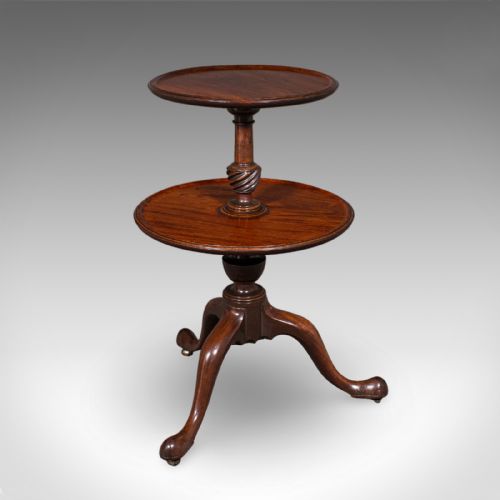


Revolving Dumbwaiter
A revolving dumbwaiter is a clever tiered or rotating dining accessory designed to keep food, wine, or books within easy reach during a meal.
Revolving Dumbwaiter
A revolving dumbwaiter stands as a practical dining room assistant, originating primarily from the Georgian, Regency, and Victorian periods. These pieces are designed with tiered circular shelves or rotating mechanisms to hold dishes and bottles without requiring a servant at the table.
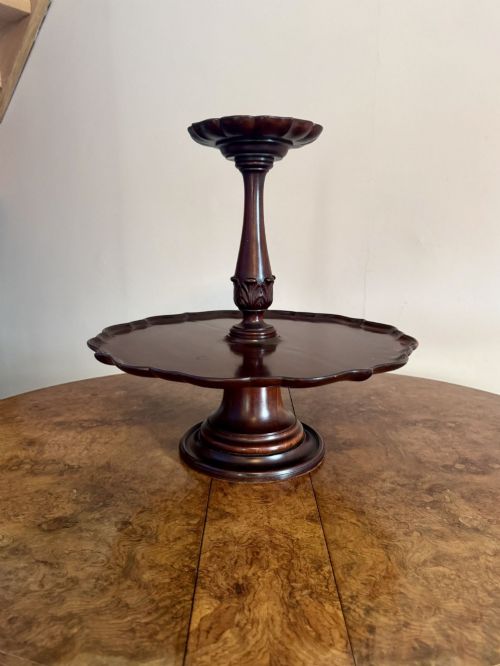
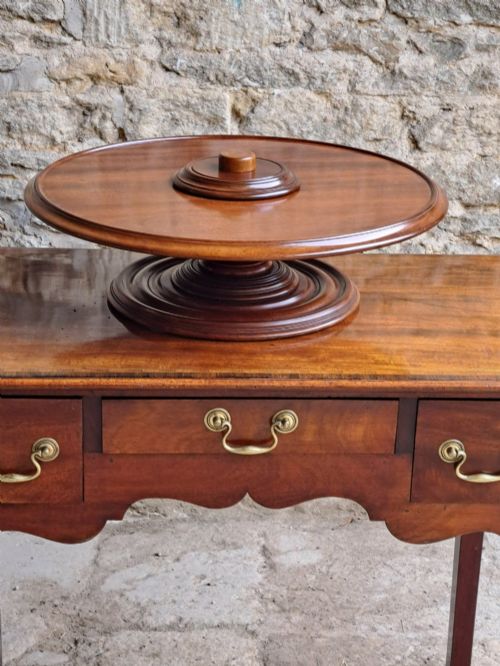
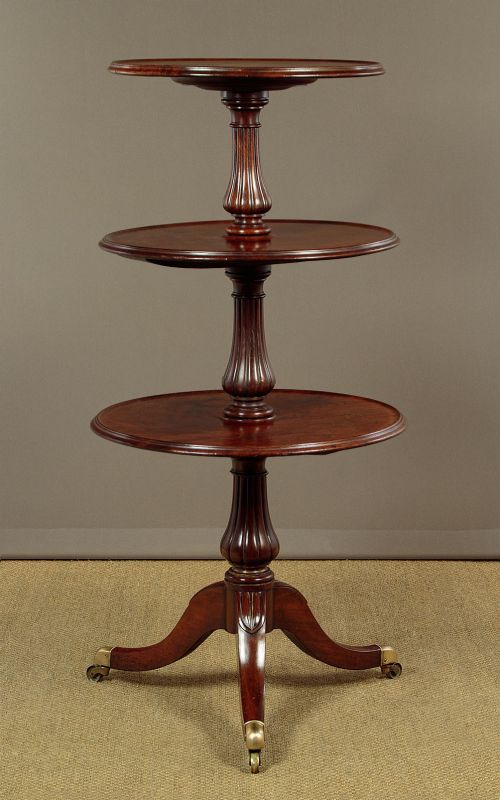
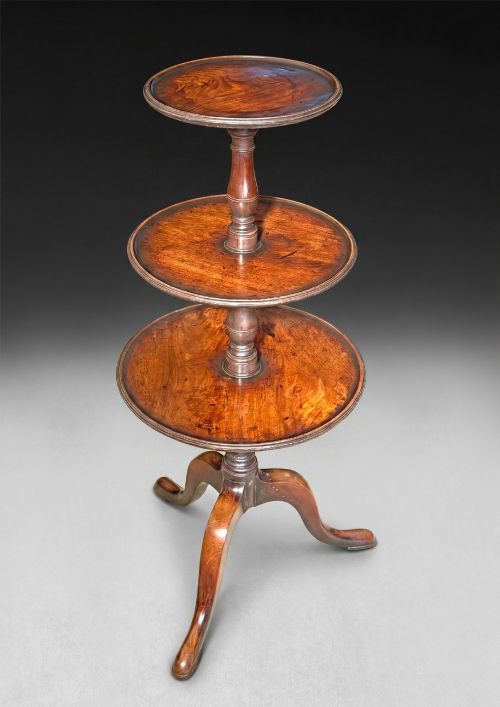
Buyers browsing this selection most frequently encounter mahogany examples featuring multiple rotating tiers or table-top lazy susans. The forms range from grand three-tier floor-standing serving stands down to compact table-top revolving trays.
Originating in periods spanning the eighteenth through the nineteenth centuries, these items bring both functional utility and classic period cabinetry into modern dining spaces. The assortment includes related rotating furniture such as occasional tables and bookcases.
Materials and Construction
Cabinetmakers relied heavily on solid and veneered mahogany, along with occasional accents of rosewood and oak, to construct these sturdy dining accessories. Timber selection prioritized rich grain patterns and durability to support multiple stacked tiers.
Metal components, specifically brass, frequently appear in the internal pivots, swivels, and gallery rails that enable smooth rotation. Joinery techniques from the Georgian and Victorian eras ensure the upright central columns securely bear the weight of the graduated wooden shelves.
Revolving Dumbwaiter Retail Price Guide 2026
Typical asking prices for revolving dumbwaiter among the pieces listed under this phrase on Sellingantiques today, from the lower quarter to the upper quarter. They describe what is for sale here now, not the wider market.
Listings feature mahogany, rosewood, oak, and brass across pieces spanning the Georgian, Regency, and Victorian periods.
Assessing Quality and Craftsmanship
The sophistication of the turning mechanism dictates much of the functional standard, distinguishing smooth, silent rotation from stiff or uneven movement. Superior examples maintain balanced equilibrium across every tier without sagging under weight.
Timber selection and surface finishing further separate the output of standard workshops from master cabinetmakers. Finely figured mahogany grain, crisp edge moulding, and robust structural joinery elevate the standing of an individual piece.
The Revolving Dumbwaiter Glossary
- Dumb waiter
- A piece of tiered dining furniture designed to hold food or drink without servants present. They often feature revolving circular trays.
- Lazy Susan
- A rotating circular tray placed on a table or stand to allow easy sharing of dishes. This form appears across various eighteenth and nineteenth-century dates.
- Tiered table
- Furniture constructed with multiple horizontal surfaces arranged vertically on a central column. These provide substantial display or serving space within a compact footprint.
- Revolving mechanism
- The internal pivot or swivel system that allows the shelves or trays to turn smoothly. Brass fittings are commonly utilised here.
- Occasional table
- A small, versatile table intended for specific, intermittent uses rather than primary dining. The category includes specialised serving stands and rotating tops.
Revolving Dumbwaiter: Frequently Asked Questions
What is a revolving dumbwaiter used for?
These pieces served as functional serving aids during meals, holding plates, condiments, and wine bottles within arm's reach of diners. They reduced the need for household staff to stand constantly by the table.
Today, they function as striking display surfaces or practical serving accessories in dining rooms and living spaces. Their rotating tiers make it easy to access items placed upon them.
How do I distinguish a Georgian dumbwaiter from a Victorian one?
Georgian examples, particularly those from the George III period, typically feature restrained classical proportions, elegant tripod bases, and finely figured mahogany. Their turning mechanisms are robust yet integrated discreetly into the column.
Victorian pieces often display heavier proportions, more ornate turning on the central supports, and sometimes broader utility as wine tables or large lazy susans. Examining the timber finish and base construction helps clarify the period of manufacture.
Can these pieces be used on a modern dining table?
Table-top versions, often referred to as lazy susans, sit directly on a dining surface to share condiments or dishes easily among guests. Their compact diameter makes them practical for everyday dining.
Floor-standing tiered models require their own corner or floor space beside the dining table. Both types integrate smoothly into contemporary rooms while retaining their traditional utility.
What woods were used to make antique dumbwaiters?
Mahogany is the predominant timber found in these listings, prized for its strength, rich reddish-brown colour, and ability to take a fine polish. Cabinetmakers also utilised oak for internal framing and rosewood for specific decorative surfaces.
Brass components frequently supplement the timber structure, appearing in swivels, hinges, and edge galleries. These combined materials ensure both structural stability and lasting aesthetic appeal.