



Revival Tier Stand
A revival tier stand brings multi-tiered display space into a room through historicist craftsmanship.
Revival Tier Stand
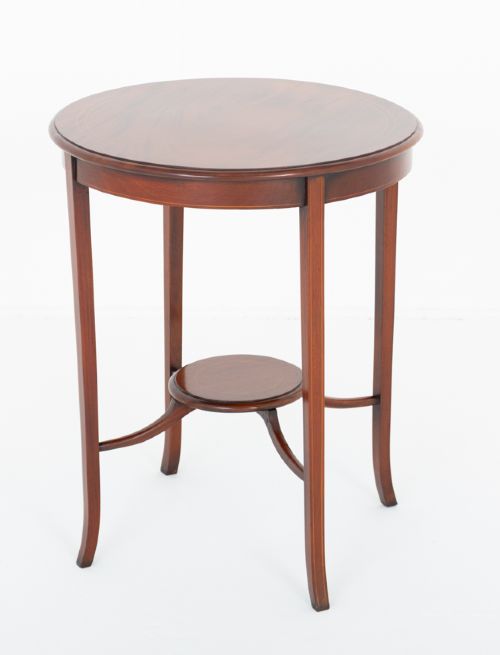
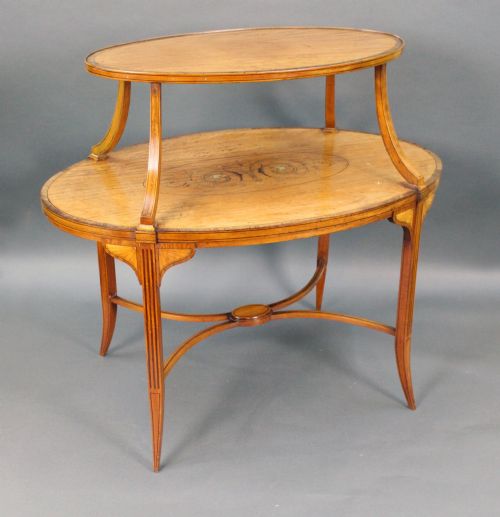
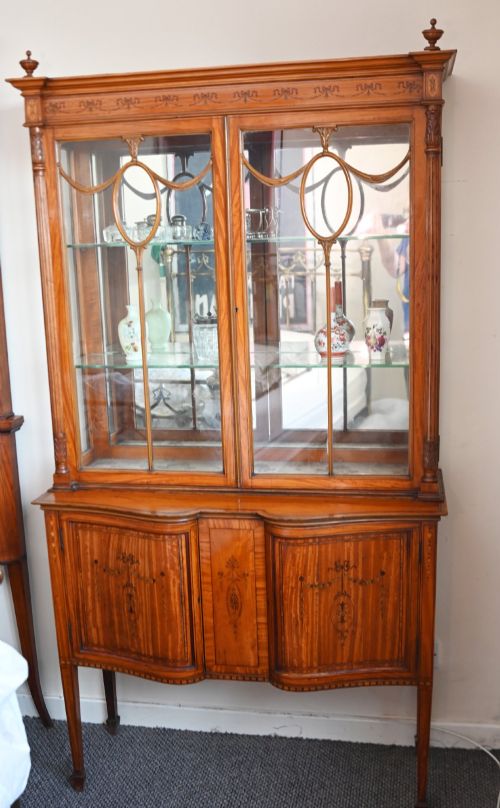
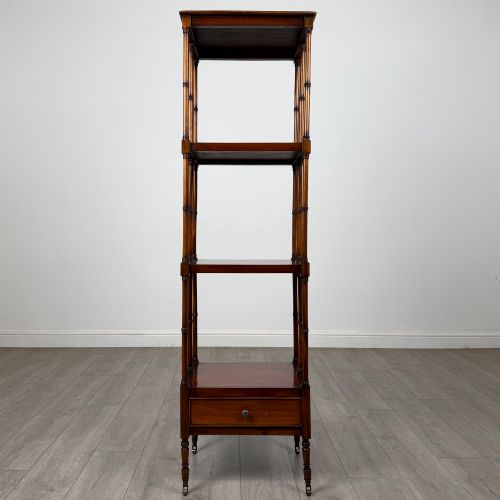
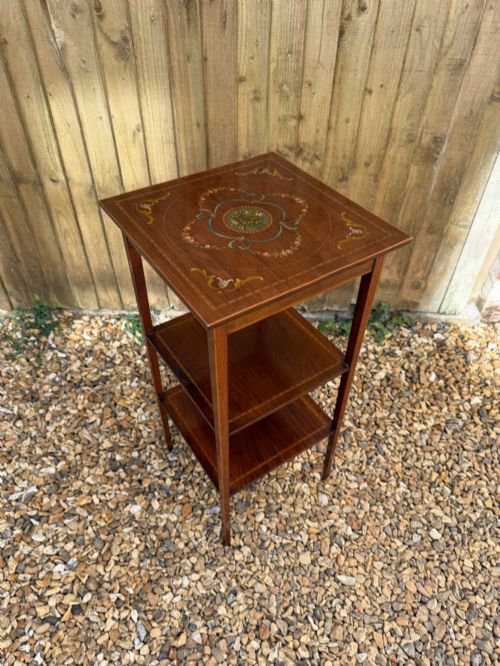
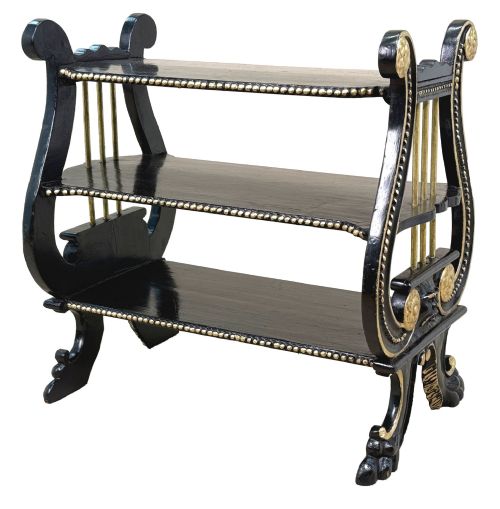
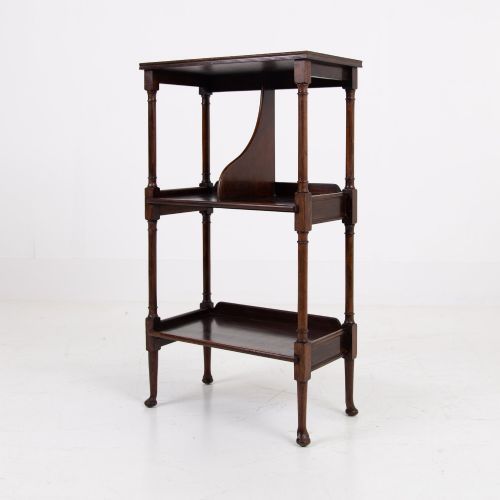
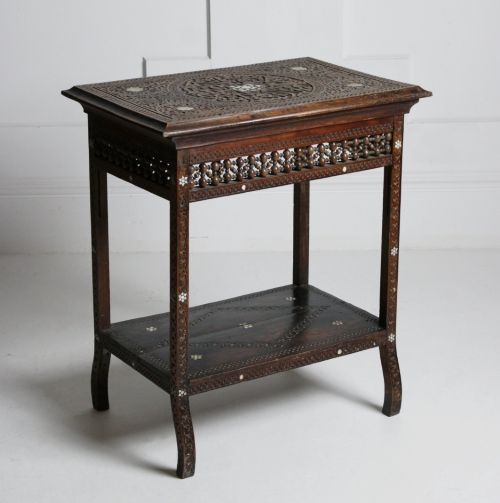
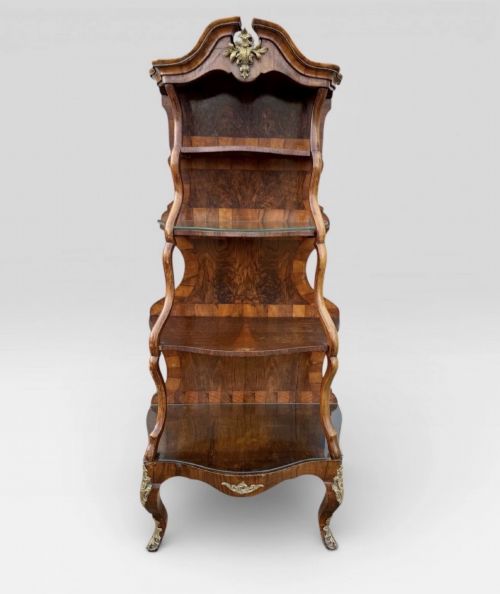
A revival tier stand presents multiple levels for display and utility, frequently taking the form of etagere tables, occasional tables, or whatnots across this selection. These pieces span from the mid nineteenth century through the Edwardian era and into the nineteen twenties, embracing styles such as Sheraton Revival, Victorian, and Louis XV Revival.
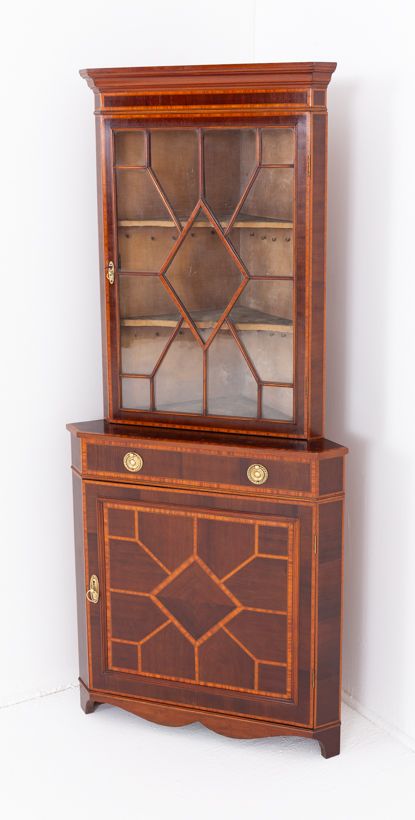
Buyers most commonly encounter mahogany and satinwood incarnations featuring multiple tiers, often enhanced with marquetry or satinwood inlay. Forms range from circular and oval etageres to corner cabinets and side tables, demonstrating the sustained demand for layered display furniture in domestic interiors.
Materials and construction methods
Cabinetmakers utilised primary timbers like mahogany, walnut, and oak, frequently pairing them with contrasting satinwood inlay or parcel gilding to achieve decorative depth. Brass and ormolu mounts provide structural accents and decorative borders on mid nineteenth century and later revival examples.
Joinery techniques combined traditional solid timber construction with delicate veneering and marquetry work, particularly evident on Sheraton Revival and Louis Revival pieces. Surfaces received careful polishing to highlight the natural grain and inlay details across tiers.
Revival Tier Stand Retail Price Guide 2026
Typical asking prices for revival tier stand among the pieces listed under this phrase on Sellingantiques today, from the lower quarter to the upper quarter. They describe what is for sale here now, not the wider market.
Even a humble cake stand finds itself elevated to a tiered revival stage.
Factors of quality
Quality rests in the crispness of the inlay, the fidelity of the stylistic revival, and the structural integrity of the multiple tiers. Finer pieces demonstrate precise marquetry work and superior timber selection, avoiding mechanical shortcuts in construction.
The sophistication of the brass or ormolu mounts and the hand-painted detailing on satinwood surfaces distinguish standard production from exceptional examples. Balance and proportion across each stacked tier dictate the overall success of the design.
The Revival Tier Stand Glossary
- Étagère
- A piece of furniture consisting of a set of open shelves or tiers for displaying small objects. These tiered stands emerged in popularity during the nineteenth century.
- Whatnot
- A multi-shelved stand used for storing or displaying ornaments, books, or miscellaneous items. They appear frequently in Victorian and Edwardian interiors.
- Marquetry
- Decorative woodwork in which pieces of fine wood are inserted into a veneer to form patterns. This technique decorates the surfaces of many revival tables.
- Ormolu
- Gilded bronze used for decorative mounts and accents on furniture. It is characteristic of French Louis Revival pieces from the nineteenth century.
- Sheraton Revival
- A late nineteenth and early twentieth century style drawing inspiration from the lighter neoclassical designs of Thomas Sheraton. It relies heavily on satinwood inlay and mahogany.
Revival Tier Stand: Frequently Asked Questions
What is a tier stand used for?
These pieces provide tiered surfaces for holding books, decorative ornaments, or lamps without occupying excessive floor space.
Historically, they populated sitting rooms and parlours as functional display furniture for domestic collections.
How do I identify a Sheraton Revival piece?
Look for light mahogany timbers complemented by contrasting satinwood inlay, slender supports, and refined neoclassical proportions.
These pieces typically date from the late nineteenth or early twentieth century rather than the eighteenth century.
Where should I place an etagere?
An etagere functions effectively in corners or against walls where its multiple levels can hold decorative objects.
Its open construction prevents rooms from feeling visually crowded while offering practical display area.
What is the difference between a whatnot and an etagere?
While both offer multiple tiers, a whatnot often serves utility storage in corners or beside seating, whereas an etagere prioritises display.
Terminology often overlaps across nineteenth century and Edwardian catalogue descriptions.