

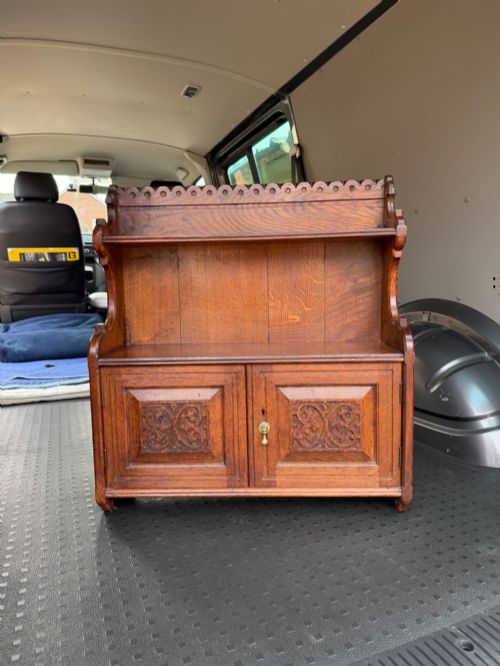
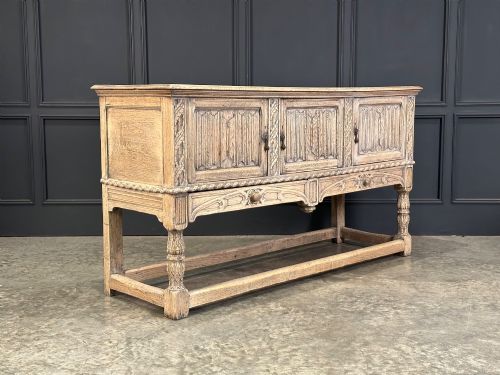
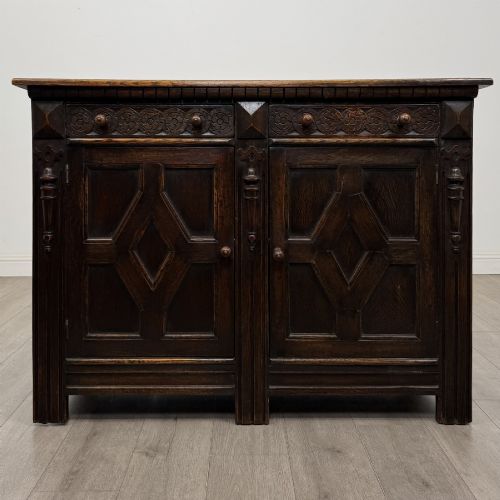
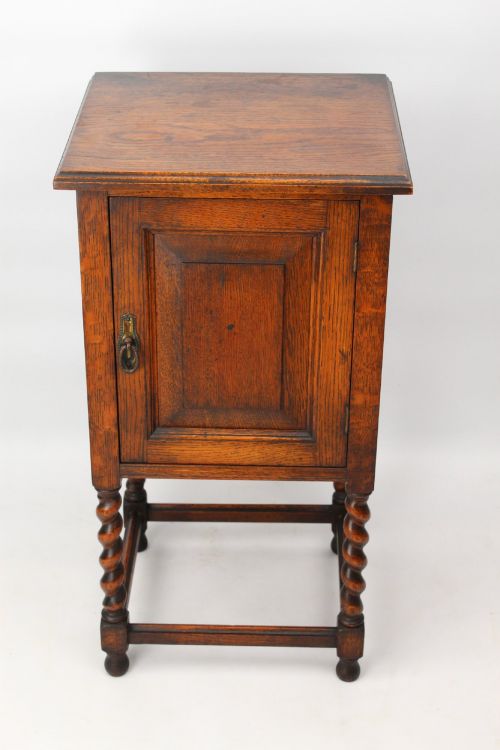
Revival Oak Cupboard
Revival oak cupboards bring sturdy historic character and practical storage to modern interiors through deep carvings and dependable timber.
Revival Oak Cupboard
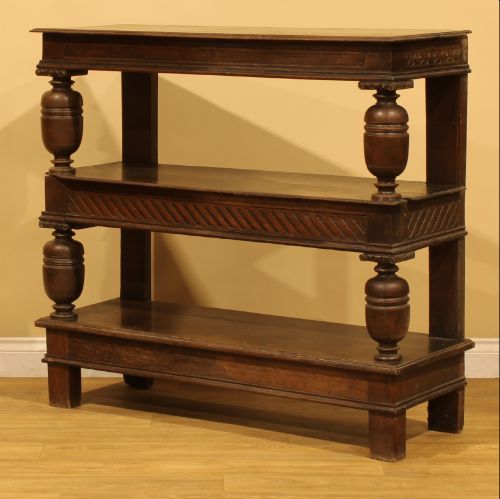
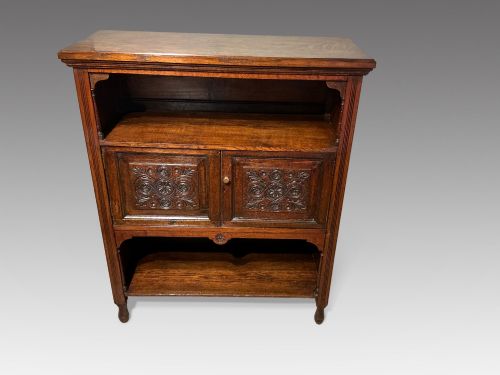
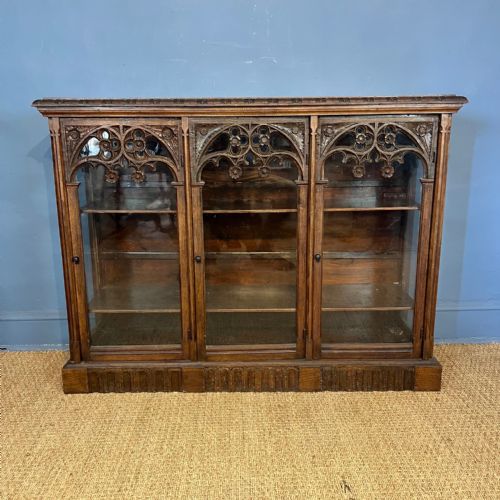
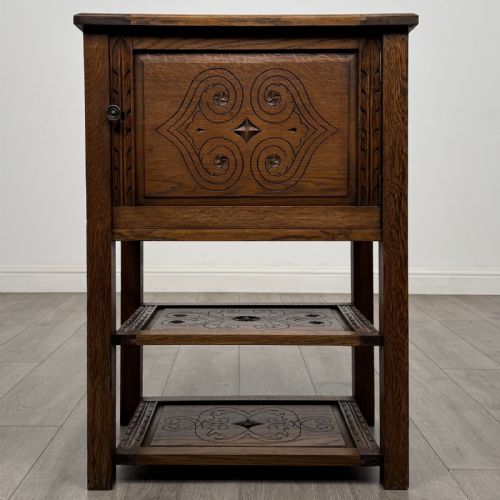
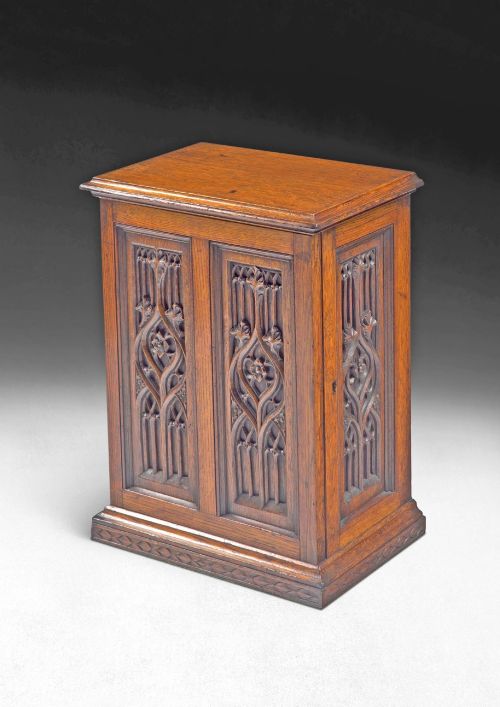
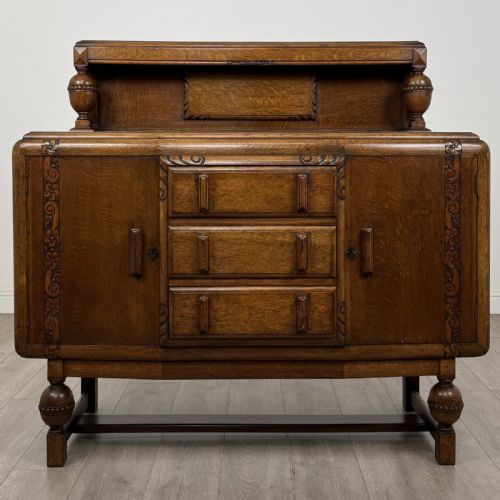
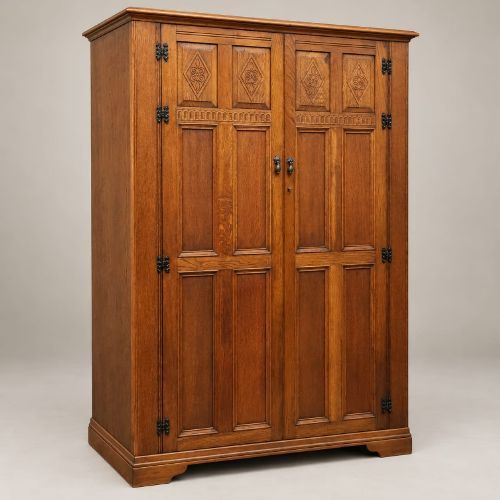
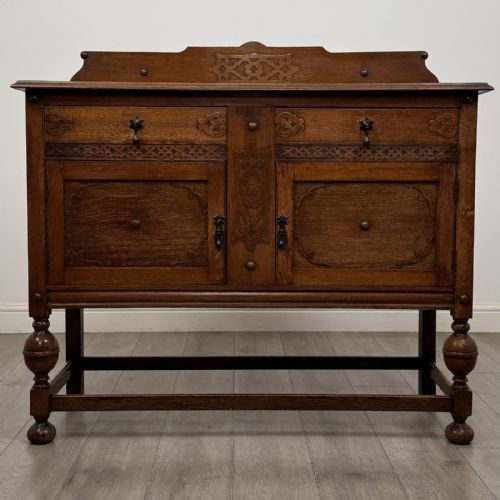
A revival oak cupboard delivers traditional presence across various domestic forms, including sideboards, display cabinets, wardrobes, and dresser bases. These pieces draw on historical vocabularies ranging from Jacobean and Tudor revivals to Gothic and Arts and Crafts movements.
The pieces you meet most often date from the late nineteenth century through to the nineteen-twenties, reflecting a sustained Victorian and Edwardian appetite for solid oak furniture with substantial historic detailing. Sideboards and linenfold cupboards dominate the selection, offering generous storage alongside decorative carved panels.
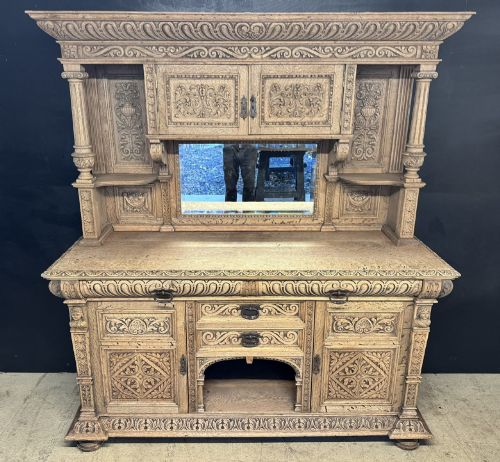
Makers and designers of the period looked backward to earlier centuries for inspiration, utilising heavy timber, geometric panels, and figurative motifs such as green men or lion masks. The resulting storage solutions suit both traditional dining rooms and contemporary spaces requiring grounded, architectural furniture.
Factors of quality and execution
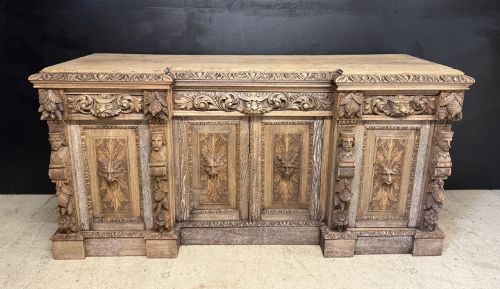
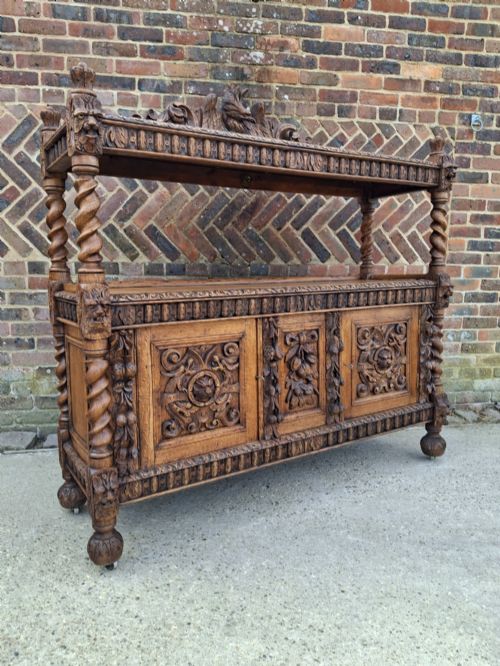
The distinction between standard production items and exceptional pieces rests upon the depth and crispness of the carving, alongside the selection of timber grain. Deeply undercut foliage, expressive figurative work, and well-figured solid oak distinguish ambitious workshop output from routine commercial stock.
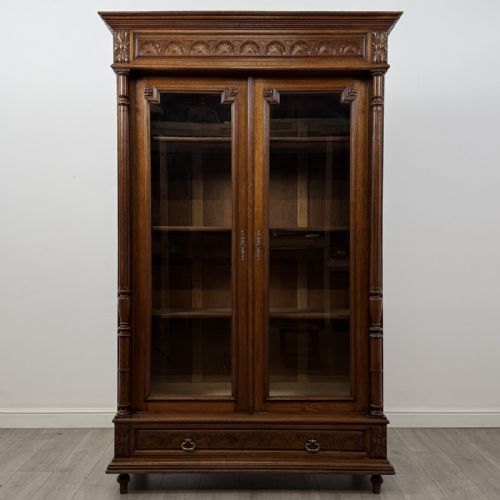
Architectural cohesion and hardware integration also determine standing within the range. Pieces retaining original brass mounts, leaded glass panes, and balanced proportions command greater appreciation than those altered or fitted with replacement elements later in their history.
Revival Oak Cupboard Retail Price Guide 2026
Typical asking prices for revival oak cupboard among the pieces listed under this phrase on Sellingantiques today, from the lower quarter to the upper quarter. They describe what is for sale here now, not the wider market.
Several cupboards hide leafy green men peering out from the woodwork, keeping a silent, watchful eye on the dining room.
John Moyr Smith·Gillows·Liberty
The Revival Oak Cupboard Glossary
- Linenfold
- A style of wood carving representing folded parchment or linen, commonly used on fifteenth-century panels and revived extensively on Edwardian cupboard doors.
- Green Man
- A sculptural architectural ornament depicting a human face disgorged from foliage, appearing frequently on nineteenth-century carved oak furniture.
- Stretcher base
- An assembly of horizontal wooden bars connecting the lower legs of a table or cabinet to provide structural rigidity.
- Barley twist
- A turned wooden furniture leg resembling a spiral or twisted rope, popular during seventeenth-century and revival periods.
- Leaded glass
- Individual panes of glass joined together by narrow strips of lead, often utilised in the doors of revival display cabinets.
Revival Oak Cupboard: Frequently Asked Questions
What periods do these cupboards date from?
The pieces span from the late nineteenth century through the early twentieth century, incorporating Victorian, Edwardian, and nineteen-twenties production dates alongside occasional eighteenth-century examples.
Makers during these later eras consciously revived older historical motifs, meaning a piece made around nineteen-twenty frequently displays seventeenth-century Jacobean or Tudor characteristics.
How were these cabinets used originally?
These cupboards served primarily for storing household provisions, linens, books, or dining china within formal dining rooms, hallways, and libraries.
Larger formats functioned as wardrobes or sideboards, while smaller table-top and wall-hanging versions held specialised collectors' items or everyday utilities.
How do I identify a revival style?
Revival pieces combine historic structural forms and decorative motifs with the construction techniques and timber milling standards of their actual manufacturing date.
Look for specific revivals named in the design, such as Gothic pointed arches, Jacobean geometric mouldings, or Arts and Crafts hand-craftsmanship applied to solid oak carcases.
How do I care for solid oak furniture?
Solid oak requires stable indoor humidity levels away from direct heat sources to prevent the timber from splitting or warping over time.
Maintain the surface with appropriate wax polishes applied sparingly, avoiding silicone-based sprays that can penetrate the grain and alter the finish.