





Revival Music Cabinet
A revival music cabinet brings Victorian and Edwardian craftsmanship into the home, offering structured storage for sheet music with elegant period styling.
Revival Music Cabinet
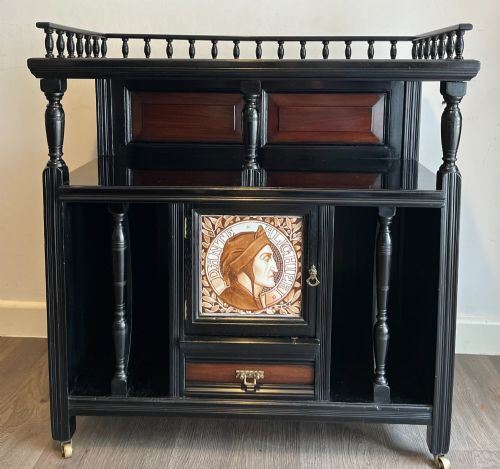
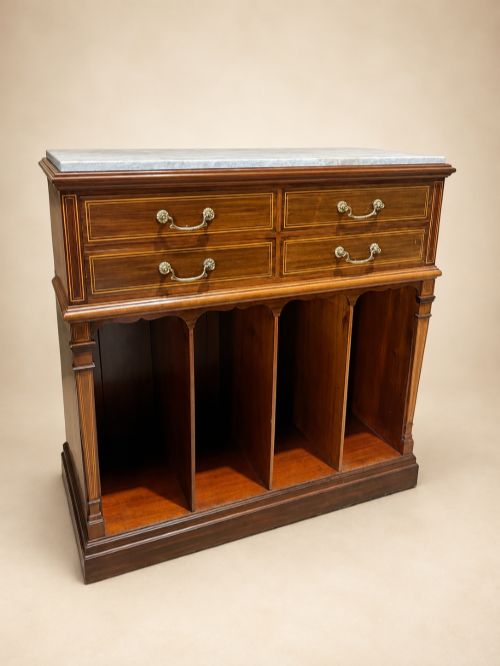
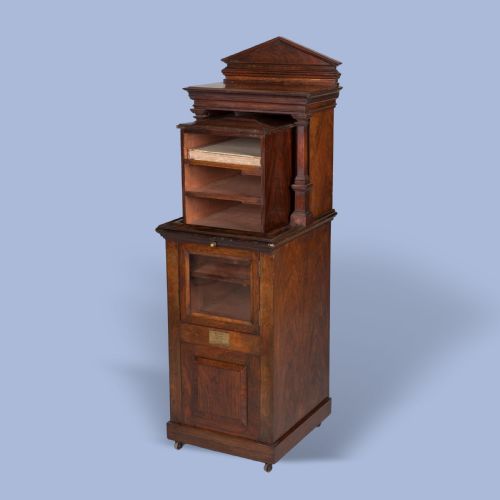
A revival music cabinet is a specialised form of furniture designed specifically to hold sheet music, emerging primarily across the Victorian and Edwardian periods. These pieces combine practical internal storage with refined exterior decoration, often taking the form of upright cabinets or modified canterburys.
Origins vary across British and continental workshops, reflecting the diverse design movements of the era, from Aesthetic Movement influences to Louis XVI style details. Walnut, mahogany, and satinwood frequently form the structural basis of these items, often enhanced by inlay work.
How they were made
Cabinet makers utilised dense hardwoods like mahogany, walnut, and satinwood to construct the primary bodies of these music cabinets, providing a stable frame for internal shelving and drawers. These timbers were often selected for their figured grains and enhanced with intricate inlay work.
Decorative elements frequently included brass fittings, ceramic or porcelain accents, marble tops, and glass panels, alongside painted panels in the Vernis Martin style. Specialised compartments were built internally to keep sheet music organised and protected.
Revival Music Cabinet Retail Price Guide 2026
Typical asking prices for revival music cabinet among the pieces listed under this phrase on Sellingantiques today, from the lower quarter to the upper quarter. They describe what is for sale here now, not the wider market.
Listings feature mahogany, satinwood, and walnut woods alongside glass, brass, marble, and ceramic materials.
What varies in quality
Quality differences emerge in the selection of timber veneers and the precision of the marquetry or inlay work across the cabinet exterior. Finer examples display carefully figured walnut or satinwood paired with meticulous brass and ceramic detailing.
The sophistication of the internal fittings and the integrity of the cabinet construction distinguish the standard production pieces from higher-grade items commissioned during the nineteenth and early twentieth centuries.
The Revival Music Cabinet Glossary
- Canterbury
- A low stand or cabinet originally designed for holding sheet music or loose papers, often fitted with vertical divisions.
- Inlay
- A decorative technique where contrasting materials such as lighter woods are embedded into the primary surface of the cabinet.
- Marquetry
- Elaborate patterns formed by fitting together small pieces of wood veneer to create pictorial or geometric designs on the furniture surface.
- Satinwood
- A durable, lustrous hardwood with a yellowish sheen, commonly utilised for fine cabinetmaking and decorative stringing during the revival periods.
- Vernis Martin
- A simulated Japanese lacquer technique developed in France, often applied to painted side and music cabinets of the nineteenth century.
Revival Music Cabinet: Frequently Asked Questions
What is a revival music cabinet?
A revival music cabinet is a piece of nineteenth or early twentieth-century furniture designed to store sheet music securely. These cabinets reflect historical design movements like the Edwardian and Victorian revivals.
They combine functional internal partitions with decorative exteriors featuring materials such as mahogany, satinwood, and inlaid details. Many include specialised shelving suited for domestic music rooms.
How were music cabinets used?
These cabinets served to organise and protect sheet music collections in parlours and drawing rooms during the Victorian and Edwardian eras. Their dedicated compartments kept scores flat and easily accessible for home piano playing.
Some designs also incorporated display areas or flat tops for holding instruments, small ornaments, or additional musical scores.
How do I date a music cabinet?
Dating relies on examining the secondary woods, construction methods, and stylistic indicators associated with periods like the Victorian, Edwardian, and Aesthetic Movement. Details such as specific brass hardware and inlay styles provide key chronological clues.
Makers labels or stamps found inside the cabinet can also help pinpoint the exact era of manufacture between the mid-nineteenth and early twentieth centuries.
What materials are typical for these cabinets?
Makers predominantly used hardwoods such as mahogany, walnut, and satinwood, often accenting them with rosewood veneers or ebonised wood. Decorative flourishes frequently included brass, glass panels, ceramic plaques, and marble.
Intricate wood inlay and painted panels in French revival styles are also commonly found on the exterior surfaces of these pieces.