





Revival Joint Stool
Revival joint stool pieces are sturdy historical interpretations built to bring centuries-old vernacular seating into domestic spaces.
Revival Joint Stool
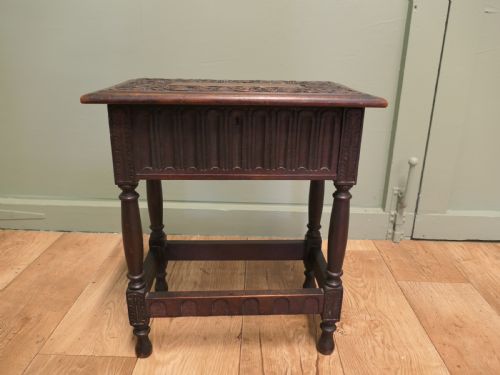
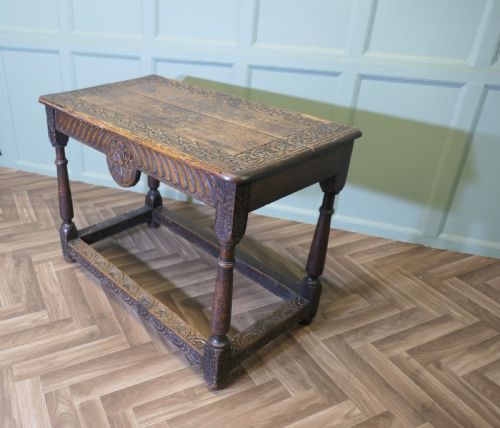
A revival joint stool is a solid wooden seat constructed using pegged mortise and tenon joinery, echoing domestic furniture from earlier British centuries. When exploring revival joint stool options, buyers mostly encounter nineteenth-century interpretations drawing heavily on Jacobean, Elizabethan, and Gothic styles. These pieces often blur the line between seating, low side tables, and small box stools with hinged tops.
Makers across the Victorian, Edwardian, and early twentieth-century periods produced these items in solid oak, sometimes integrating textiles, leather, or metal studs. Forms range from simple boarded trestle structures to carved occasional tables and low doll or teddy bear stools. Each example references older carpentry traditions while serving as functional household furniture.
How they were made
Makers relied primarily on solid oak, shaping boards and framing timber with hand tools to build rigid, rectilinear frames. Joinery depended on pegged mortise and tenon joints, creating durable structures that required no metal nails in the primary frame.
Surface decoration frequently involved carved ornamentation such as strapwork, guilloche, or Celtic motifs, applied directly to the solid wood. Selected variants incorporated iron hardware, metal studs, leather, or fabric upholstery fastened to the upper surfaces.
Revival Joint Stool Retail Price Guide 2026
Typical asking prices for revival joint stool among the pieces listed under this phrase on Sellingantiques today, from the lower quarter to the upper quarter. They describe what is for sale here now, not the wider market.
Objects grouped under this phrase range from standard seating and occasional tables to specialised box stools and miniature doll furniture.
What varies in quality
The degree of material selection and timber weight separates standard production from superior pieces, particularly evident in heavy, dense solid oak construction. Finer examples display crisp, deliberate carving and careful proportioning rather than hurried machine milling.
The integrity of the pegged joinery dictates structural longevity, with tighter joints maintaining rigidity over decades of domestic use. Original surface treatments and patination on the timber add depth that distinguishes careful nineteenth-century craftsmanship from later utilitarian output.
The Revival Joint Stool Glossary
- Joint stool
- A sturdy wooden stool constructed with pegged mortise and tenon joinery rather than turned legs glued into round holes. This technique ensures high structural rigidity.
- Mortise and tenon
- A woodworking joint where a projecting tongue fits snugly into a corresponding cavity, traditionally secured with a wooden peg. It forms the skeletal backbone of early English seating.
- Jacobean Revival
- A nineteenth-century design movement copying the heavy, geometric, and dark-finished oak furniture of the early seventeenth century. It emphasises straight lines and panelled construction.
- Boarded stool
- A simple form of seating made from thick planks joined together at right angles rather than a framed skeleton. Early iterations often utilised trestle-style supports.
- Strapwork
- Flat ornamental carving resembling interlaced bands or leather straps, commonly found on Elizabethan and Jacobean woodwork. It creates rhythmic surface patterns across friezes and rails.
Revival Joint Stool: Frequently Asked Questions
What is a revival joint stool?
A revival joint stool is a nineteenth or early twentieth-century piece built in the style of much older sixteenth and seventeenth-century English furniture. These sturdy oak seats were constructed using traditional pegged joinery methods.
They often double as small occasional tables or box stools with hidden storage compartments beneath the top surface.
How were these stools used?
Historically, joint stools served as versatile household seating for dining or sitting near the hearth, easily tucked away when not required. Later revival versions continued this practical domestic role while also functioning as display surfaces.
Smaller variants were sometimes made as miniature display pieces, doll furniture, or low footstools alongside standard seating forms.
Are revival joint stools authentic antiques?
Revival pieces are antiques in their own right, typically dating from the Victorian, Edwardian, or early twentieth-century periods. They represent nineteenth-century historical interest rather than original sixteenth or seventeenth-century manufacture.
Makers of this era deliberately copied older vernacular styles, using period timber selection and traditional joinery techniques to recreate historic aesthetics.
What woods were used?
Solid oak is the primary material found across these revival pieces, reflecting the heavy timber traditions of early English furniture making. The wood was often finished with dark stains to emulate centuries of ageing.
Secondary materials occasionally include iron hardware, leather upholstery, fabric coverings, and decorative metal studs on padded surfaces.