


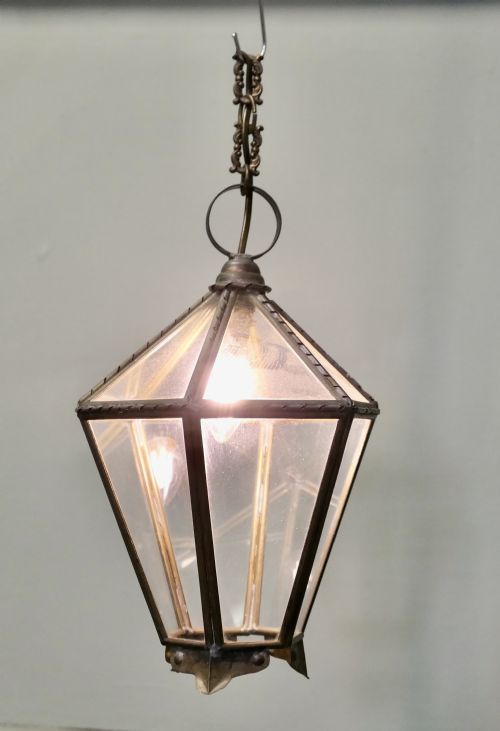


Revival Hanging Lantern
These revival hanging lantern pieces offer atmospheric overhead illumination, bringing period character and substantial architectural presence straight to your hallway or porch.
Revival Hanging Lantern
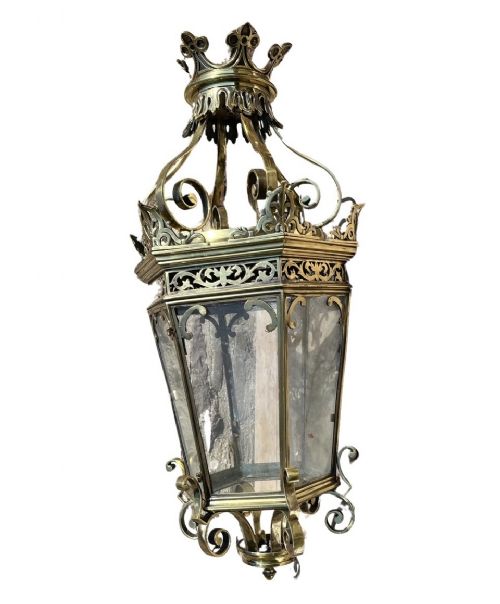
A revival hanging lantern draws upon earlier Gothic, Victorian and Continental architectural traditions, functioning primarily as a substantial ceiling-hung light source for corridors, halls and porches. When you search for revival hanging lantern designs, you encounter ceiling pendants, hall lanterns and porch lights spanning periods from the mid-nineteenth century through to the mid-twentieth century.
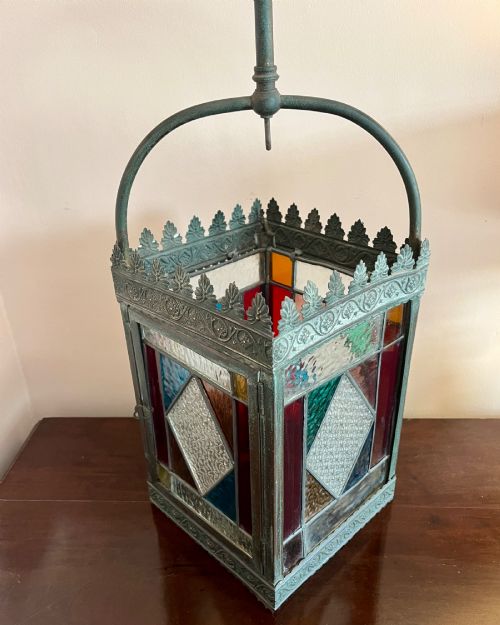
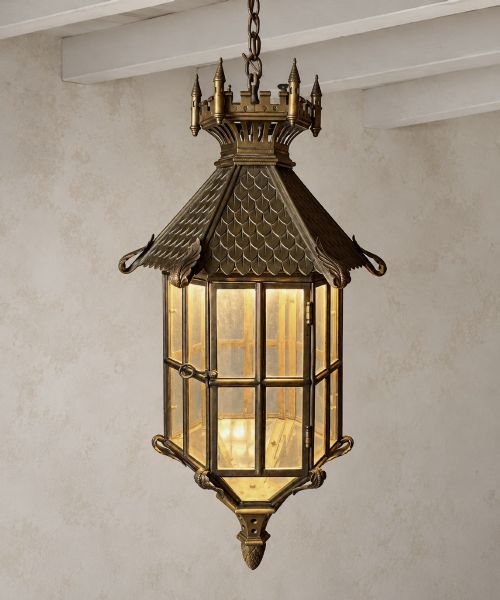
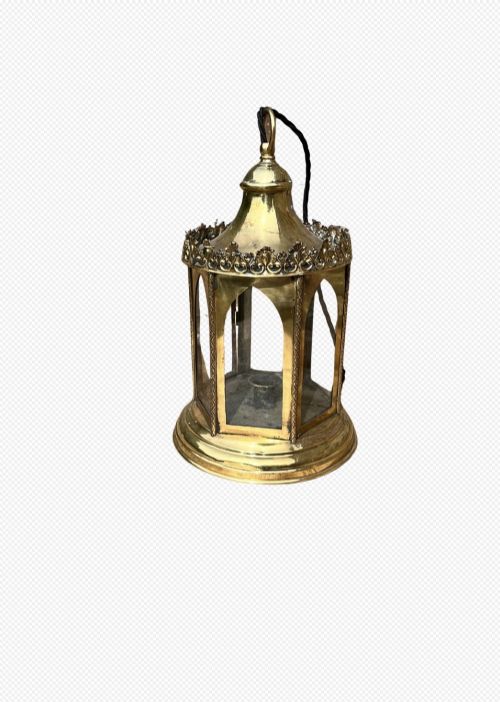
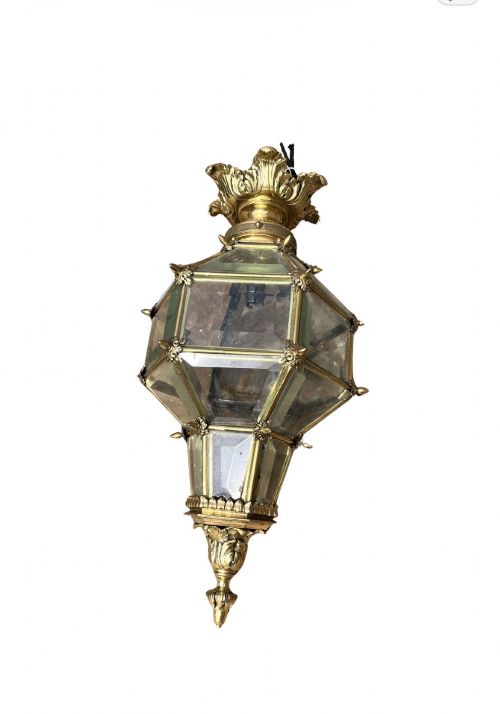
The pieces on this page appear in various geometric shapes, ranging from hexagonal brass frames to large hexagonal bronze bodies crowned with castellated details. You will regularly find distinct regional flavours, including French Chateau models and English Gothic interpretations referencing historical designers.
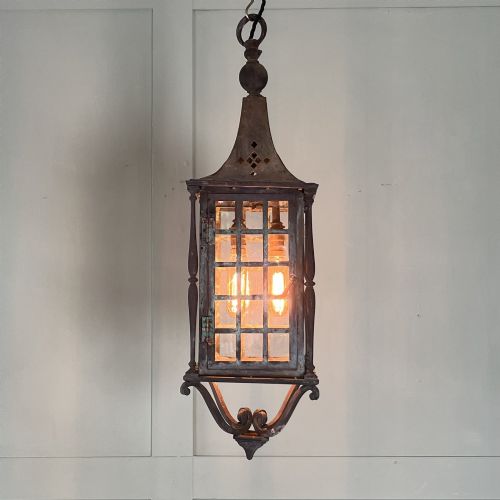
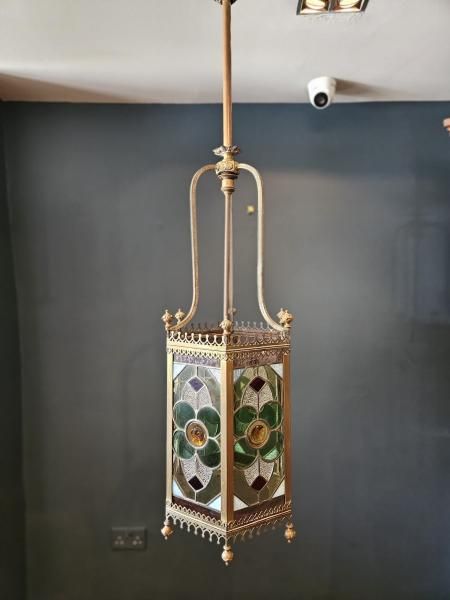
Many examples retain their original hanging mechanisms, such as ceiling chains or integrated brackets, while others show adaptations for modern electrical wiring. Their primary purpose remains the creation of focused downward and filtered side illumination through leaded or coloured glass panes.
Materials and Construction Techniques
Makers constructed these lanterns using robust structural metals like brass, bronze, cast iron and copper to support heavy glass panels and withstand exterior or hallway conditions. Blacksmiths shaped wrought iron and cast iron by hand, while foundries cast heavier bronze and brass components with decorative motifs.
Glazing techniques form a defining characteristic of the category, utilising leaded glass, coloured glass, dimpled red glass or standard panes fitted securely into metal framing. Artisans incorporated functional details like opening side doors, decorative gilt metalwork and soldered lead came to hold the glass securely in place.
Revival Hanging Lantern Retail Price Guide 2026
Typical asking prices for revival hanging lantern among the pieces listed under this phrase on Sellingantiques today, from the lower quarter to the upper quarter. They describe what is for sale here now, not the wider market.
Keep an eye out for hidden green men and lucky shamrocks peering out from the metalwork of these historic lanterns.
Distinctions in Quality and Craftsmanship
Quality reveals itself in the weight of the metal casting and the precision of the joinery where the frame meets the glass panels. Finer lanterns display crisp architectural detailing, such as well-defined tracery, cast bronze crowns and substantial gauge brass rather than thin stamped sheet metal.
The artistry of the glazing further separates standard production from exceptional work, particularly in leaded or coloured glass configurations that diffuse light evenly. Original hardware, such as functioning latches on side doors and integrated decorative elements like shamrocks or green man motifs, adds substantive character to the piece.
The Revival Hanging Lantern Glossary
- Gothic Revival
- An architectural and decorative style drawing inspiration from medieval forms, featuring pointed arches, tracery and robust metalwork. This aesthetic heavily influences many Victorian and Edwardian hall lanterns.
- Leaded Glass
- Glass panes held together by came strips of lead, soldered at the joints to form geometric or decorative patterns. It provides both structural integrity and traditional visual texture in hanging lanterns.
- Castellated Crown
- A decorative upper frieze shaped like the battlements of a castle, frequently seen on large bronze or brass revival lanterns. This architectural detail reinforces the medieval or Gothic inspiration of the piece.
- Hall Lantern
- A ceiling-suspended light fixture specifically designed for narrow entrance spaces, corridors or porches. These pieces project illumination downwards while casting patterns through translucent or coloured glass sides.
Revival Hanging Lantern: Frequently Asked Questions
Can these antique lanterns be wired for electricity?
Most surviving lanterns have already undergone conversion for modern electrical systems, often retaining their original internal socket holders or burner spaces. Rewiring allows you to integrate contemporary bulbs safely while preserving the historic exterior structure.
An electrician can easily thread modern wiring through the existing suspension tubes or chains without altering the external metalwork. Using low-heat LED bulbs helps protect fragile coloured or leaded glass panels from thermal stress over long periods of use.
Where should I place a hall lantern?
These fixtures suit entryways, stairwells and high-ceilinged corridors where their architectural frames and decorative glass can be viewed from multiple angles. Positioning the lantern high enough to clear head height while maintaining a commanding presence in the space is essential.
Covered porches also accommodate durable brass and iron models, provided the materials resist local weathering conditions. The downward light distribution creates a welcoming atmosphere for guests entering the home.
How do I identify the period of a metal lantern?
Dating relies on examining the manufacturing techniques, such as hand-forged iron versus machine-cast brass, alongside stylistic clues from the Gothic Revival or Arts and Crafts movements. Victorian examples often display heavier cast components and elaborate ornamentation, while later twentieth-century pieces may show simpler lines.
Patina on the bronze, copper or brass surfaces also offers clues to age, though hardware styles and glass types provide the most reliable chronological markers. Comparing the construction methods to dated comparative pieces helps narrow down the decade of production.