

Revival Dining Chairs
Revival dining chairs bring historic weight to the table, combining earlier centuries of design ambition with the solid construction of the Victorian and Edwardian eras.
Revival Dining Chairs
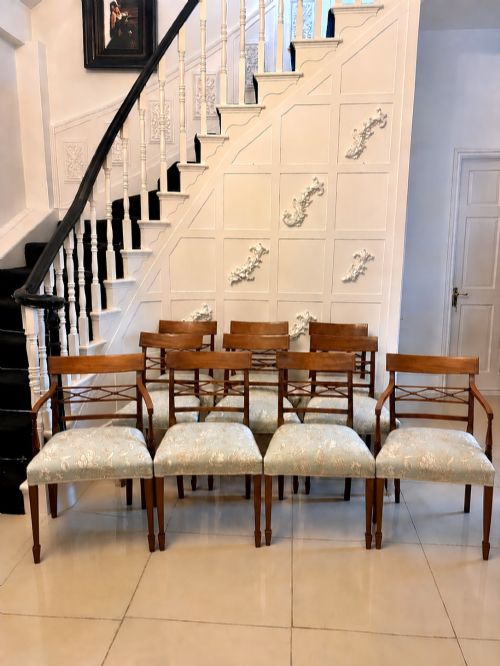
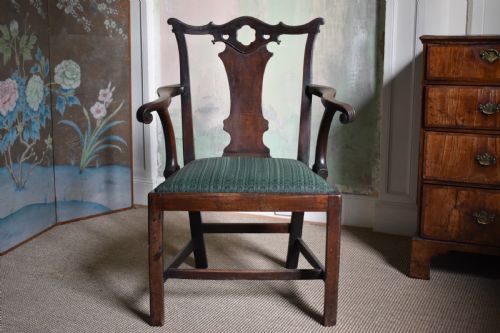
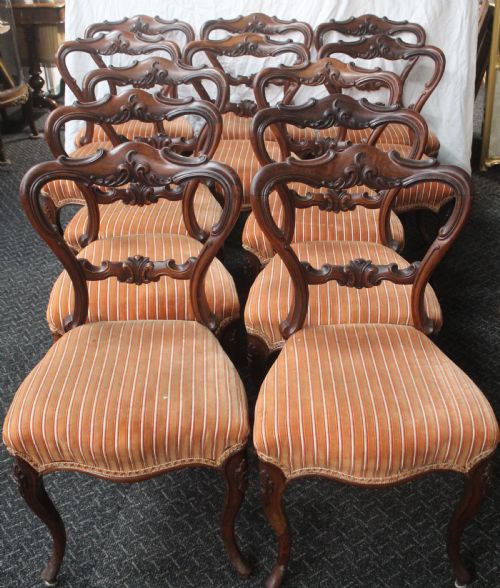
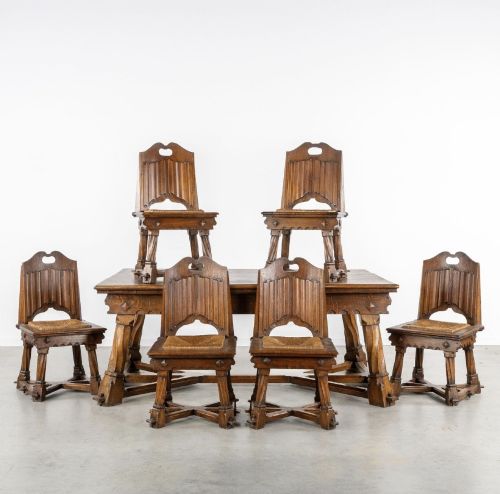
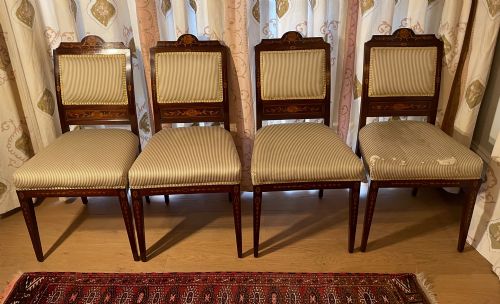
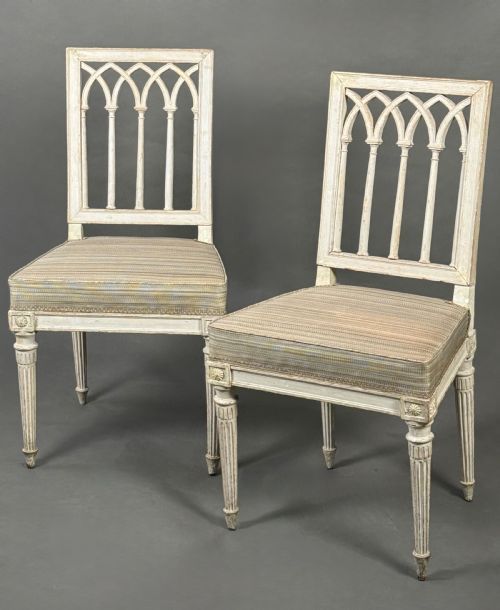
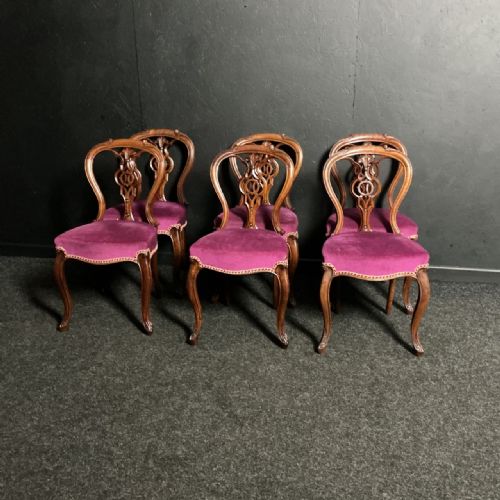
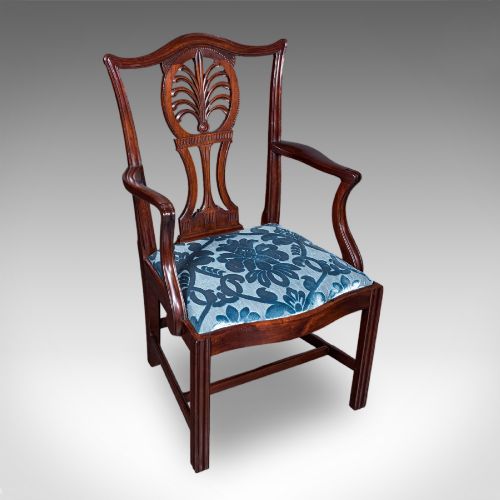
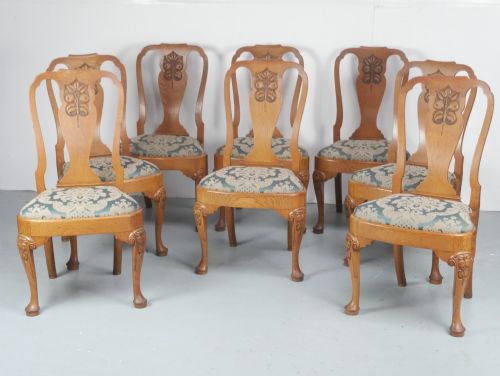
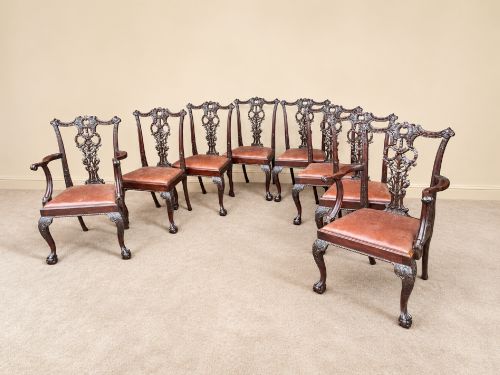
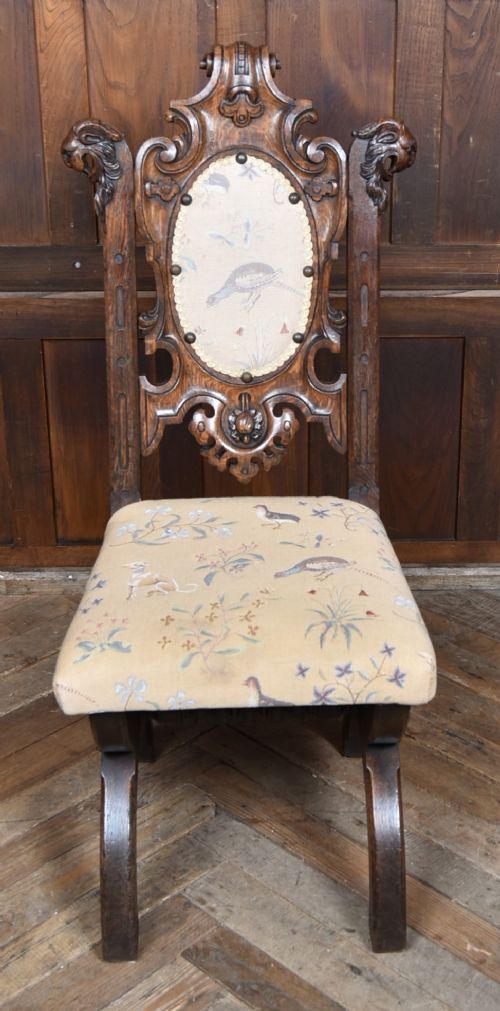
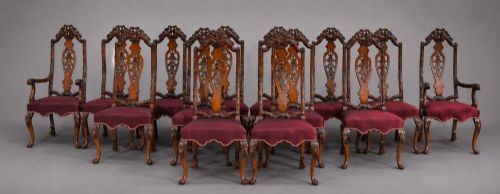
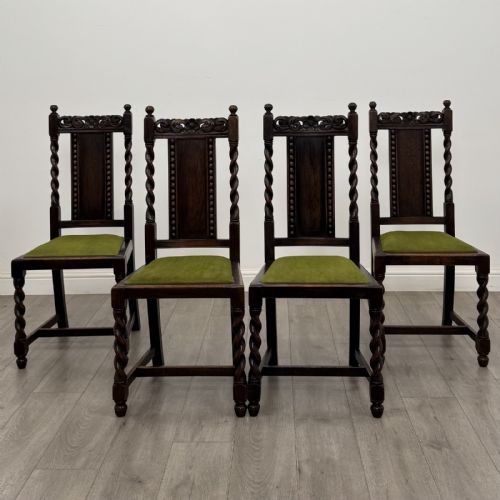
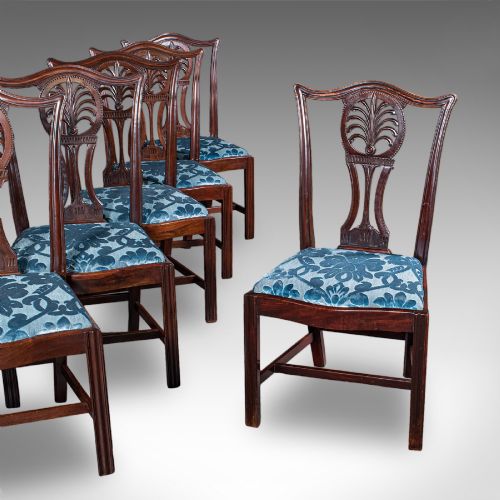
Revival dining chairs draw upon centuries of distinct architectural and furniture history, reworking earlier forms to suit modern sitting habits. When you search for revival dining chairs, you encounter seating built across the nineteenth and early twentieth centuries that looks deliberately back to previous eras. The most common examples on this page are mahogany and oak dining chairs shaped by Georgian, Chippendale, Regency, and Gothic ideals.
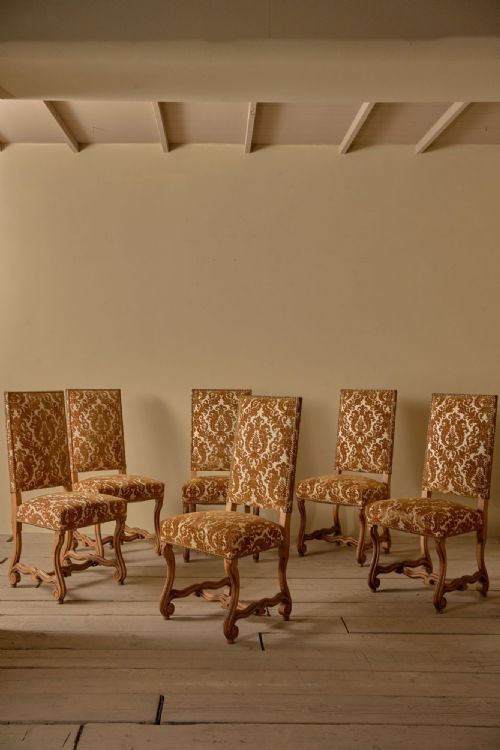
These pieces range from single side chairs to large matching sets of eight or ten, often accompanied by matching carver armchairs with scroll or open arms. Makers reproduced the pierced splats, barley twists, and carved crest rails of the past whilst meeting the demand for sturdy domestic seating. They span various formats, including tall hall chairs, upholstered side chairs, and solid timber dining seats designed to anchor a formal interior.
How they were made
Carpenters relied primarily on dense hardwoods such as mahogany and oak, shaping timber with hand tools alongside emerging mechanical saws. Frames were frequently joined using traditional mortise and tenon construction to ensure the heavy timber could withstand daily dining use.
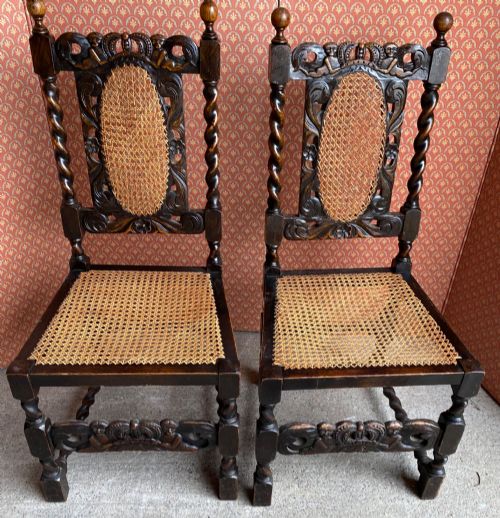
Surface ornamentation depended on deep carving, barley twist turnings, and subtle inlay work rather than applied veneers. Upholstered seats were padded with traditional stuffing and covered in leather, tapestry, or fabric, then secured with brass tacks.
Revival Dining Chairs Retail Price Guide 2026
Typical asking prices for revival dining chairs among the pieces listed under this phrase on Sellingantiques today, from the lower quarter to the upper quarter. They describe what is for sale here now, not the wider market.
Oak and mahogany dominate the timber options here, appearing across Jacobean, Gothic, Chippendale, and Regency revival styles.
What varies in quality
Quality rests heavily on the depth and crispness of the carved detail, separating standard production seating from exceptional workshop output. A superior set displays sharply defined acanthus leaves, pierced splats with smooth edges, and timber selected for rich grain movement.
Structural integrity also dictates value, as chairs built with thick, unwarped oak or heavy mahogany retain their rigidity over generations. The uniformity of a matched set and the quality of the original joinery determine whether a suite holds its proportion and balance.
Howard and Sons·Warings·Norwich Maker
The Revival Dining Chairs Glossary
- Splat
- The vertical wooden strip running up the centre of a chair back. It often takes a pierced or carved shape derived from Georgian or Chippendale models.
- Carver
- An armchair designed to match a set of dining side chairs, usually positioned at the head of the table. These incorporate sturdy elbow rests.
- Barley Twist
- A cylindrical furniture leg or stretcher carved in a spiral resembling twisted barley sugar. This technique appears frequently on nineteenth-century oak frames.
- Gothic Revival
- A nineteenth-century style drawing inspiration from medieval architecture. Chairs in this mode utilise pointed arches, high backs, and heavy tracery.
- Regency Revival
- An early twentieth-century interpretation of the early nineteenth-century Regency aesthetic. Pieces typically feature clean lines, dark mahogany, and classical proportions.
Revival Dining Chairs: Frequently Asked Questions
What periods do these chairs come from?
These dining chairs primarily date from the Victorian and Edwardian eras, spanning the nineteenth and early twentieth centuries. During this time, cabinetmakers frequently looked backward to earlier historical epochs for inspiration.
While the construction methods belong to the 1800s and 1900s, the visual language mimics eighteenth-century or medieval design.
How do I identify a matched set?
Matched sets share consistent timber grain, identical carving depths, and uniform dimensions across every chair in the group. Variations in turning or timber tone often indicate that individual chairs were gathered together later.
Larges sets of eight or ten pieces require particularly close inspection to confirm that all side chairs and carvers originated from the same workshop batch.
Were these chairs used for daily dining?
Most of these pieces were built specifically for formal Victorian and Edwardian dining rooms where families gathered daily. The heavy oak and mahogany frames were engineered to withstand regular sitting and movement.
Thick timber construction and robust joinery ensure they remain fully functional for modern dining tables.
How do I care for antique wood?
Protect the timber by keeping chairs away from direct heat sources and sudden temperature shifts that cause wood to crack. Regular application of suitable wax maintains the finish and nourishes the antique grain.
Avoid commercial polishes containing silicone, which can penetrate the timber and damage the original surface patina over time.