

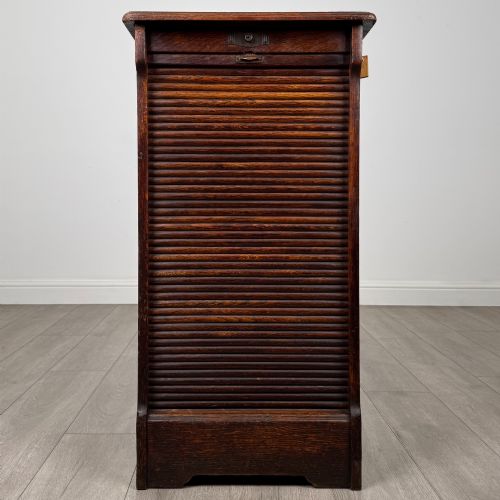


Retro Wooden Shelving
Retro wooden shelving brings practical display and honest twentieth-century craftsmanship into a modern room, offering sturdy utility with a warm, aged grain.
Retro Wooden Shelving
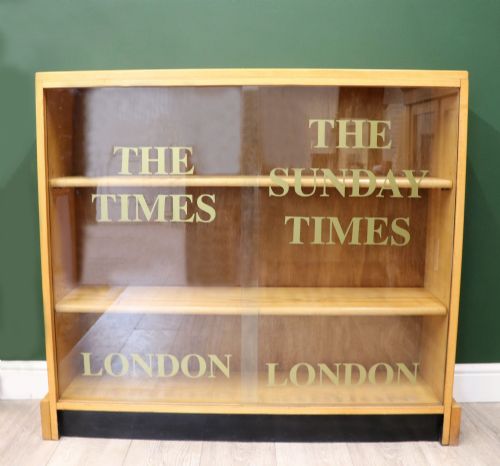
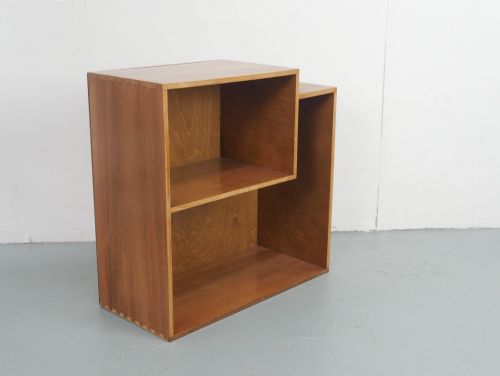
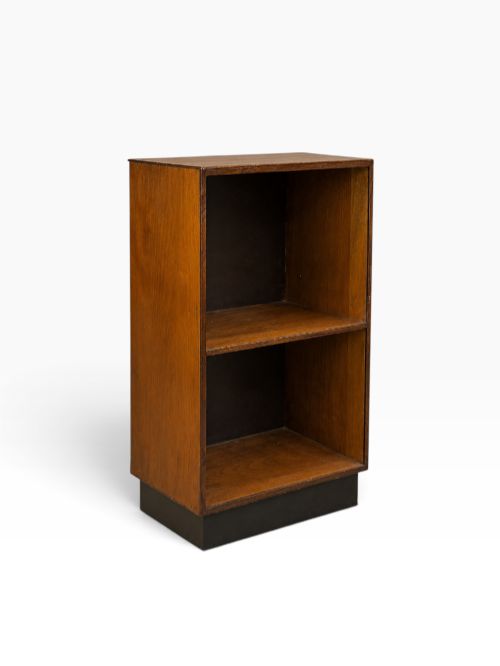
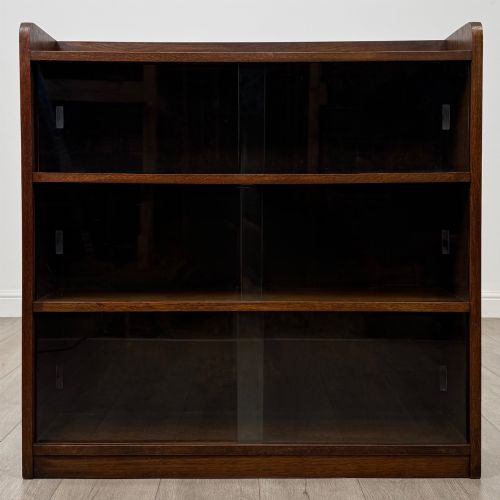
When you search for retro wooden shelving, you are looking at practical storage pieces spanning the Edwardian era through the nineteen-forties. These items range from modular display boxes and sliding glass cabinets to upright bookcases with adjustable shelves.
The most common formats you will meet on this page are upright bookcases and display cabinets, often showing the clean lines of the Art Deco period or the solid utility of Edwardian oak. Many pieces utilise intelligent space-saving mechanisms like tambour doors or stacking box sections.
Origins represented here lean towards British workshop traditions and continental design, taking forms such as breakfront bookcases and shelved cupboards. They offer straightforward storage tailored for books and collected objects.
How they were made
Construction relies heavily on oak, walnut, ash, and plywood, matched with timber framing to support heavy book collections and display items. Wood veneer provides decorative surface patterns on cabinet fronts.
Brass fittings and sliding glass doors appear as functional hardware elements, securing contents while maintaining visual access. Tambour mechanisms utilise narrow wooden slats to create flexible roll-top cabinet closures.
Retro Wooden Shelving Retail Price Guide 2026
Typical asking prices for retro wooden shelving among the pieces listed under this phrase on Sellingantiques today, from the lower quarter to the upper quarter. They describe what is for sale here now, not the wider market.
Materials recorded across these pieces include oak, walnut, ash, timber, plywood, glass, and brass.
What varies in quality
Quality shows in the selection of timber and the precision of the joinery, particularly where shelving must bear substantial weight without sagging. Solid oak and figured ash demonstrate superior material selection compared to simpler utility timbers.
Mechanisms like tambour tracks and sliding glass channels dictate how smoothly a piece operates day-to-day. Thoughtful detailing in cabinet framing separates standard utilitarian storage from pieces bearing maker attributions.
The Retro Wooden Shelving Glossary
- Tambour cabinet
- A storage unit featuring flexible doors made of narrow wooden strips running in tracks. This clever mechanism allows the door to slide out of sight around the side of the cabinet.
- Breakfront
- A cabinet design where the central section projects forward from the flanking outer sections. This architectural arrangement adds depth and visual rhythm to large bookcases.
- Display box
- A modular wooden compartment intended for wall mounting or stacking to display small objects. These versatile units allow flexible arrangements on domestic walls.
- Veneer
- A thin slice of decorative wood bonded over a stable base timber. This technique displays rich grain patterns like walnut without warping.
Retro Wooden Shelving: Frequently Asked Questions
How do I clean old wooden shelving?
Dust surfaces regularly with a dry cloth and occasionally feed the timber with a traditional beeswax polish to nourish the grain. Avoid chemical sprays that strip the vintage finish.
Keep wooden shelving away from direct sunlight and radiators to prevent the timber from drying out and splitting over time.
Are these shelves strong enough for books?
Most pieces were built precisely for heavy libraries, utilising solid oak or reinforced timber frames to support dense rows of volumes. Adjustable shelf supports allow you to configure spaces for larger folios.
Check the thickness of individual shelves and the condition of their internal supports before loading them with heavy textbooks.
What is a tambour cabinet?
A tambour cabinet uses a flexible shutter door made of vertical wooden slats that slide neatly around a curved track. It provides enclosed storage without requiring clearance space for hinged doors.
This mechanism was popular in office and library furniture during the early twentieth century for practical space-saving.
How do I date these wooden pieces?
Dating relies on stylistic clues such as geometric Art Deco veneers, Edwardian brass hardware, and construction methods like exposed dovetails or plywood cores. Comparing the proportion and decorative motifs helps narrow down the decade.
Makers' marks or stamps inside drawers and cabinet backs often provide definitive manufacturing dates and workshop origins.