

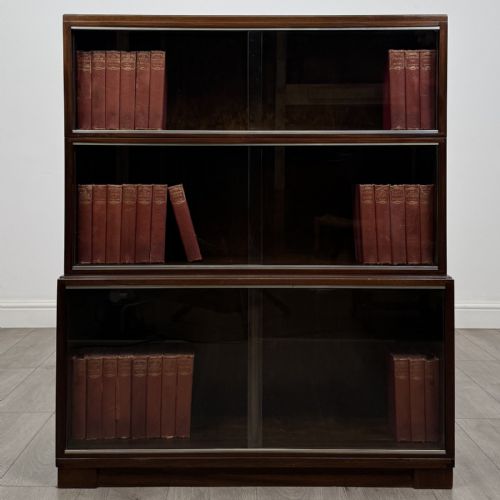
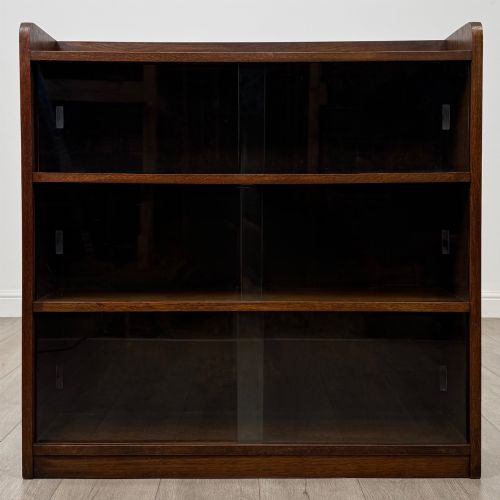
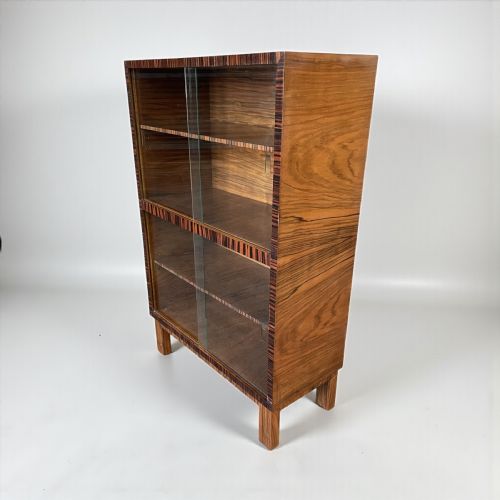


Retro Sliding Glass Bookcase
A retro sliding glass bookcase brings clean lines and visible storage to a room, offering the practical appeal of enclosed shelving with mid-century or earlier character.
Retro Sliding Glass Bookcase
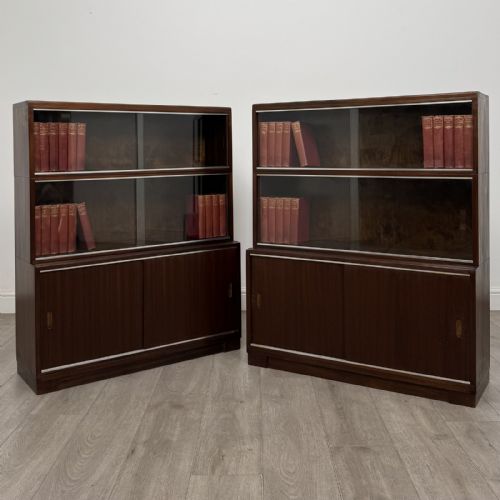
A retro sliding glass bookcase provides accessible shelving protected by glazed panes that glide horizontally rather than swinging outward on hinges. This design saves floor space while keeping dust off books and display items.
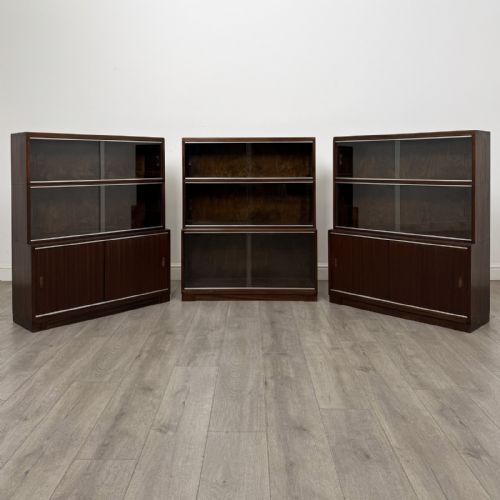
The pieces listed here span the Edwardian period, 1920, 1930, and 1950, taking forms such as single bookcases, display cabinets, and matched sets of multiple cabinets. Styles range from Art Deco and mid-century modern to 20th century British vernacular.
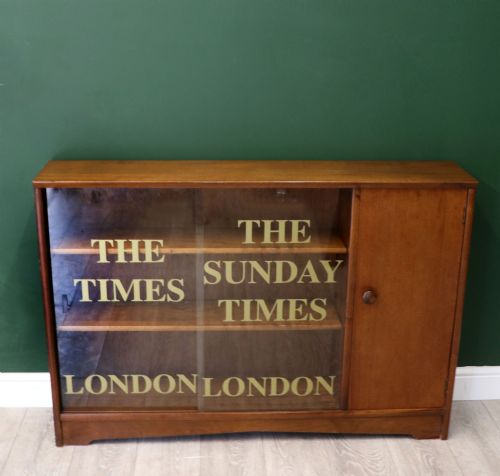
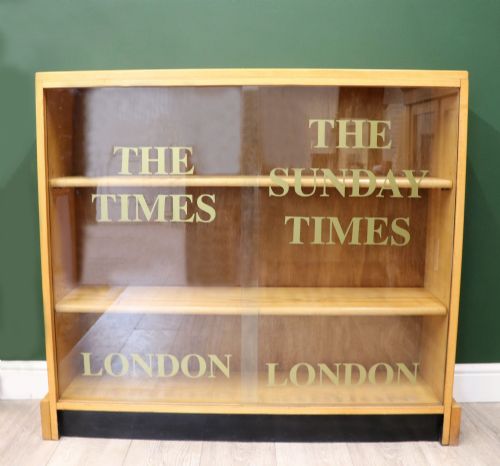
You will encounter single mahogany display cabinets, oak Edwardian pieces, and teak bookcase cabinets by named makers like Herbert Gibbs. Some examples feature applied text from publications such as The Times and Sunday Times.
How they were made
Construction relies on traditional timbers including oak, mahogany, walnut, and teak, frequently enhanced with decorative veneers applied over plywood or secondary woods. Metal components appear in the track mechanisms and hardware supporting the sliding glass doors.
Cabinet makers utilised straightforward joinery to build the main carcass and shelving units, framing glazed panels to slide smoothly within recessed grooves. The glass remains a defining feature, allowing an unobstructed view of the interior contents.
Retro Sliding Glass Bookcase Retail Price Guide 2026
Typical asking prices for retro sliding glass bookcase among the pieces listed under this phrase on Sellingantiques today, from the lower quarter to the upper quarter. They describe what is for sale here now, not the wider market.
Listings incorporate timber varieties such as oak, mahogany, walnut, teak, veneer, and plywood alongside metal and glass.
What varies in quality
The distinction between standard production and finer examples lies in the selection of timber veneers and the precision of the sliding door mechanism. Selected grain patterns in teak, walnut, or mahogany elevate the visual weight of a cabinet.
Origin and maker attribution also differentiate pieces, with marked items from known makers or retailers carrying distinct provenance compared to anonymous production.
Herbert Gibbs·Phoenix Gallery
The Retro Sliding Glass Bookcase Glossary
- Sliding glass door
- A glazed panel that moves sideways within a track to open the cabinet. This setup prevents doors from projecting into narrow rooms.
- Veneer
- A thin layer of superior wood glued to a base panel of lesser quality. It allows for striking grain patterns across flat cabinet surfaces.
- Art Deco
- A design style from the early to mid-twentieth century defined by sleek geometric shapes and streamlined forms. Pieces from this era often favour symmetrical layouts.
- Mid-Century Modern
- An architectural, interior, and product design development that peaked in the mid-twentieth century. It emphasises functional minimalism and warm timber tones.
Retro Sliding Glass Bookcase: Frequently Asked Questions
How do sliding glass doors work?
The glass panes sit in parallel tracks cut into the wooden frame, allowing each door to slide past the other without requiring clearance for hinges.
This mechanism keeps the footprint compact and suits tighter spaces where swinging doors would obstruct movement.
Are these bookcases suitable for heavy books?
Solid wood and veneered shelving structures support standard collections of books, though capacity depends on the thickness of the individual boards and their span.
Heavier volumes sit best on lower shelves, while lighter reading material and display items fit the upper sections.
How do I date a retro bookcase?
Dating relies on timber choices, construction techniques, and stylistic markers such as Edwardian moulding or mid-century teak finishes.
Maker marks, retailer stamps, and applied labels also provide concrete clues to the exact decade of manufacture.
Can I use these cabinets for display?
The transparent glass front makes these units well suited for showcasing collections, ceramics, and glassware alongside reading material.
Enclosing the shelves protects delicate items from dust while keeping them fully visible within the room.