

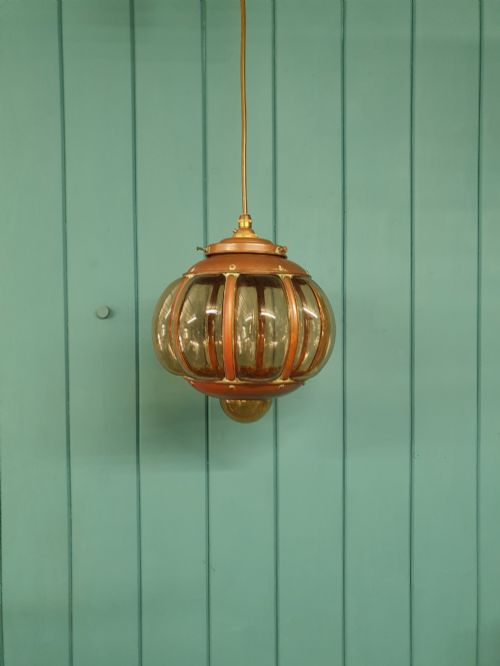
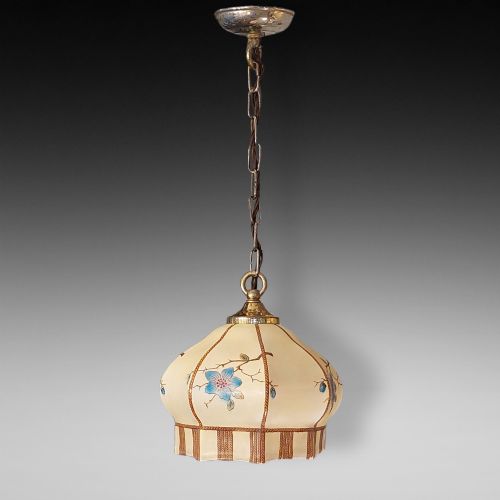
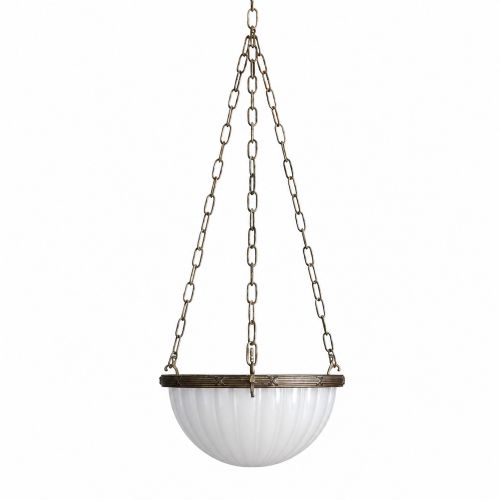
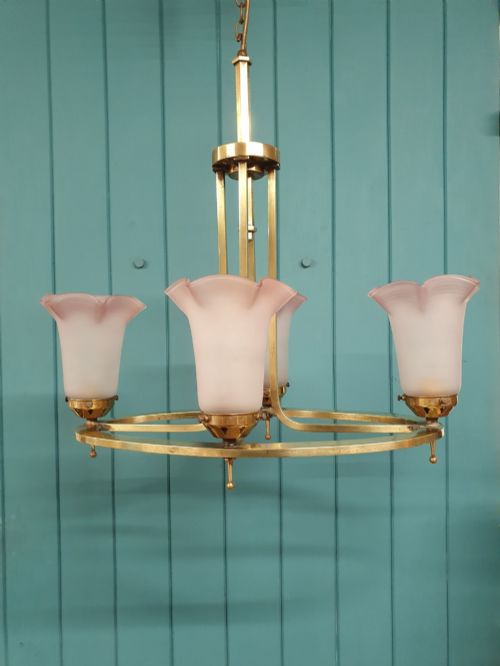


Retro Pendant Shades
Retro pendant shades deliver focused task lighting and distinctive period character through glass, brass and enamel forms.
Retro Pendant Shades
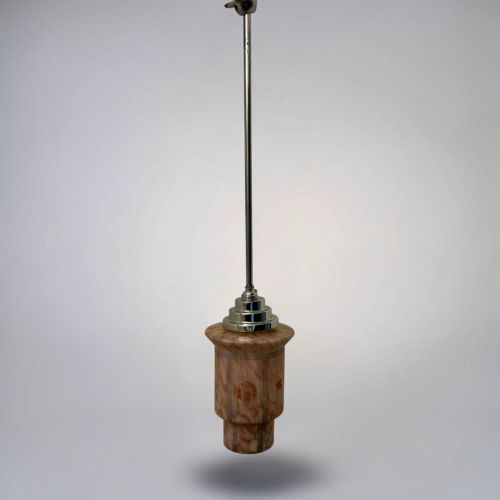
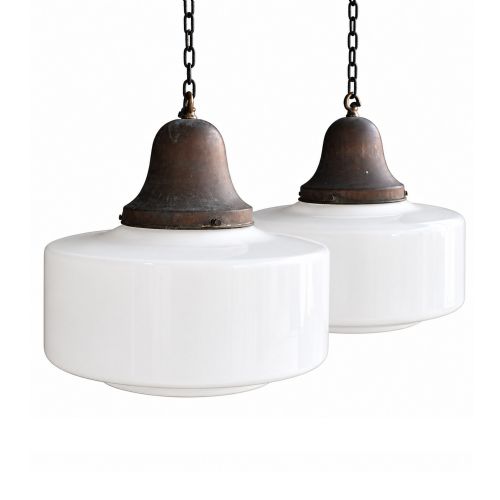
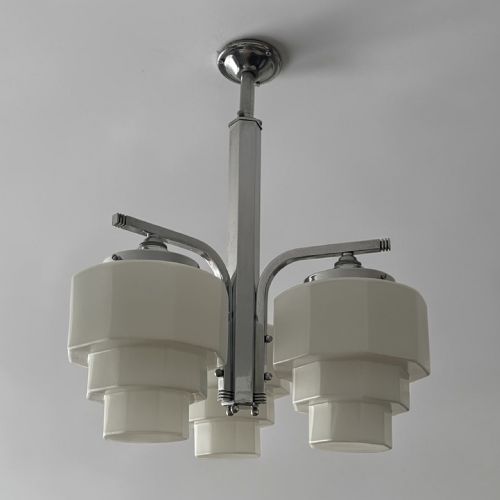
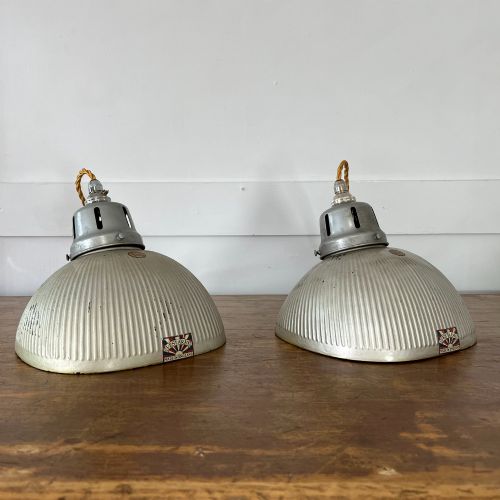
Retro pendant shades encompass ceiling lights, chandeliers and individual lampshades suspended from above, spanning industrial, Art Deco and Edwardian styles. When exploring retro pendant shades, buyers encounter everything from modest glass globes to large church lights and multi-light brass fixtures.
The selection leans heavily toward pieces originating from the 1920s, 1930s and 1940s, alongside earlier Victorian and Edwardian examples. French and English origins appear frequently, bringing distinct regional silhouettes to the category.
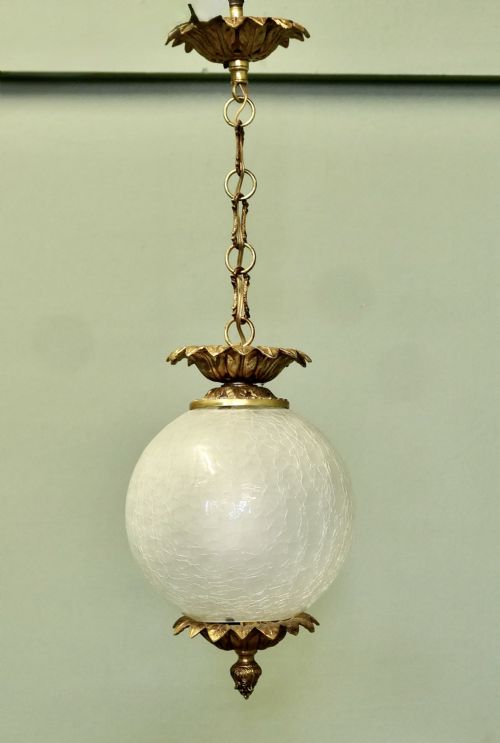
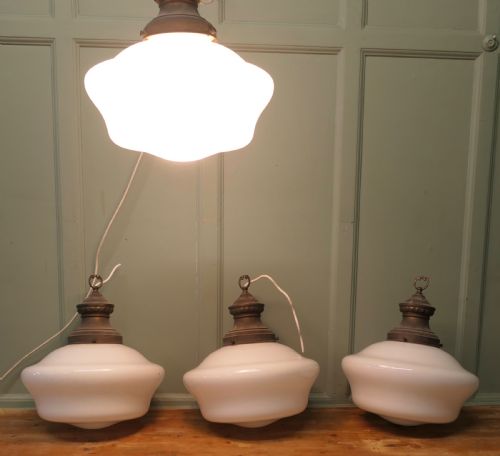
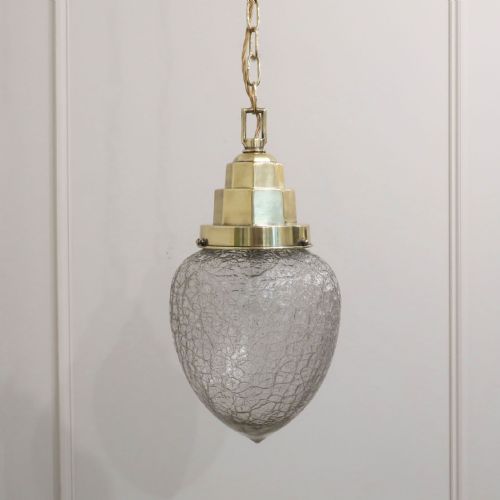
Formats vary from simple conical opaline shades and bell-shaped glass to elaborate chandeliers featuring crackle glass, alabaster dishes and brass galleries. Buyers find both individual statement pieces and matched sets suitable for unified interior schemes.
How they were made
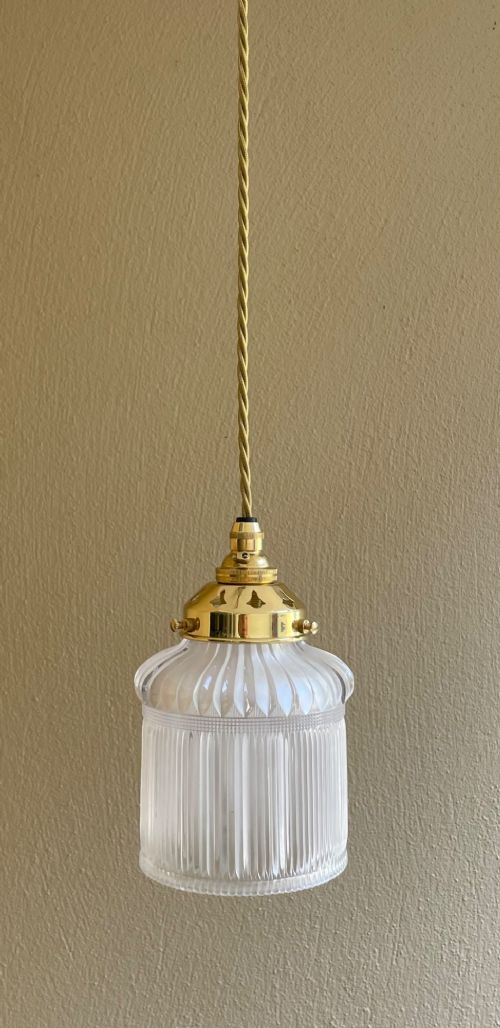
Makers utilised pressed, moulded and hand-painted glass alongside blown opaline, frosted and smoked finishes to diffuse light effectively. Metal components combined spun copper, brass, chrome and heavy enamel steel, often incorporating specialised prismatic glass for commercial and industrial output.
Structural integrity relied on metal galleries, brass frames and copper mounts to secure heavy glass globes and prisms safely. Surface treatments included hand-painted details, crackle effects and polished metal work tailored to domestic and institutional interiors.
Retro Pendant Shades Retail Price Guide 2026
Typical asking prices for retro pendant shades among the pieces listed under this phrase on Sellingantiques today, from the lower quarter to the upper quarter. They describe what is for sale here now, not the wider market.
Object forms range from single conical shades and industrial trade sign lights to multi-light chandeliers and church fixtures.
What varies in quality
Quality reveals itself in the weight and clarity of the glass, whether standard pressed panes or finely moulded opaline and crackle finishes. Superior examples show crisp casting in brass and copper galleries, clean enamel surfaces on industrial fixtures and robust framing that supports multi-light configurations.
The sophistication of the design dictates distinction, separating simple utility fittings from decorative chandeliers by recognised makers featuring alabaster dishes or intricate prism assemblies. Matched sets and large-scale architectural pieces demonstrate higher original manufacturing investment.
Jean Gauthier·Ezanville Ezan·Vestaray·Jefferson
The Retro Pendant Shades Glossary
- Opaline glass
- A milky, translucent glass developed to soften glare while distributing illumination evenly across a room. This material appears frequently in conical, spherical and fish scale pendant shades.
- Plafonnier
- A ceiling light fixture mounted flush or close to the ceiling, often consisting of a decorative glass bowl held by a metal frame. These pieces provide ambient illumination in hallways and principal rooms.
- Gallery
- The metal collar or ring that grips the top of a glass shade and connects it to the suspension rod or flex. Galleries are cast in brass, copper or chrome depending on the period and style.
- Prismatic glass
- Specially moulded glass featuring geometric ribs or prisms designed to refract and direct light efficiently. It forms the basis of functional industrial and commercial pendant lighting.
- Alabaster
- A fine-grained, translucent stone utilised for carved hanging dish lights during the Art Deco period. It offers a soft, diffused glow when illuminated from within.
Retro Pendant Shades: Frequently Asked Questions
What periods do these pendant shades come from?
The listings span the nineteenth century, Edwardian era, and the 1920s, 1930s and 1940s. Art Deco and industrial styles dominate the selection.
Most pieces date from the interwar decades, reflecting the design shifts of that period.
How do I hang a heavy glass shade safely?
Heavier glass shades and multi-light chandeliers require secure ceiling joist attachment and appropriate suspension chains or reinforced brass rods. The metal gallery must securely clamp the collar of the glass.
Professional electrical installation is recommended to support the combined weight of vintage metal and glass components.
Are these lights suitable for low ceilings?
Certain forms like plafonniers and shallow dish lights sit close to the ceiling line, making them practical for restricted vertical spaces. Conical and globe pendants require more headroom.
Adjustable suspension flex allows some drop height customisation during installation.