



Retro Opal Jewellery
Retro opal jewellery brings together colourful fire and mid-century design, offering distinctive rings, pendants and earrings that catch the eye.
Retro Opal Jewellery
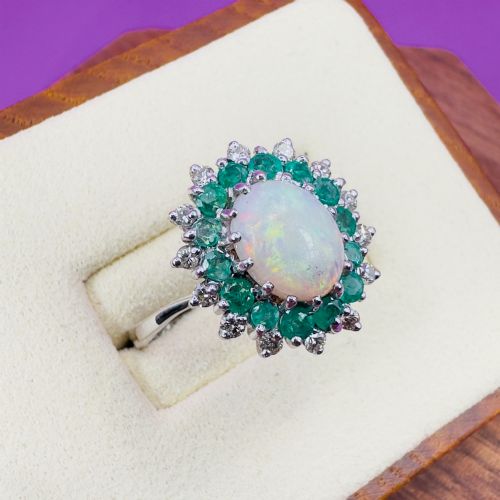
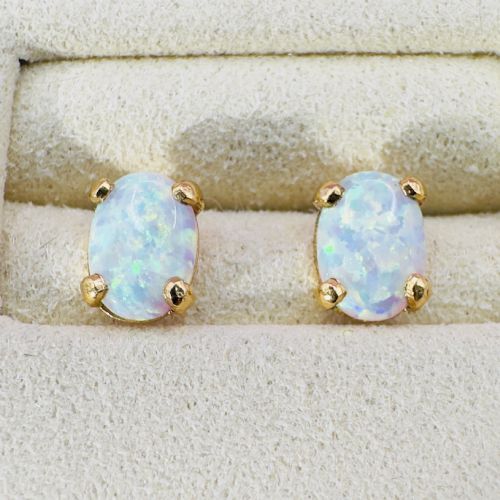
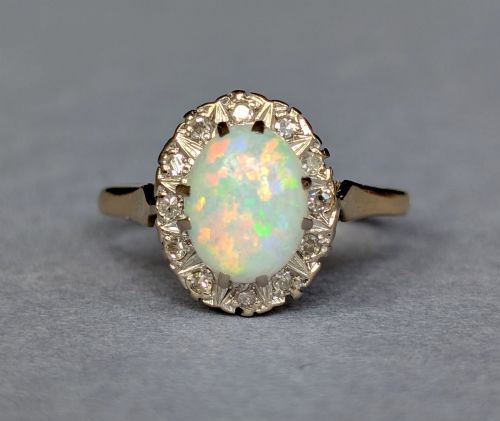
Retro opal jewellery encompasses pieces primarily from the mid-century period, including the 1940s, 1950s and 1960s, alongside select nineteenth-century examples. Buyers searching for retro opal jewellery encounter cluster rings, solitaire pendants, stud earrings and diamond-set bracelets.
The most common forms on this page are rings and pendants fashioned in various gold purities and platinum. These items capture the aesthetic of the mid-century era through bold stone settings and distinct gemstone combinations.
Design characteristics span mid-century modern styles and traditional vintage mountings. Each piece utilises opals as the focal point, often enhanced by diamonds or sapphires to frame the play of colour within the stone.
How they were made
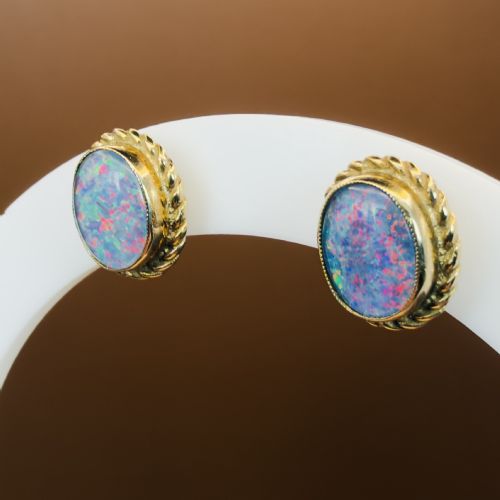
Maker construction relies heavily on precious metals such as 9ct gold, 18ct gold, white gold and platinum to secure the central opals. Artisans formed structural mountings to house both solid opals and black opal doublets safely.
Gemstone integration involves claw and cluster settings where diamonds or sapphires surround the main opal. Jewelers balanced the softer nature of opals with robust precious metal frameworks during the mid-century decades.
Retro Opal Jewellery Retail Price Guide 2026
Typical asking prices for retro opal jewellery among the pieces listed under this phrase on Sellingantiques today, from the lower quarter to the upper quarter. They describe what is for sale here now, not the wider market.
The object types recorded in current inventory include rings, stud earrings, pendant necklaces, and bracelets.
What varies in quality
Quality differences stem from the visual play of colour within the opal itself and the accompanying gemstone carat weight. Pieces featuring larger white or black opals alongside substantial diamond embellishments sit at a different level from simpler solitaire examples.
The choice of metal alloy also defines the standard of a piece, with platinum and 18ct gold mountings representing a higher tier than 9ct gold alternatives. The precision of the cluster arrangement and the overall proportion of the design complete the assessment.
The Retro Opal Jewellery Glossary
- Opal doublet
- A two-layer composite stone consisting of a thin slice of natural opal glued to a darker backing material to enhance its colour play. This technique creates a bolder appearance while utilising less precious rough material.
- Cluster ring
- A ring design featuring a central gemstone surrounded by a geometric arrangement of smaller accent stones, typically diamonds. This style maximises overall visual presence on the hand.
- Solitaire pendant
- A single gemstone suspended from a chain necklace as the singular focal point. It highlights the natural qualities of the stone without distraction from secondary gems.
- Platinum
- A dense, durable and naturally white precious metal used in fine jewellery fabrication. Its strength allows for secure and delicate stone settings.
- Carat
- A unit of weight used for measuring gemstones and pearls. Higher carat weights indicate larger physical stone sizes.
Retro Opal Jewellery: Frequently Asked Questions
What is retro opal jewellery?
Retro opal jewellery consists of decorative accessories produced predominantly during the mid-century period, spanning the 1940s through the 1960s.
These items showcase natural opals set within yellow gold, white gold, and platinum, often accompanied by accent diamonds.
How do I care for my opal ring?
Opals contain water within their structure and possess a lower hardness than diamonds, requiring gentle handling during daily wear.
Avoid exposure to harsh chemicals, extreme temperature changes, and ultrasonic cleaners to preserve the stone.
What is a black opal doublet?
A black opal doublet is a composite gemstone formed by adhering a thin slice of natural opal to a dark base.
This construction method provides the dark background needed to intensify the play of colour visible in the stone.
How do I date mid-century jewellery?
Dating mid-century pieces involves examining the stylistic hallmarks of the 1940s, 1950s, and 1960s design movements.
Specific mounting techniques, metal choices like platinum alongside yellow gold, and documented design eras help establish the period.