



Retro Oak Shelving
Retro oak shelving offers sturdy utility and striking design, bringing practical book storage and clean lines into modern rooms.
Retro Oak Shelving
When you search for retro oak shelving, you encounter practical storage pieces built across the Edwardian period, the 1920s, and the 1930s. These items range from open bookcases and display cabinets to modular units and tambour cupboards.
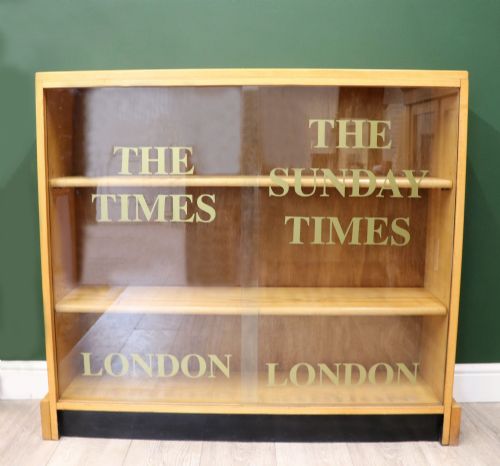
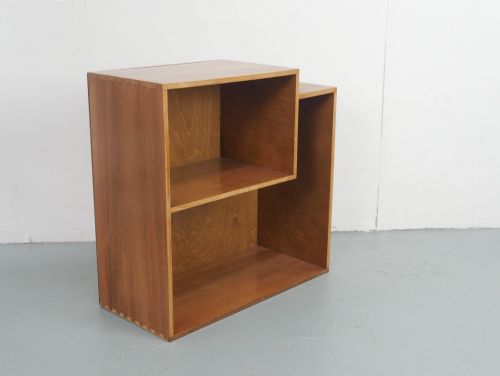
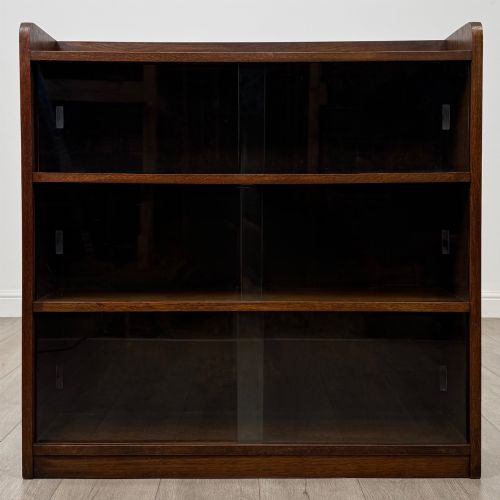
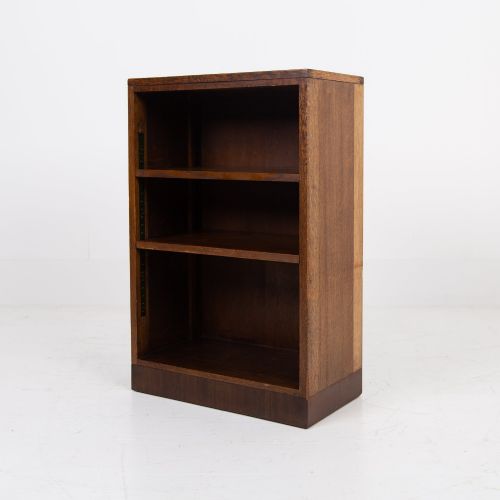
The most common examples on this page are mid-century and Art Deco oak bookcases featuring adjustable shelves, sliding glass doors, or stacked modular sections. Pieces often incorporate walnut, brass hardware, or leather tops alongside the primary oak timber.
These items serve as functional furniture for books and display, combining early twentieth-century British and Danish craftsmanship with distinctive period styles.
How they were made
Cabinet makers constructed these units predominantly from solid oak and oak veneers, frequently pairing the timber with glass panels for display doors and brass for handles and mechanisms.
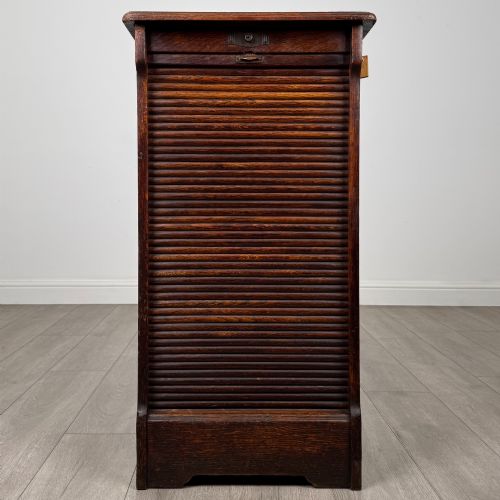
Construction methods include sliding door tracks, tambour slats, and adjustable shelf supports, with select pieces utilising plywood and canvas for internal or backing structures.
Retro Oak Shelving Retail Price Guide 2026
Typical asking prices for retro oak shelving among the pieces listed under this phrase on Sellingantiques today, from the lower quarter to the upper quarter. They describe what is for sale here now, not the wider market.
What varies in quality
Quality rests upon the selection of timber figures, the precision of the joinery, and the integration of secondary materials such as walnut or leather. Pieces exhibiting sophisticated mechanisms like functioning tambour shutters or modular stacking systems stand apart.
The distinction between standard utility items and finer pieces lies in the refinement of the proportions and the quality of the original hardware.
Heals·Globe Wernicke
The Retro Oak Shelving Glossary
- Tambour cabinet
- A storage unit with a door made of narrow wooden slats on a canvas or fabric backing that slides in a track. This clever mechanism allows the door to curve around the side of the cabinet.
- Display cabinet
- A piece of furniture with glass panels designed to showcase books or decorative objects while protecting them from dust. Edwardian and Art Deco examples often feature sliding glass doors.
- Open bookcase
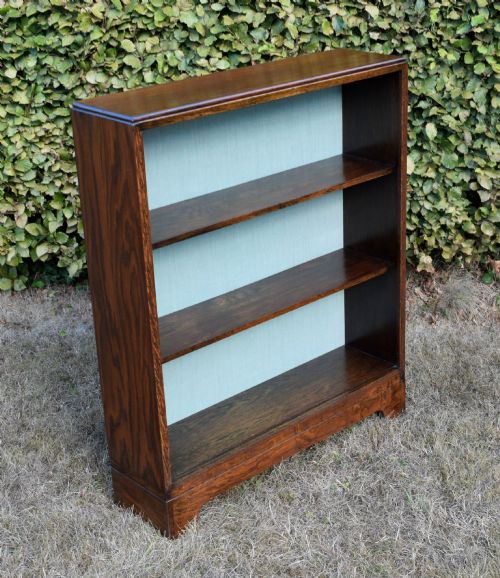
- A shelving unit without doors, providing direct access to the contents. These frequently appear in oak with adjustable internal shelves.
- Modular bookcase
- A stacking system of separate shelving boxes or sections that can be arranged together. Notable examples include Globe Wernicke designs from the 1930s.
Retro Oak Shelving: Frequently Asked Questions
What periods do these pieces come from?
The selection spans the Edwardian era, the 1920s, and the 1930s. You will find items reflecting early twentieth-century British design alongside continental influences.
Art Deco and Mid-Century Modern styles dominate the later decades, bringing distinct geometric lines and practical modular formats to the selection.
How are the shelves adjusted?
Many pieces feature adjustable internal shelving supported by traditional wooden or metal tracks. This allows you to alter the height spacing to accommodate books of various sizes.
Modular units offer flexibility by letting you stack or arrange separate cabinet sections to suit your wall space.
What materials are used besides oak?
While oak forms the primary structure of these pieces, makers often incorporated contrasting materials for visual and functional impact. Glass appears frequently in doors, while brass provides hardware details.
Selected items also feature walnut veneers, leather surface inserts, and fabric or canvas backings on tambour doors.
How do I identify an Art Deco bookcase?
Art Deco bookcases from the 1930s typically feature clean geometric forms, symmetrical lines, and minimal ornamentation. They often utilise rich oak grains and occasionally incorporate sliding glass doors or stacking modular compartments.
Some pieces bear direct stylistic references to prominent makers of the period, such as Heals.