



Retro Geometric Lighting
Retro geometric lighting brings sharp architectural lines and period character into a modern room through striking glass, chrome, and bakelite forms.
Retro Geometric Lighting
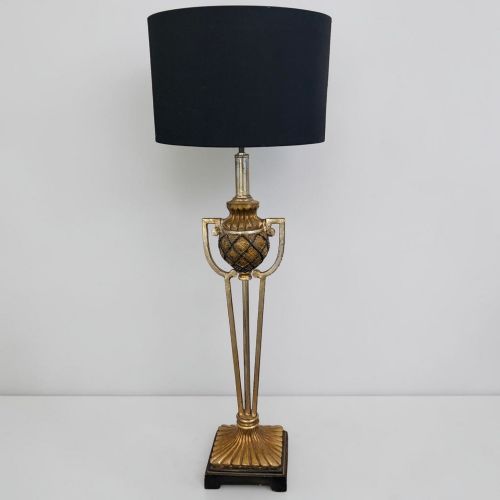
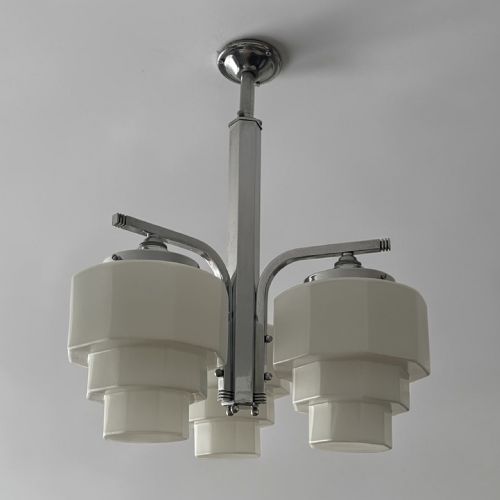
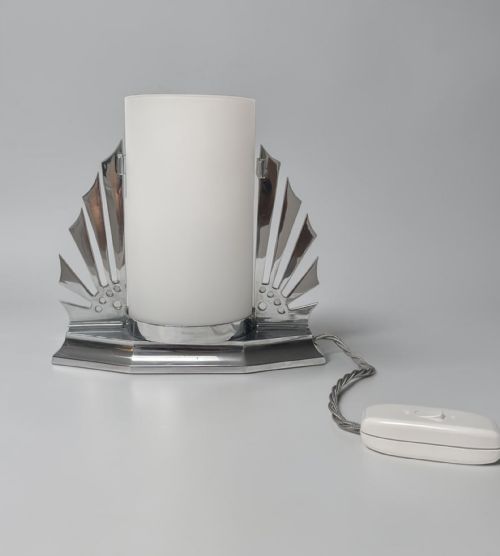
Retro geometric lighting encompasses table lamps, ceiling lights, floor lamps, chandeliers, and pendant lights built with distinct angular and structural profiles. These pieces predominantly date from the 1920s, 1930s, and 1940s, capturing the essence of Art Deco and Mid-Century Modern design movements.
Buyers browsing this selection will most frequently encounter Art Deco table lamps and ceiling lights constructed from moulded glass and metal. The inventory leans heavily towards British and continental pieces that utilise stepped forms, zig-zag motifs, and clean cubic silhouettes.
How they were made
These fixtures combine metals like chrome, brass, and standard metal with heavy glass components, including frosted and moulded varieties. Workshops frequently paired these materials with early plastics such as bakelite and celluloid to create sharp, contrasting details.
Wood elements like walnut, satinwood, and mahogany appear as supportive bases for glass and metal shades, anchoring the linear designs. Construction techniques rely on precise geometric assembly, securing glass shades within chrome or brass frameworks to emphasise clean architectural silhouettes.
Retro Geometric Lighting Retail Price Guide 2026
Typical asking prices for retro geometric lighting among the pieces listed under this phrase on Sellingantiques today, from the lower quarter to the upper quarter. They describe what is for sale here now, not the wider market.
Listings span three distinct decades from 1920 to 1940, uniting Art Deco and Mid-Century Modern aesthetics through glass, chrome, and bakelite.
What varies in quality
The distinction between standard examples and exceptional pieces rests upon the sophistication of the glass moulding and the integration of diverse materials. Superior items feature complex geometric cuts, intricate frosted patterns, or distinctive designer attributions that elevate the structural form.
Material combination also defines the upper tiers of the range, where polished chrome, rich woods like mahogany or walnut, and tactile bakelite are balanced with precision. Lesser pieces rely on simpler metal frames and plain glass without the architectural depth seen in premier examples.
Eileen Grey·Karl Palda
The Retro Geometric Lighting Glossary
- Plafonnier
- A shallow ceiling light designed to sit flush or close against the ceiling surface. These fixtures often feature moulded or frosted glass bowls held by metal mounts.
- Bakelite
- An early form of synthetic plastic utilised for lamp bases and switch housings. It offers a dark, durable finish favoured in interwar manufacturing.
- Standard lamp
- A tall freestanding floor lamp designed to illuminate a larger area of a room. They often feature prominent shafts of wood or metal supporting an upper shade.
- Celluloid
- A historic thermoplastic material used for delicate decorative elements and lamp components. It provides a smooth surface texture characteristic of vintage production.
Retro Geometric Lighting: Frequently Asked Questions
What defines retro geometric lighting?
These pieces are defined by their angular lines, stepped profiles, and structural use of glass and metal. They draw heavily on 1920s and 1930s design principles.
Forms range from flush ceiling fixtures to large floor lamps, all sharing a focus on symmetry and industrial materials.
How do I identify an Art Deco lamp?
Art Deco lamps typically feature repeating geometric motifs, zig-zags, and stepped tiers. Materials like chrome, frosted glass, and bakelite are standard.
Silhouettes are sharp and architectural rather than organic or curved, distinguishing them from later lighting styles.
Where were these lights used?
Original installations included formal reception rooms, offices, and hallways where architectural lighting was a statement feature. Desk lamps served working spaces.
Ceiling lights and plafonniers provided central illumination for rooms with moderate ceiling heights.
How do I style these lights at home?
Pair these fixtures with minimalist or mid-century interior spaces where their linear forms can stand out. They function well as focal points in living areas.
Matching the metal finish, such as chrome or brass, with existing hardware helps integrate the piece into a modern room.