



Retro Display Shelves
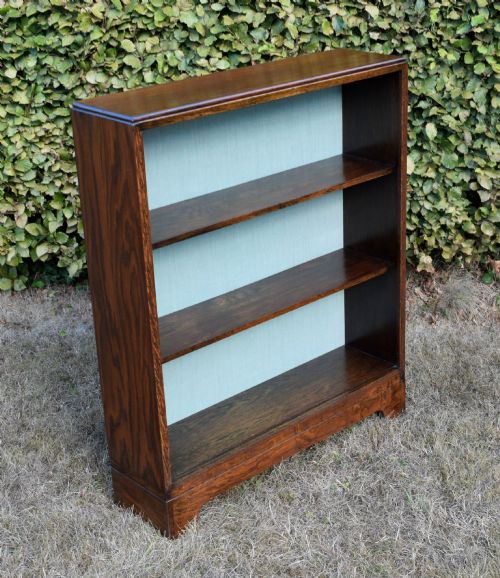
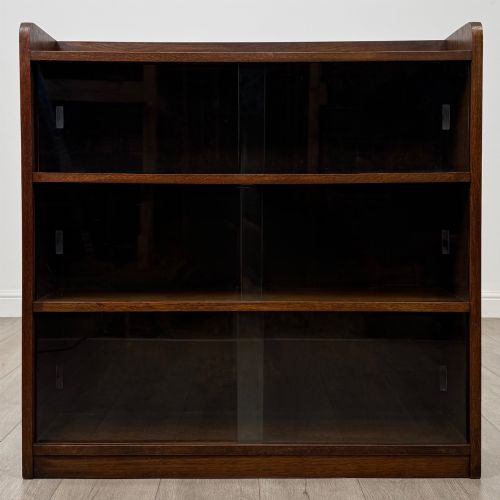
Retro display shelves bring practical storage and period character to a room, offering glazed and open housing for books and objects.
Retro Display Shelves
Retro display shelves encompass bookcases and cabinets originating from the Edwardian period through to the mid-twentieth century. These pieces serve to organise volumes and showcase decorative items behind glass or within open bays.
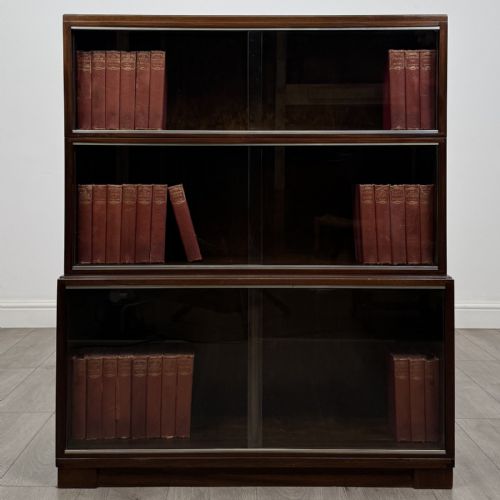
The most frequent examples found under retro display shelves are oak and mahogany bookcases dating from the 1930s. They combine utilitarian storage with the distinct linear characteristics of Art Deco and early twentieth-century design.
How they were made
Cabinet makers incorporated decorative elements like burr walnut veneers, sycamore banding, and brass hardware to elevate standard storage forms. Open shelving formats counterpart enclosed cabinets, relying on solid timber frames and stable jointing.
Retro Display Shelves Retail Price Guide 2026
Typical asking prices for retro display shelves among the pieces listed under this phrase on Sellingantiques today, from the lower quarter to the upper quarter. They describe what is for sale here now, not the wider market.
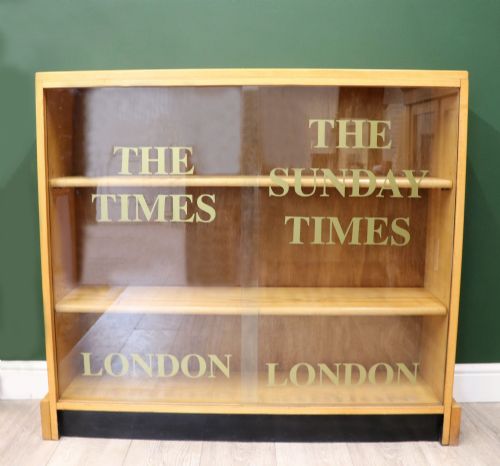
One unexpected interwar bookcase carries later applied press text for The Times and Sunday Times.
What varies in quality
Quality rests upon the selection of timber veneers and the precision of decorative details, distinguishing standard utility furniture from sophisticated workshop pieces. Fine examples utilise figured woods like burr walnut or select ash, paired with considered grain matching across doors and panels.
Structural refinement also marks the difference between tiers, observable in the smooth movement of sliding glass doors and the integration of maker attribution or distinct stylistic execution.
The Retro Display Shelves Glossary
- Art Deco
- A design style from the interwar period characterised by stylised geometric forms, streamlined silhouettes, and rich surface patterns.
- Breakfront
- A piece of furniture where the central section projects forward from the flanking outer wings.
- Sliding glass doors
- Glazed panels moving along tracks to permit access without requiring clearance for hinged door swings.
- Burr walnut
- Timber harvested from walnut tree growths, prized for its swirling, highly figured grain pattern used in decorative veneering.
Retro Display Shelves: Frequently Asked Questions
What periods do these shelves cover?
The pieces span from the Edwardian era through the 1920s, 1930s, and into the 1940s. This timescale covers traditional Edwardian craftsmanship right through to interwar Art Deco production.
Most items concentrate around the 1930s, reflecting the popularity of utility and modernist bookcase designs from that decade.
Are these shelves open or glazed?
Both formats appear regularly across the selection. Glazed options often feature sliding doors to protect books while maintaining visibility.
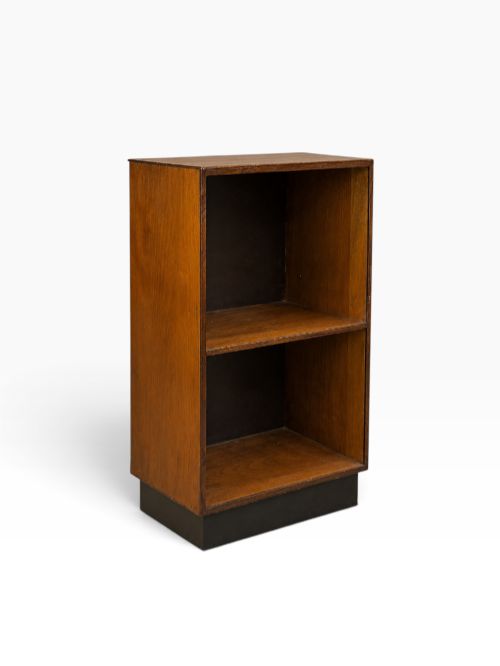
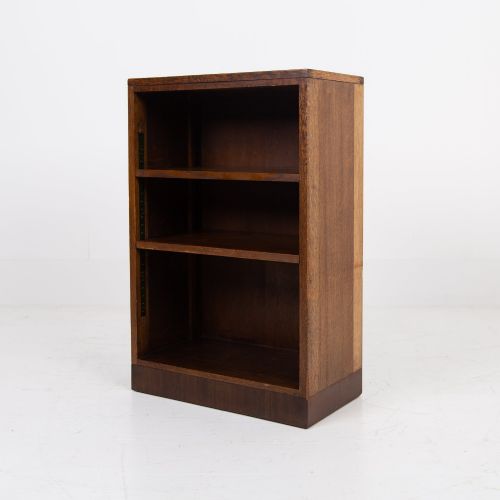
Open bookcases provide immediate access to volumes and usually incorporate fixed or adjustable wooden shelves within a sturdy timber frame.
What woods were commonly used?
Oak and mahogany form the foundation of many pieces, offering durable structures for daily book storage. Ash and timber variants appear alongside them in various formats.
More decorative items incorporate burr walnut and sycamore veneers to create striking patterns on cabinet doors and facades.