







Repousse Mirror Frame
A repousse mirror frame brings tactile metalwork into a room, offering rich chased detail that catches the light.
Repousse Mirror Frame
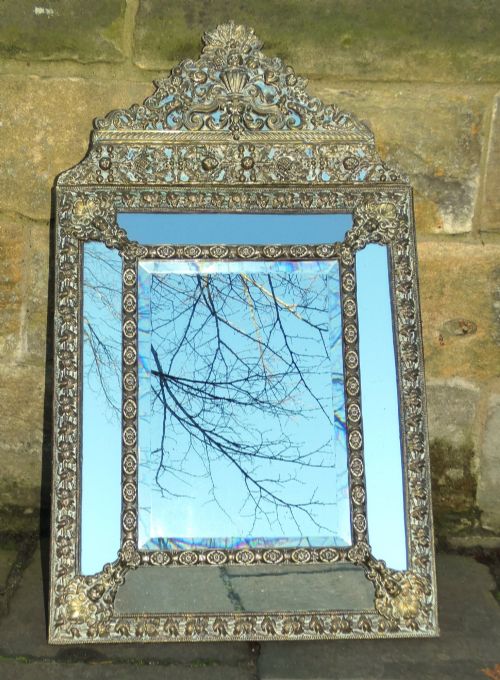
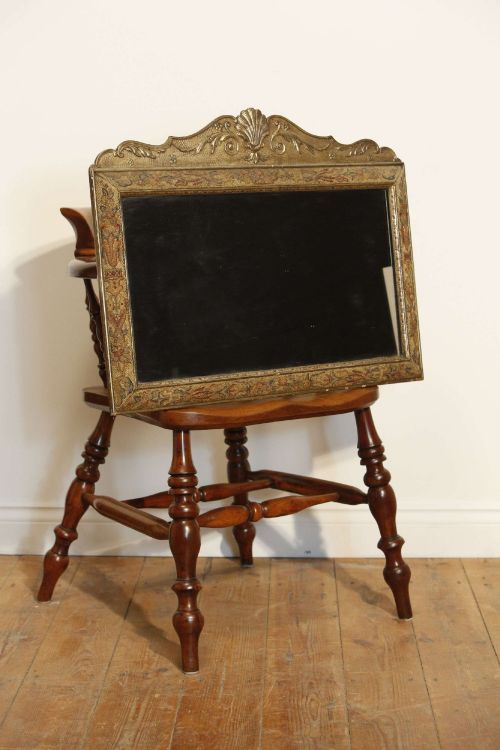
A repousse mirror frame is a wall or dressing table glass surrounded by metalwork beaten from the reverse to form raised patterns on the front. These pieces emerge chiefly from the Victorian and Edwardian eras, spanning the nineteenth and early twentieth centuries.
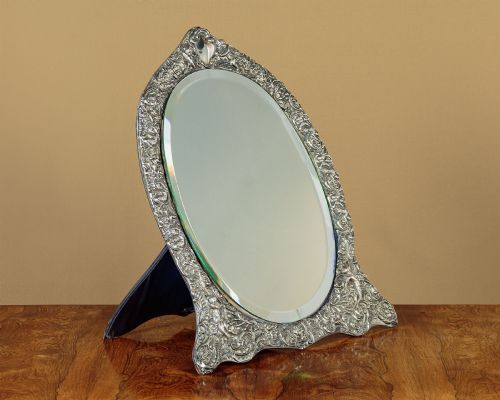
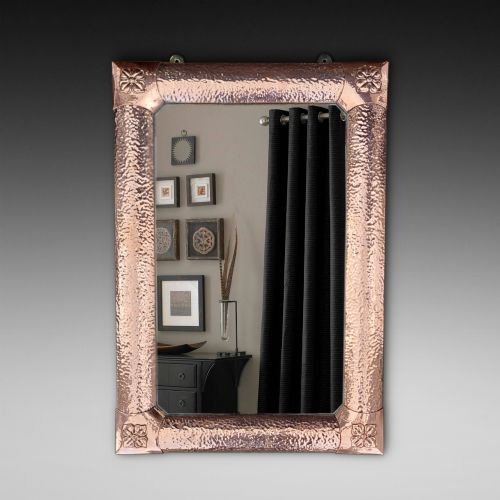
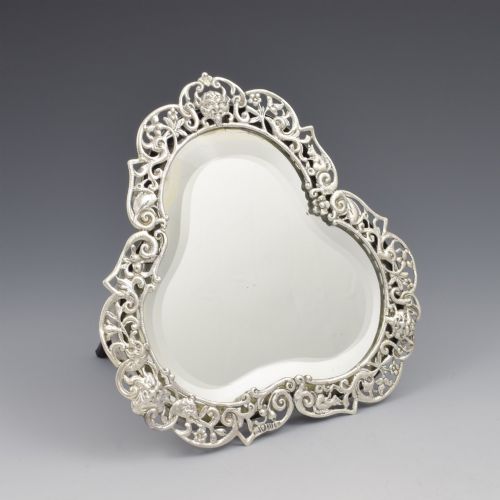
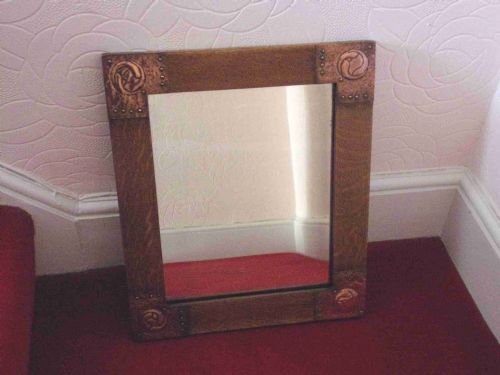
The most common form on this page is the Arts and Crafts copper or brass wall mirror, often featuring hammered surfaces and organic motifs. Alongside these, buyers find sterling silver dressing table mirrors and cushion frames drawing on Flemish or Dutch revival styles.
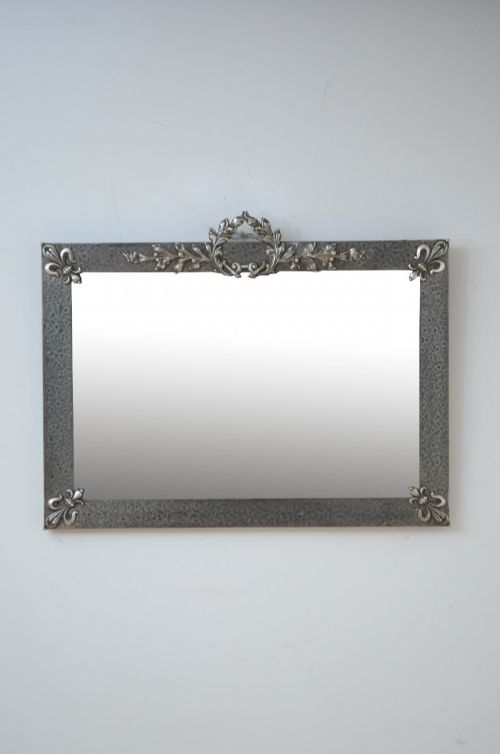
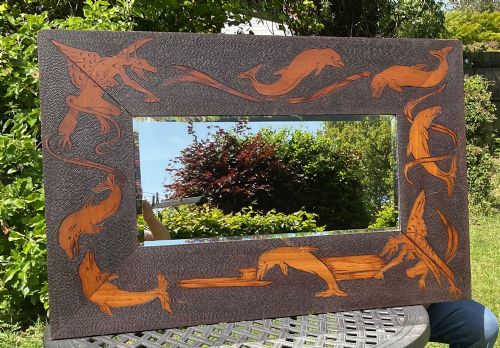
Objects range from small oval and rectangular wall hangings to easel-backed vanity pieces adorned with animals, birds, and Celtic knots. Makers such as Liberty and Co and silversmiths like Henry Matthews appear in the listings.
How metalsmiths shaped the surface
Craftsmen worked sheets of copper, brass, or sterling silver by hammering and punching the metal from behind while it rested on a pitch bed. This repousse technique pushed the design outward, allowing intricate relief work before final hand-chasing on the front face.
Wooden cores or velvet backings often provided structural support to hold the beaten metal frame rigid around bevelled or plain mirror glass. Frames were secured with pins or mounted on wooden panels featuring oak or simpler timber surrounds.
Repousse Mirror Frame Retail Price Guide 2026
Typical asking prices for repousse mirror frame among the pieces listed under this phrase on Sellingantiques today, from the lower quarter to the upper quarter. They describe what is for sale here now, not the wider market.
Object forms range from wall-mounted rectangular mirrors to small easel-backed vanity pieces and circular bevel-edged glasses.
What distinguishes finer examples
Quality rests in the depth and crispness of the hand-beaten relief rather than flat stamping, separating workshop output from mass production. Well-defined motifs like dragons, dolphins, or peacocks demonstrate greater skill in the metalworker.
The integration of the frame with original bevelled glass and sturdy timber or easel backs influences the overall integrity of the piece. Retaining a patinated finish without excessive cleaning preserves the character intended by the maker.
Liberty and Co·Henry Matthews
The Repousse Mirror Frame Glossary
- Repousse
- A metalworking technique where the design is hammered into relief from the reverse side. This creates raised ornamental patterns on the front of copper, brass, or silver frames.
- Bevelled glass
- Mirror glass with edges cut and polished at an angle. This treatment refracts light and adds depth to the appearance of the mirror.
- Easel mirror
- A dressing table or tabletop mirror supported by a hinged prop at the back. It allows the glass angle to be adjusted for grooming.
- Cushion frame
- A convex, rounded frame profile that swells outward toward the outer edge. It is frequently seen in Flemish and Dutch revival styles.
- Arts and Crafts
- A design movement valuing handcraft, natural materials, and vernacular traditions over industrial manufacture. It produced many of the hammered copper and brass frames seen here.
Repousse Mirror Frame: Frequently Asked Questions
How do I hang a heavy metal frame safely?
Wall mirrors with metal frames often carry significant weight from their wooden cores and glass inserts. Secure fixings into wall studs or use appropriate wall anchors suited to the weight of the piece.
Ensure picture wire or mounting brackets attached to the timber backing are robust enough to support the frame securely.
How should I clean tarnished brass or copper?
A gentle dusting with a soft, dry cloth is generally sufficient to remove surface dirt from repousse metalwork. Avoid harsh commercial dips that strip away desirable age patina and flatten the character of the hand-beaten surface.
If polishing is necessary, use a mild cream applied sparingly with a cloth, taking care not to let residue build up in the recessed details of the relief.
What is the difference between Victorian and Edwardian frames?
Victorian examples often lean toward heavy revival styles, featuring elaborate Flemish or Dutch cushion frames in brass alongside ornate sterling silver dressing table pieces. These frequently incorporate deep embossing and dense ornamentation.
Edwardian pieces commonly reflect the simpler, more restrained aesthetic of the Arts and Crafts movement, utilising hammered copper with stylized plant motifs, dragons, or Celtic knots.
Can dressing table mirrors be wall-mounted?
Most dressing table and tabletop mirrors rely on a hinged easel leg at the rear for support on flat surfaces. Converting them for wall hanging requires removing the easel mechanism and attaching secure secure wall-mounting hardware to the frame.
It is usually preferable to keep table mirrors in their original configuration to preserve their structural integrity.