


Repousse Fruit Spoons
Repousse fruit spoons are ornate silver serving pieces decorated with raised fruit motifs, prized by collectors for their intricate craftsmanship and historical charm.
Repousse Fruit Spoons
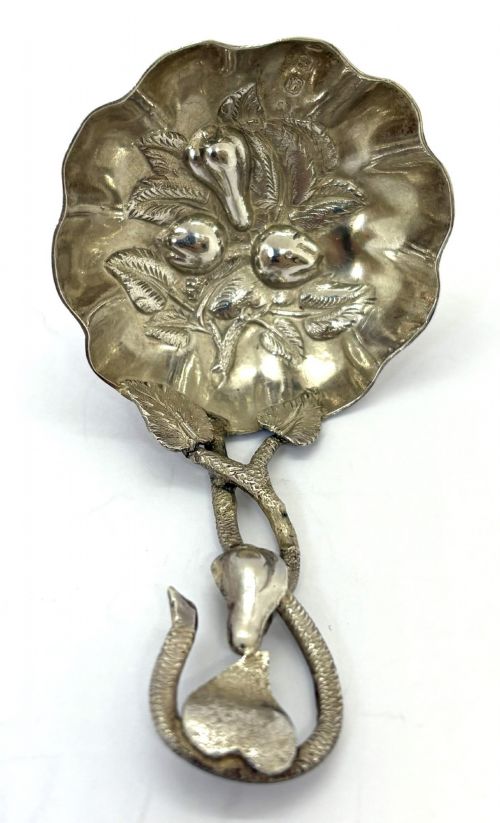
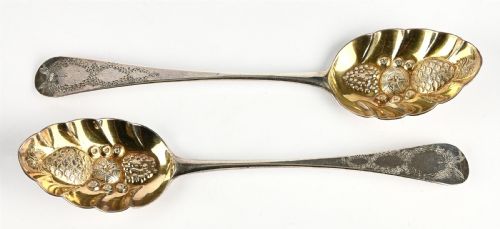
When searching for repousse fruit spoons, you are looking at sterling silver and silver gilt flatware created for serving fruit or berries, often found in matched pairs or boxed sets. These ornate utensils frequently appear alongside related serving items like sugar sifters and dessert spoons.
The pieces on this page span the Georgian and Victorian eras, with dates ranging from the eighteenth century through to the late nineteenth century. You will encounter both individual items and fitted presentation cases lined with silk, velvet, or leatherette.
Most examples originate from English silversmiths and reflect classic Georgian and Victorian design sensibilities. The primary focus centres on serving spoons embellished with detailed repousse work on the bowl and handle.
Materials and construction
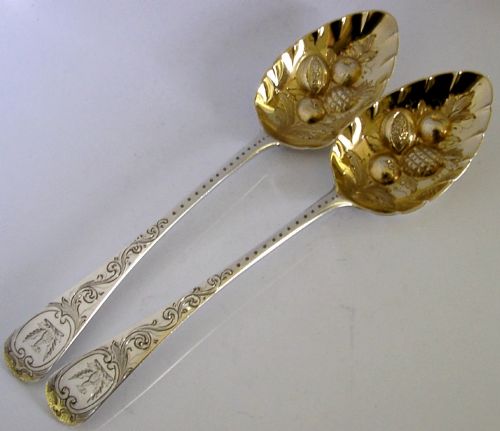
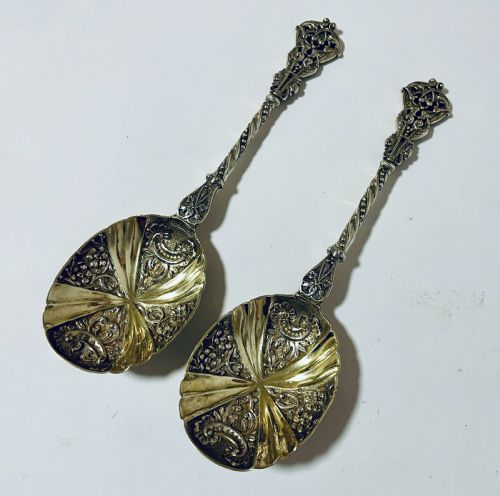
Makers shaped these utensils from sterling silver and silver gilt, utilising hammering and repousse techniques to push the metal from the reverse side and create raised fruit and berry designs. Engraved handles frequently complement the embossed bowl decoration.
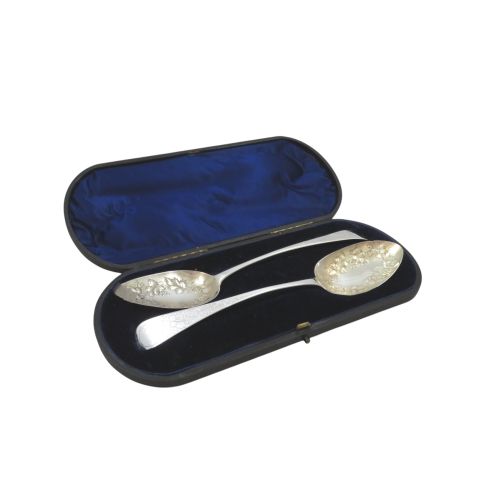
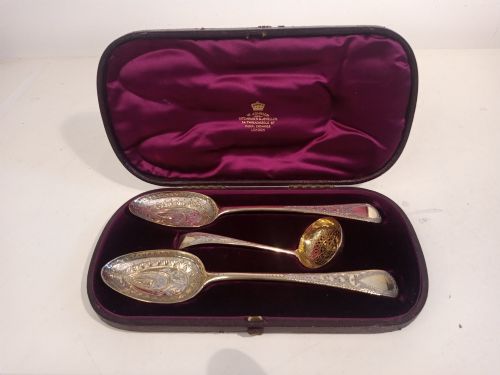
Many of these silver spoons are housed in purpose-built cases lined with velvet, silk, or leatherette. These fitted boxes protected the delicate metalwork and made the sets suitable for presentation or gifting.
The listings on this page span the Georgian and Victorian periods, incorporating materials such as sterling silver, silver gilt, velvet, and leatherette.
Assessing quality and craftsmanship
Quality in these pieces rests upon the crispness and depth of the repousse embossing on the silver bowl. Superior examples display sharp, well-defined fruit motifs that retain their dimensionality rather than appearing flattened through heavy polishing.
The integration of the engraved handle decoration with the embossed bowl indicates the level of artisan skill. Complete, matching pairs and original fitted presentation cases enhance the integrity of the set.
Peter and Anne Bateman·William Chawner II·Fenwick Family
The Repousse Fruit Spoons Glossary
- Repousse
- A metalworking technique where the artisan hammers the metal from the reverse side to form a raised design on the front. This method creates the characteristic fruit and berry ornamentation seen on these spoons.
- Silver-Gilt
- Silver that has been coated with a thin layer of gold on the surface. This finish adds a warm tone to the interior of the spoon bowl.
- Caddy Spoon
- A small specialised spoon originally designed for measuring tea leaves from a caddy. Some variants share the decorative repousse style of larger fruit spoons.
- Sugar Sifter
- A perforated spoon used for dusting powdered sugar over fruit or desserts. These utensils frequently accompany berry spoons in matched serving sets.
- Hallmark
- An official stamp applied to precious metals to indicate the standard of purity and the maker. These marks help verify the period of manufacture.
Repousse Fruit Spoons: Frequently Asked Questions
What were repousse fruit spoons used for?
These spoons were utilised at the dining table for serving soft fruits, berries, and desserts during formal meals.
Their ornate bowls made them well-suited for portioning delicate foods while adding visual elegance to the table setting.
Why do some spoons come in fitted boxes?
Many pairs and sets were originally retailed in presentation boxes lined with materials like silk, velvet, or leatherette.
These fitted cases protected the delicate repousse work from damage and preserved the matched sets together over generations.
How do I distinguish Georgian from Victorian examples?
Georgian pieces generally date from the eighteenth and early nineteenth centuries, displaying characteristic neoclassical or early revival motifs.
Victorian items from later in the nineteenth century often exhibit heavier ornamentation and more elaborate engraving styles on the handles.