






Repousse Copper Frame
These repousse copper frame pieces bring tactile hand-beaten metalwork into domestic spaces, offering sturdy charm for collectors of period interior metalwork.
Repousse Copper Frame
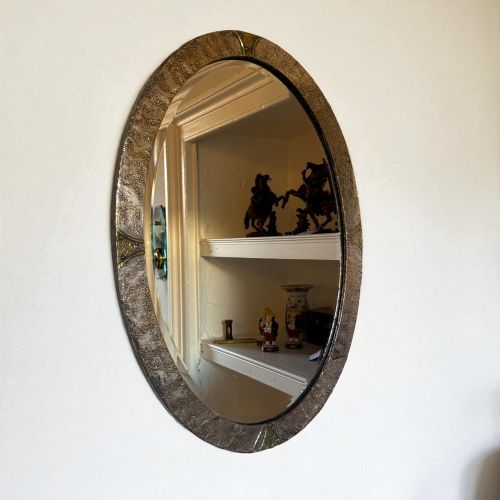
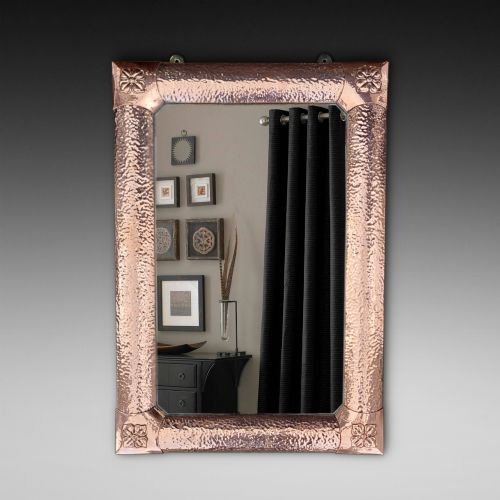
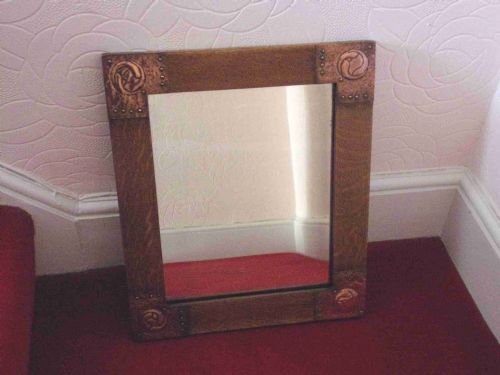
A repousse copper frame brings together hand-hammered metalwork and domestic utility, most commonly seen as wall mirrors originating from the Arts and Crafts period. These pieces frequently incorporate wooden supports like oak, alongside mirror glass or ceramic elements.
The selection ranges from oval and rectangular wall mirrors to wall reliefs, wall art, wall signs, and firescreens. Most examples emerge from the decades around nineteen hundred, carrying the distinct aesthetic of Victorian neoclassical and Edwardian design movements.
How they were made
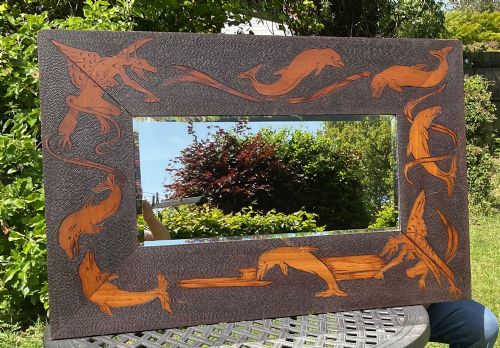
Makers shaped these items by hammering sheet copper from the reverse side to push the metal forward into relief designs. This technique created textured surfaces depicting stylistic motifs, dragons, dolphins, trees, or celtic knots.
Makers mounted these beaten copper panels onto solid timber backings, predominantly oak or other woods, to provide structural rigidity. Additional components such as mirror glass, brass fixtures, and ceramic inserts completed the functional objects.
Repousse Copper Frame Retail Price Guide 2026
Typical asking prices for repousse copper frame among the pieces listed under this phrase on Sellingantiques today, from the lower quarter to the upper quarter. They describe what is for sale here now, not the wider market.
Materials appearing across the inventory include copper, glass, wood, oak, brass, mirror glass, and ceramic elements.
What varies in quality
The depth and definition of the hand-hammered relief work dictate the visual impact of the metal. Sharper, more deliberate tooling distinguishes superior examples from simpler, flatter surfaces.
The integration of the metalwork with its wooden frame or backing determines the overall construction standard. Superior pieces display careful joinery and substantial materials like solid oak rather than basic framing.
Liberty & Company
The Repousse Copper Frame Glossary
- Repousse
- A metalworking technique where the artisan hammers sheet metal from the reverse side to create a raised design on the front. This method gives the copper its characteristic three-dimensional texture.
- Arts and Crafts
- A design movement valuing handcraftsmanship and traditional materials over mass production. Pieces from this style often display visible hammer marks and natural motifs.
- Firescreen
- A decorative panel placed before a fireplace grate when not in use. These objects often combine a solid wooden frame with a beaten copper front.
- Relief
- Sculptural work where the figures or designs project from a flat background. In these listings, copper reliefs depict scenes, animals, or lettering.
Repousse Copper Frame: Frequently Asked Questions
How do I clean a copper frame?
Dust the metal gently with a dry or slightly damp cloth to preserve the aged surface. Avoid harsh chemical polishes that strip away the historical patina.
Allow the natural oxidation to remain, as cleaning away dark areas reduces the visual depth of the hand-beaten relief.
Are these mirrors suitable for bathrooms?
Most of these pieces use older mirror glass and wooden frames that react poorly to high humidity. Placing them in dry hallways or living spaces protects the materials.
Keep them away from direct moisture to prevent the backing wood from warping and the mirror silvering from degrading.
How do I hang a heavy mirror?
Secure the piece using appropriate wall anchors matched to the weight of the timber and metal. Heavy frames require sturdy fixings screwed directly into wall studs.
Check the existing hanging wire or brackets on the back of the frame to ensure they remain strong enough to support the load.
What period do most pieces date to?
The majority of these items date from the late nineteenth century through to the early decades of the twentieth century. This era encompasses the height of the Arts and Crafts movement.
Look for stylistic clues like celtic knots, stylized trees, and hammered textures which typify work from nineteen hundred and surrounding years.