

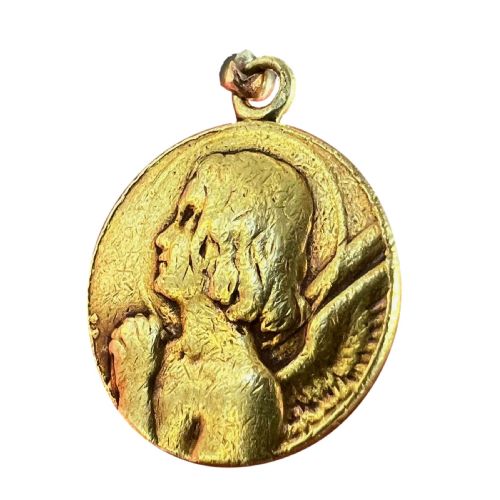
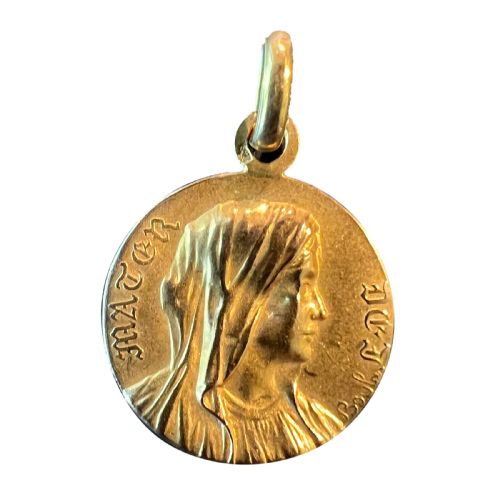
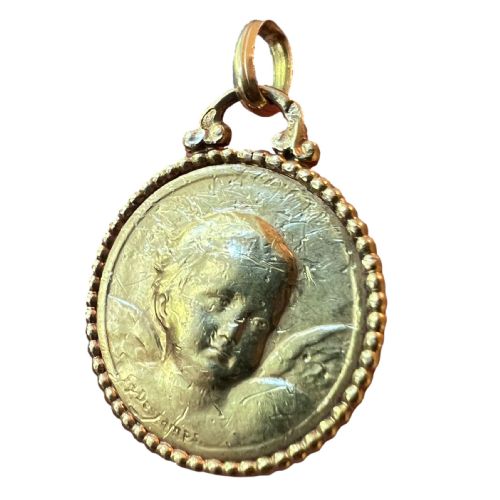
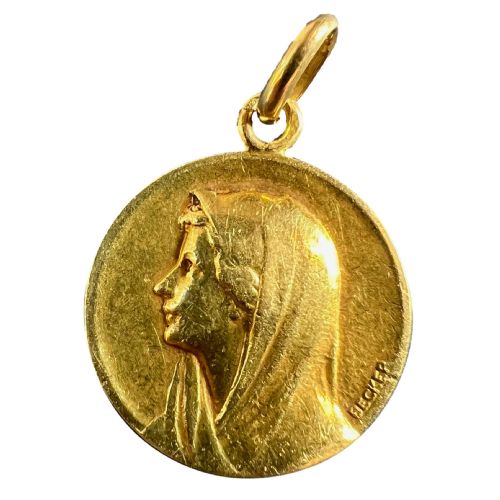
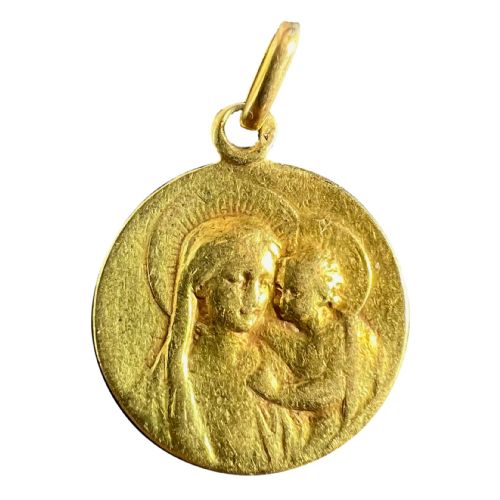
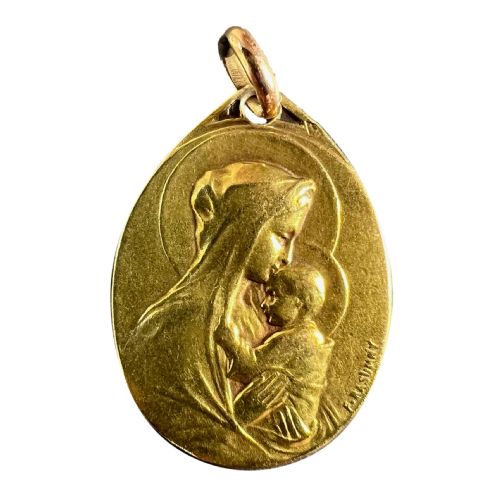
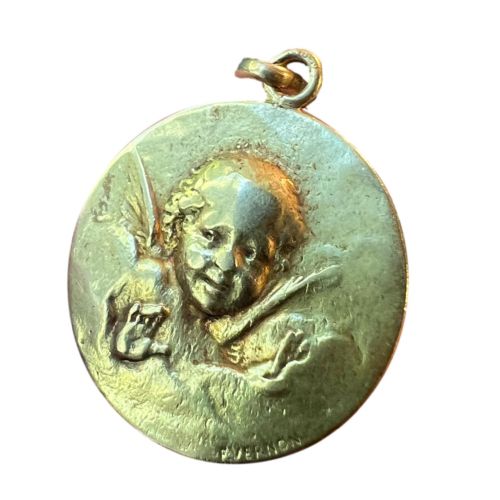
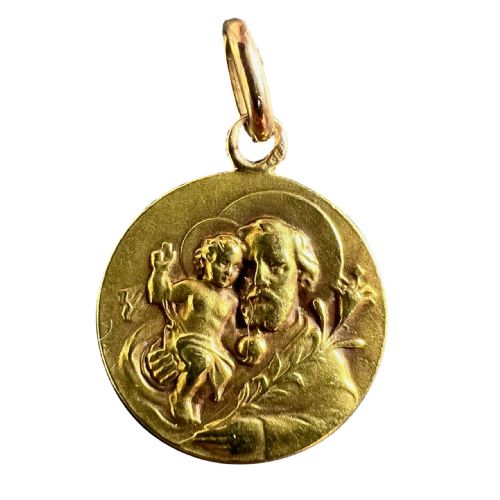
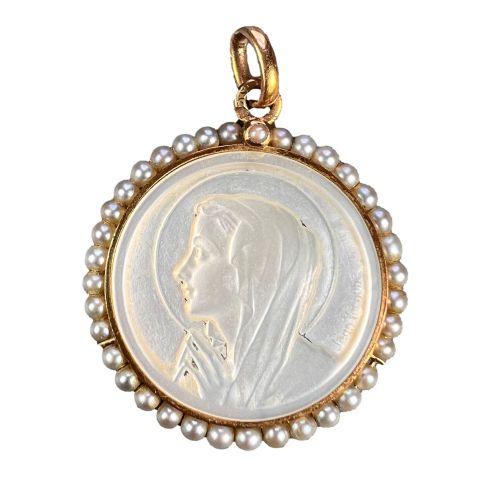


Religious Medal Charm
When you search for religious medal charm, you find small devotional tokens cast in gold that combine sacred imagery with miniature scale.
Religious Medal Charm
A religious medal charm bridges personal devotion and miniature jewellery, taking the form of small pendants worn close to the body. Most examples seen here originate from French workshops spanning the late nineteenth century through to the middle decades of the twentieth century.
The objects combine medal and charm formats, functioning as devotional markers that double as everyday wearable pieces. Pendants and medallions appear frequently in yellow gold, rose gold, and occasionally white gold, often paired with devotional figures.
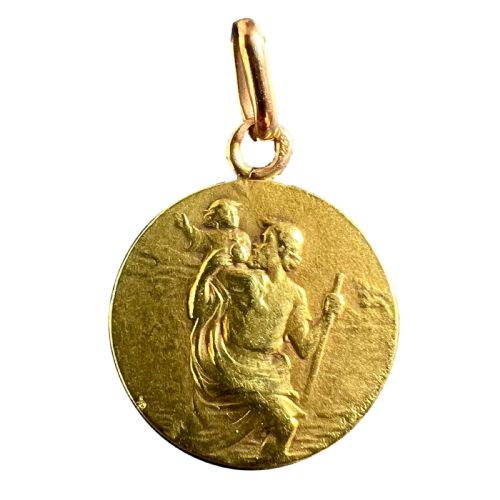
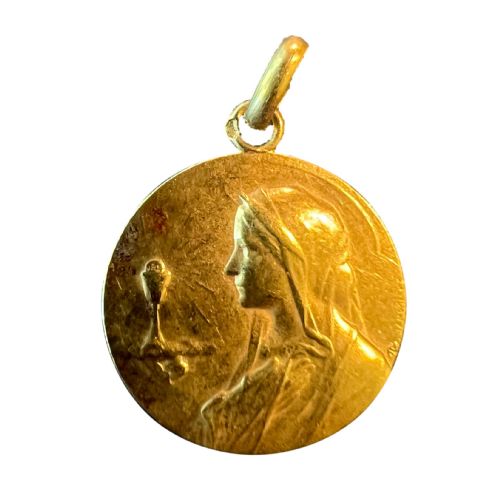
Subjects centre upon the Virgin Mary, various saints including Christopher and Joseph, and angelic motifs such as cherubs. These pieces emerge from periods encompassing Art Nouveau, Belle Epoque, and Art Deco design movements.
Materials and construction techniques
Goldsmiths utilise eighteen-karat yellow, rose, and white gold to cast and stamp these diminutive devotional objects. Precious metals form the structural base of each medal, providing a durable ground for intricate relief work.
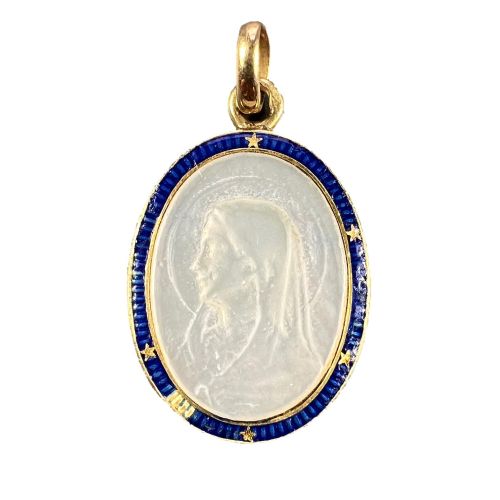
Craftsmen integrate mother of pearl, enamel, and seed pearls to add colour and texture to the metallic surfaces. Plique-a-jour enamel and miniature gemstone settings appear on select pieces, catching light through translucent coloured glass partitions.
Religious Medal Charm Retail Price Guide 2026
Typical asking prices for religious medal charm among the pieces listed under this phrase on Sellingantiques today, from the lower quarter to the upper quarter. They describe what is for sale here now, not the wider market.
Distinctions in craftsmanship
The integration of decorative elements such as plique-a-jour enamel or inset seed pearls separates standard production pieces from finer artisan outputs. Superior items maintain intact enamel work and balanced proportions across both sides of the medallion.
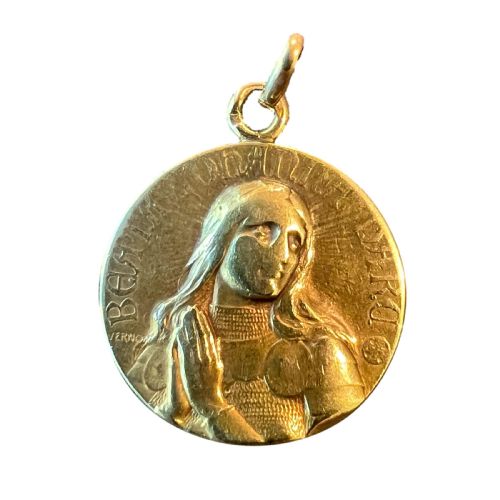
Vernon·Descamps·Rasumny·Jampolsky·Emile Monier·Paul Brandt·Mazzoni·Pageli Perriat·Dropsy·Guilbert·Sellier·Ovide Yencesse·Tairac
The Religious Medal Charm Glossary
- Plique-a-jour
- Enamelling technique where transparent enamel is fired within a wire frame without a backing, creating a stained-glass effect. Light passes directly through the coloured compartments.
- Medallion
- A large metal coin-like pendant struck with a commemorative or devotional design. These objects carry religious iconography intended for personal protection or remembrance.
- Mother of pearl
- The iridescent inner layer of mollusc shells used as a backing material for carved devotional scenes. This organic substance creates a shimmering background behind gold figures.
- Seed pearl
- A tiny natural or cultured pearl used in clusters or borders around a central medallion. These small pearls accent the outer edges of devotional pendants.
Religious Medal Charm: Frequently Asked Questions
What is a religious medal charm?
A religious medal charm is a small devotional pendant struck in gold, featuring sacred figures such as the Virgin Mary or various saints. These objects served as personal talismans of faith and protection.
Craftsmen designed them to be worn daily on chains or charm bracelets, combining miniature sculptural art with religious devotion.
How do I identify the period?
Periods are identified through stylistic cues such as flowing Art Nouveau linework or geometric Art Deco borders. Hallmarks stamped onto the gold also indicate the country of origin and purity.
French pieces from this category frequently bear maker marks and eagle head assay stamps corresponding to late nineteenth and early twentieth-century production.
Were these worn daily?
These medals were intended for regular personal wear, often attached to charm bracelets or suspended from necklaces as daily devotional reminders. Their durable gold construction suited constant contact with the skin.
Over decades of use, delicate details on the high relief surfaces softened slightly through natural handling and friction.
What materials are common?
Eighteen-karat yellow and rose gold form the primary structure for these devotional charms. Artisans frequently added secondary materials like mother of pearl and enamel to enhance the visual depth.
Seed pearls and plique-a-jour enamel appear on select pieces, adding translucent colour and tactile borders to the central gold figures.