
Regency Sofa
A regency sofa brings architectural line and figured timber to a room, offering the unmistakable profile of the early nineteenth century.
Regency Sofa
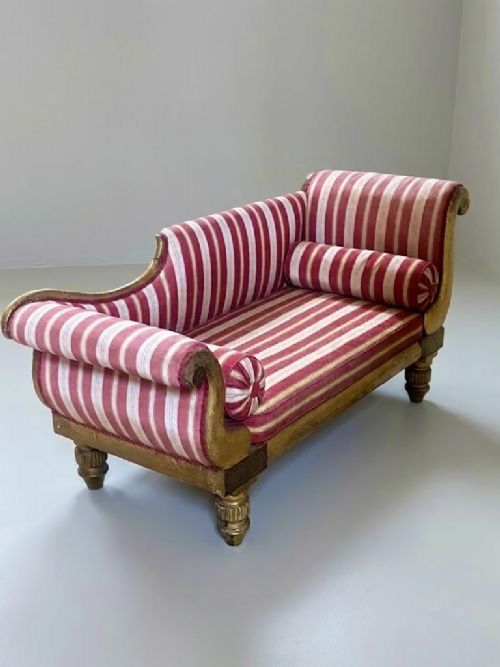
A regency sofa sits among the most sculptural seating forms of the early nineteenth century, combining classical restraint with rich cabinet timbers. When searching for a regency sofa, buyers encounter pieces defined by scrolling ends, bold mahogany or rosewood grains, and supportive daybed frames.
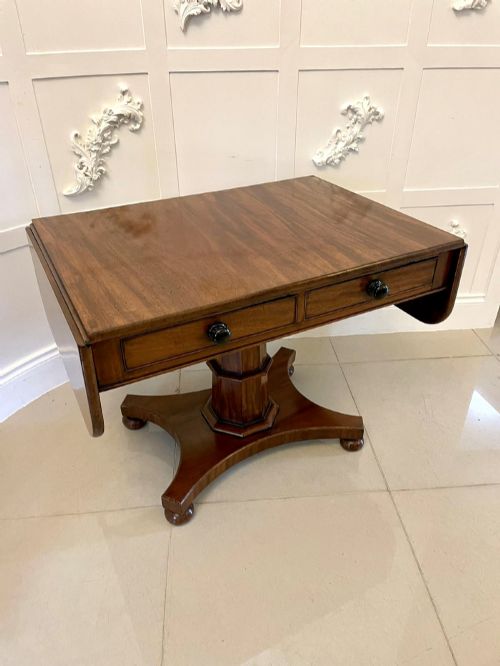
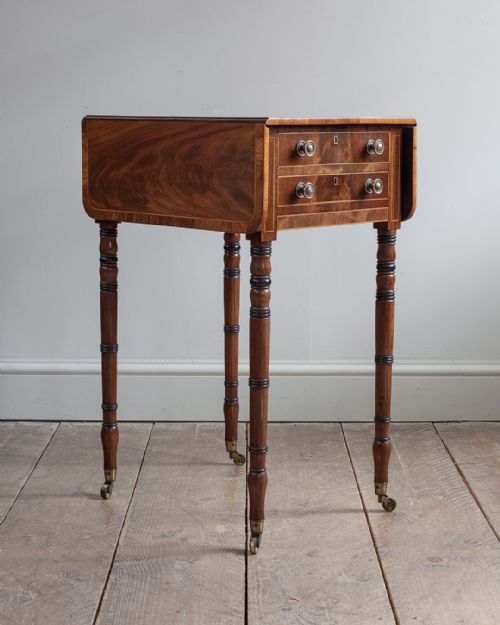
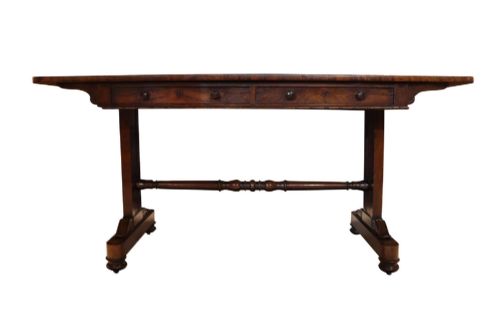
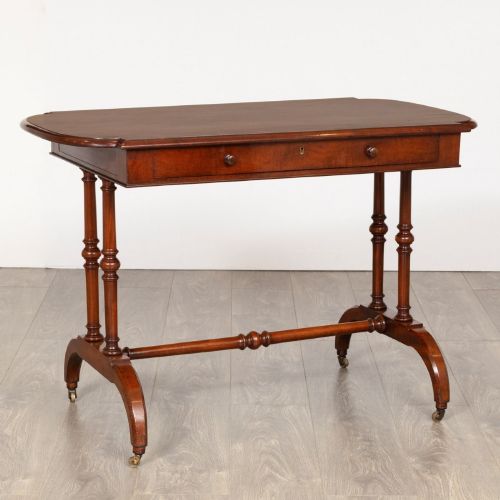
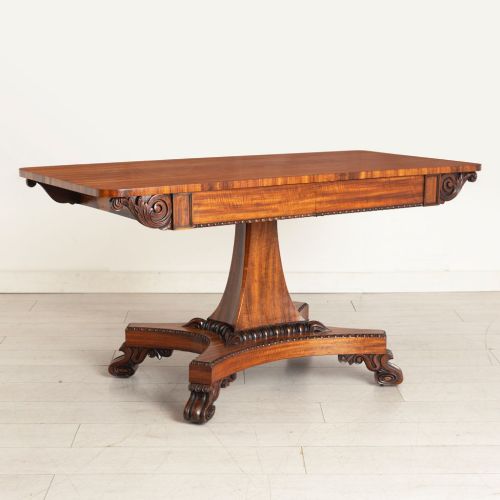
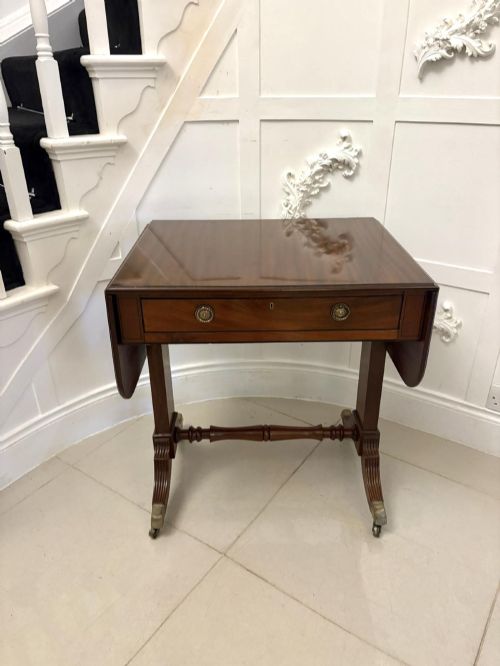
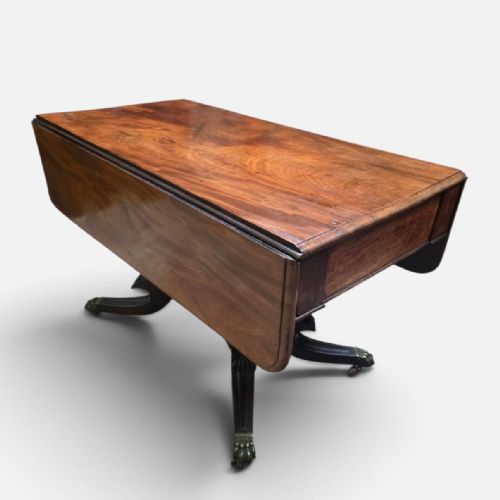
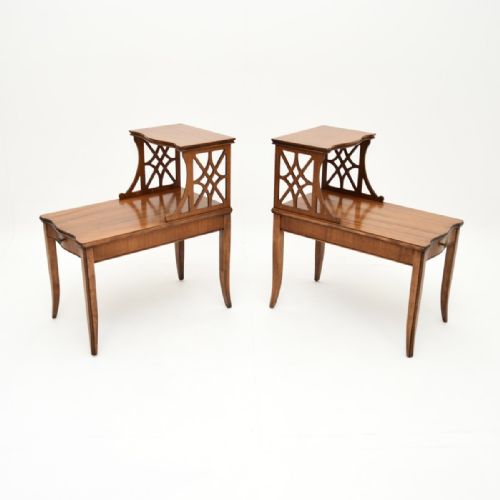
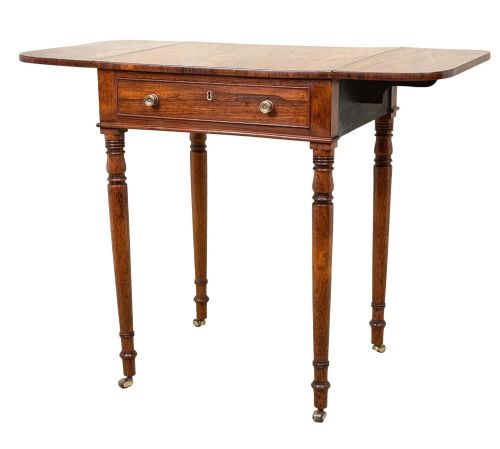
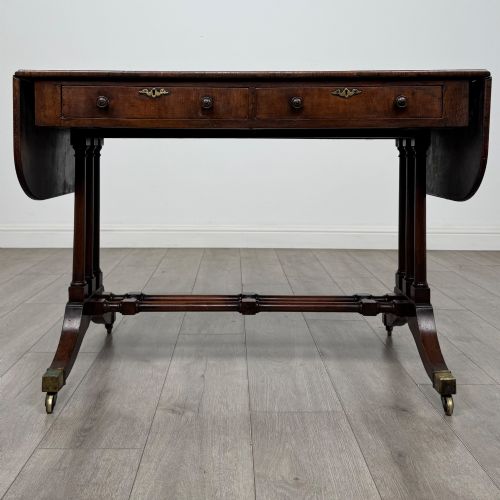
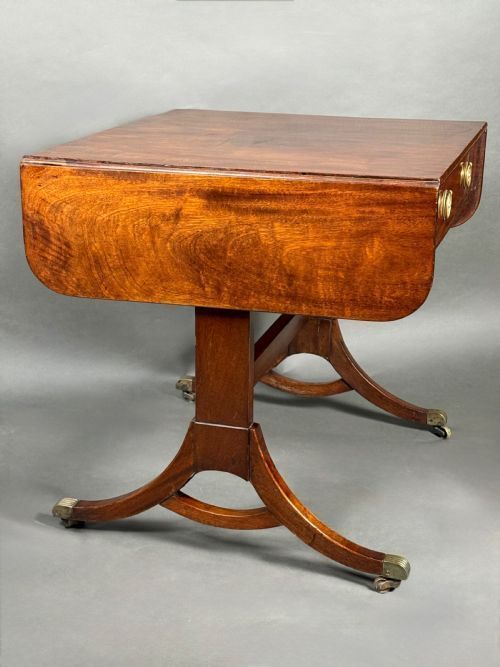
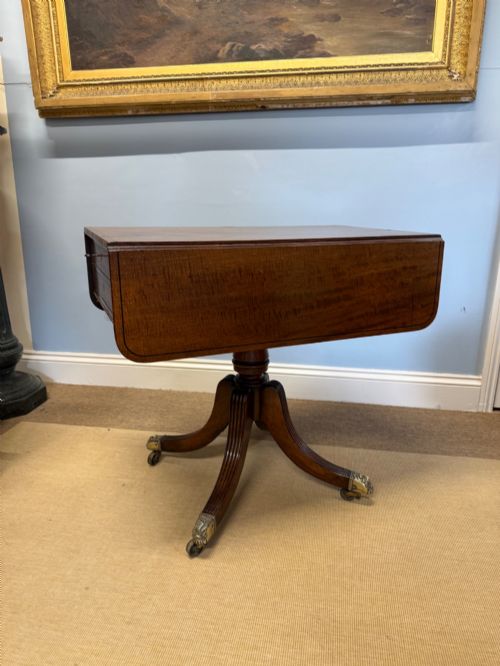
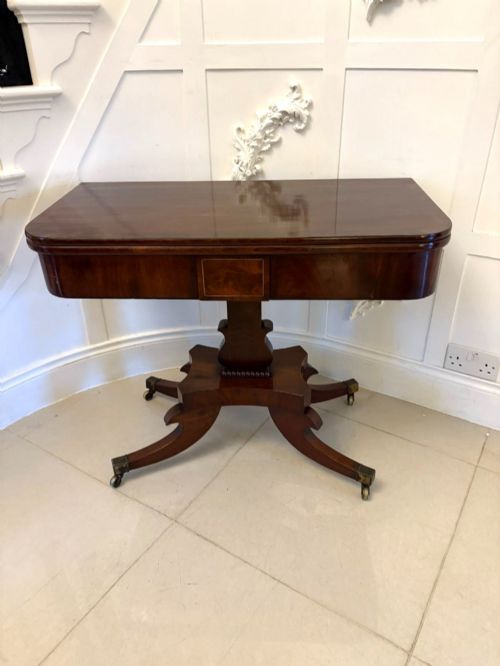
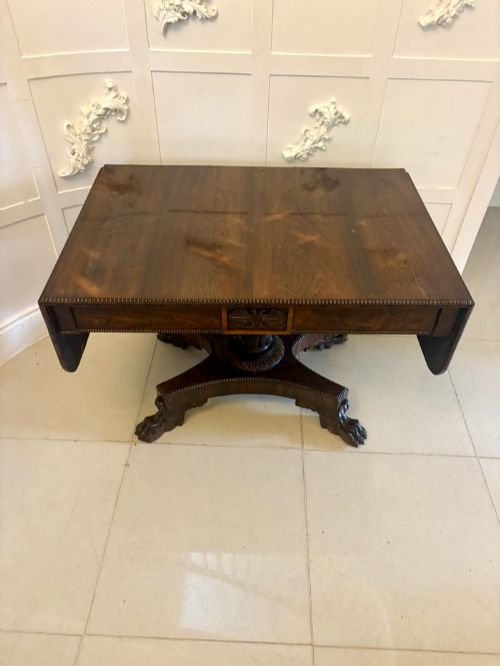
The selection on this page extends across the broader family of period seating and related library furniture. Alongside actual settees and daybeds, the titles include drop-leaf sofa tables, library tables, and chaise longues sharing the exact vocabulary of the period.
Most pieces date from the early decades of the nineteenth century, built during the Regency, William IV, and George IV reigns. Later revivals from the Victorian and Edwardian eras also appear, matching the classical proportions of the original designs.
Materials and Construction
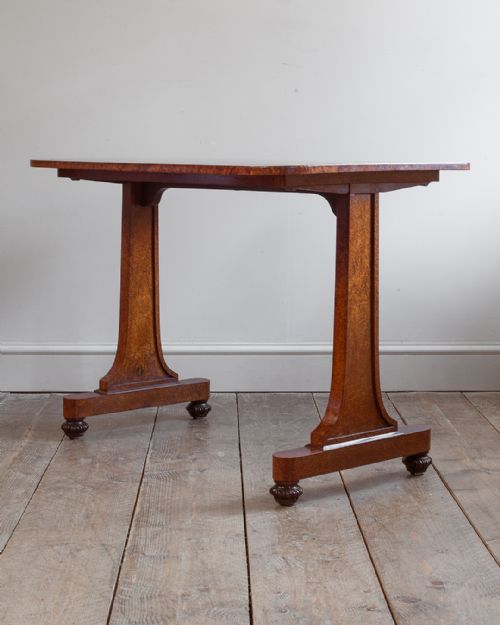
Cabinet makers relied heavily on solid and veneered mahogany, rosewood, and satinwood to build these forms. Flame mahogany and figured timber surfaces were chosen for their deep grain patterns, often highlighted with brass inlay or giltwood details.
Structural integrity relied on pegged joinery and sturdy subframes of secondary woods like pine or oak. Drop leaves on tables and scrolling wooden frames on daybeds required precise carpentry to handle movement in the timber over time.
Evaluating Quality
The distinction between ordinary and exceptional pieces rests in the choice of timber and the crispness of the carving. Finely figured flame mahogany or tropical hardwoods like gonçalo alves elevate a piece far above standard domestic items.
Proportion and the handling of classical details dictate the standing of a design. Sharp scroll ends, well-integrated brass inlay, and balanced freestanding proportions separate master workshop production from later commercial copies.
The Regency Sofa Glossary
- Sofa table
- A freestanding centre table with drop leaves at either end, originally designed to stand before a sofa.
- Chaise longue
- An upholstered daybed with a raised headrest or single scrolling end for reclining.
- Flame mahogany
- Timber cut to expose a distinctive ripple or flame-like pattern in the grain figure.
- Giltwood
- Timber coated with a thin layer of gold leaf, frequently used to highlight carved mouldings.
- Scroll end
- A sweeping, outward-curved terminal typical of armrests and couch ends from this period.
Regency Sofa: Frequently Asked Questions
How do I spot a true period piece?
Examine the secondary woods inside drawers and beneath frames, as period pieces utilise timbers consistent with early nineteenth-century workshop practices. Construction methods should show hand-cut joints rather than modern machine fixings.
Surface patination develops naturally over decades of polishing. Look for soft wax accumulation in the grain rather than thick modern varnishes.
Where should I place a sofa table?
These versatile pieces suit placement behind a sofa, against a wall, or freestanding in the centre of a room. Because the backs are finished to the same standard as the fronts, they look correct from any angle.
Drop leaves allow the surface area to expand when needed and fold down to save space in smaller drawing rooms.
How do I care for antique mahogany wood?
Protect timber surfaces by keeping them away from direct sunlight and sudden changes in central heating humidity. Apply a sparing coat of quality beeswax periodically to nourish the grain and maintain the natural lustre.
Avoid placing damp glasses or hot ceramic items directly onto polished tabletops to prevent marking the historical finish.