





Regency Serving Furniture
Regency serving furniture brings understated gravity to dining spaces through rich mahogany tiers, architectural sideboards, and revolving dumb waiters designed for grand entertaining.
Regency Serving Furniture
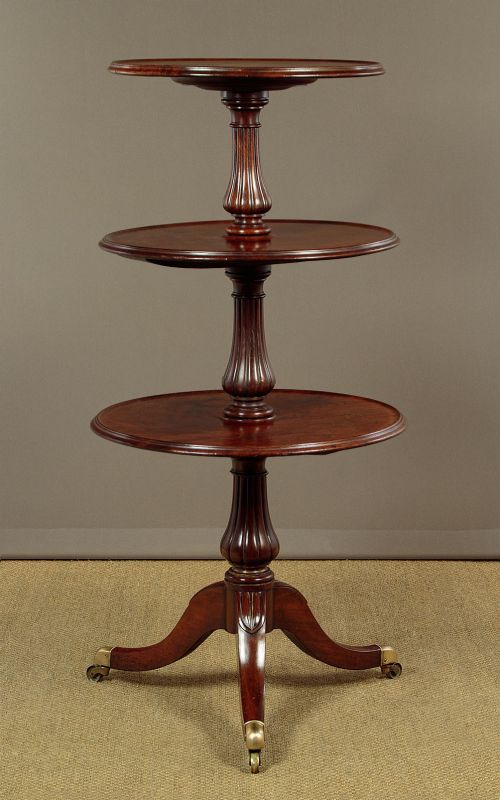
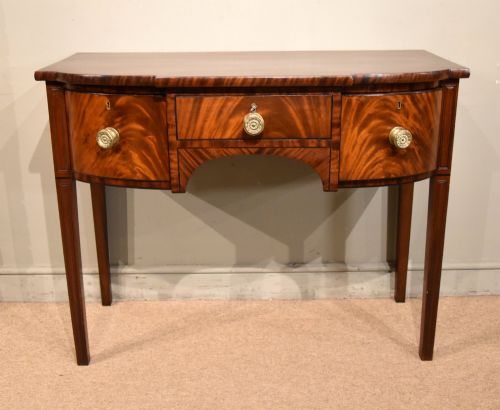
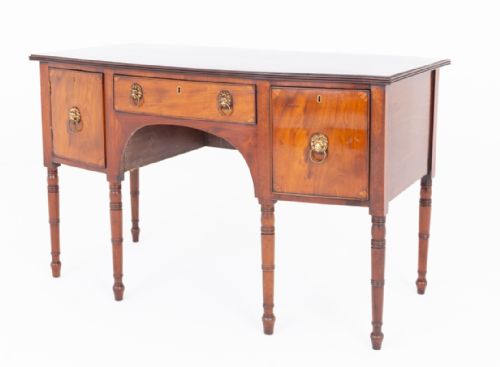
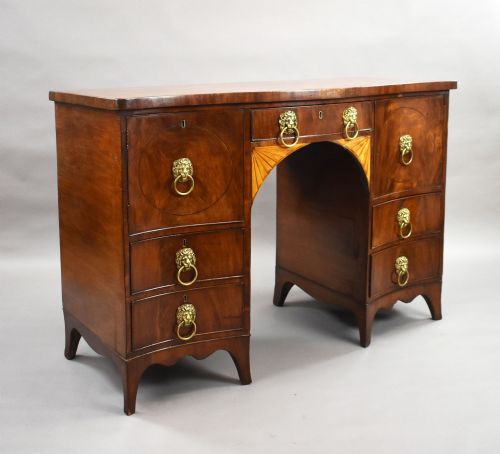
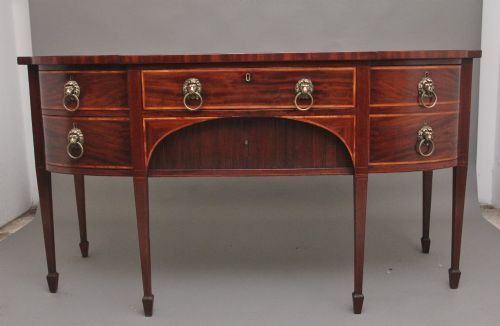
Regency serving furniture comprises dining room pieces built for food preparation, service, and display, including sideboards, side tables, buffets, and multi-tiered dumb waiters. The selection leans heavily toward mahogany sideboards and revolving dumb waiters spanning the nineteenth century, alongside revival iterations.
Makers and workshops constructed these forms to manage formal dining service with discrete elegance, utilising tiered surfaces for courses and sideboards for storage. Pieces range from straightforward utilitarian servers to grand Irish and Scottish examples carrying heavy carved detail.
What varies in quality
Quality rests upon the selection of timber figures, such as flame mahogany and pollard oak, and the crispness of hand-carved elements on framing and friezes. Pieces attributed to prominent cabinetmakers show superior structural integration and refined proportions compared to standard commercial workshop output.
The sophistication of internal mechanisms on revolving dumb waiters and metamorphic buffets dictates functional distinction across the range. Proportion, timber selection, and regional carving depth separate standard utility dining pieces from grand salon examples.
Regency Serving Furniture Retail Price Guide 2026
Typical asking prices for regency serving furniture among the pieces listed under this phrase on Sellingantiques today, from the lower quarter to the upper quarter. They describe what is for sale here now, not the wider market.
Listings feature mahogany, pollard oak, and Cuban mahogany, with styles spanning Regency, William IV, and George IV periods.
Robert Strahan and Co·Mack Williams and Gibton·Gillows·James Mein of Kelso·Holland and Sons
The Regency Serving Furniture Glossary
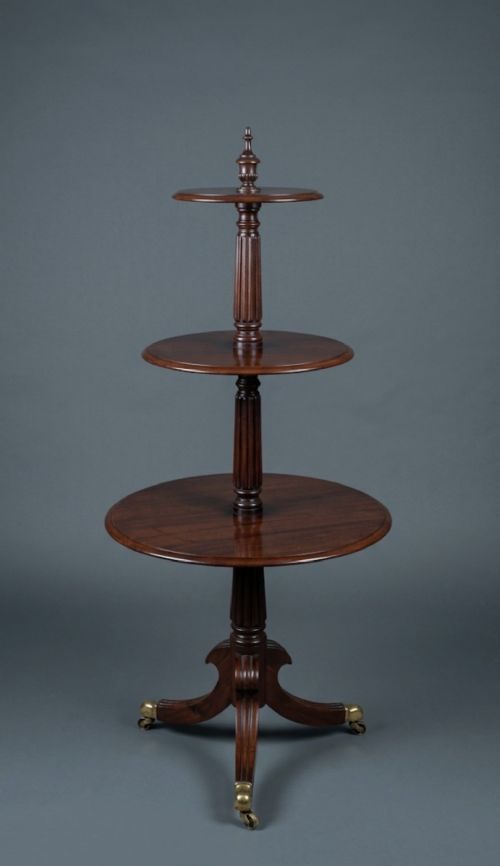
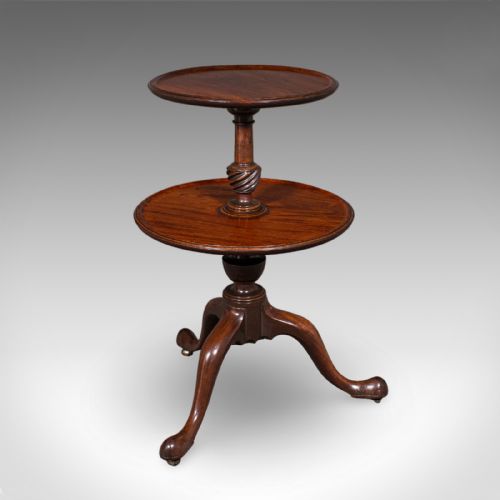
- Dumb waiter
- A tiered stand with revolving or fixed shelves used in dining rooms for holding dishes and silverware without the need for attendants. These pieces feature two or three graduated circular tiers supported on central pedestals.
- Buffet
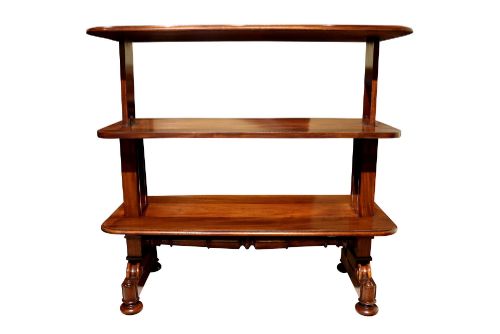
- A low sideboard or serving table designed specifically for presenting food and drink during large gatherings. Nineteenth-century examples often incorporate tiers or sliding mechanisms.
- Flame mahogany
- A highly figured timber veneer prized for its distinctive flame-like pattern caused by the intersection of branch growth with the main trunk. Cabinetmakers applied this veneer to prominent drawer fronts and tabletops.
- Pollard oak
- Oak timber taken from trees that have been pollarded, producing a dense, knotty burl figure utilised for decorative panels. This material appears on select nineteenth-century serving pieces.
- Butler's tray
- A portable tray with hinged or fixed sides, often mounted on a folding stand for serving tea or drinks. These portable surfaces appear in both mahogany and Cuban mahogany.
Regency Serving Furniture: Frequently Asked Questions
What is a dumb waiter used for?
Dumb waiters provided accessible shelving for plates, cutlery, and dishes during long dining courses without requiring servants in the room. Guests could spin the revolving tiers independently to reach food.
Today these tiered stands function effectively as plant stands, occasional tables, or display units in living spaces and hallways.
How do I identify a true period piece?
Authentic period pieces show hand-cut joinery, aged timber patination, and construction methods consistent with nineteenth-century cabinetmaking practices. Secondary timbers used inside drawers and underneath tiers offer clear clues to age.
Comparing hardware, timber grain, and structural weight against documented workshop examples helps confirm the period.
Where should I place a serving table?
Serving tables sit naturally against dining room walls to hold dishes, glassware, and decorative objects during meals. Their shallow depth allows them to fit comfortably in hallways and drawing rooms.
Pairing a console or serving table with a mirror creates a balanced focal point in smaller rooms.
What is the difference between a sideboard and a buffet?
Sideboards generally feature enclosed cupboards and drawers for storing silver and linen, combined with a broad top surface for serving. Buffets focus more on open tiers or serving surfaces designed for food presentation.
Both forms served the dining room but catered to different styles of meal service and storage needs.