
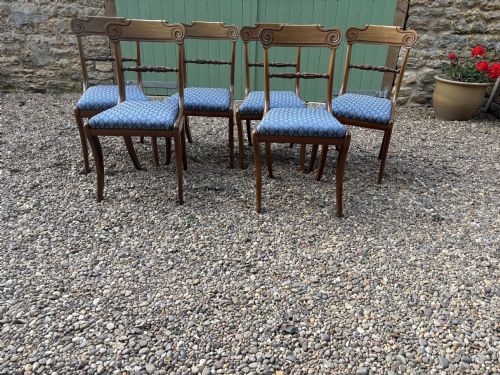
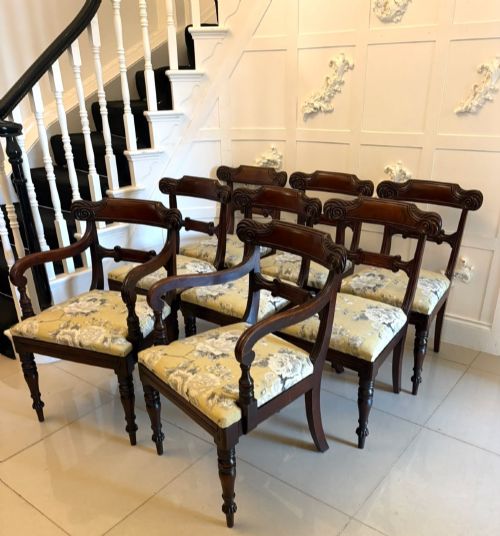
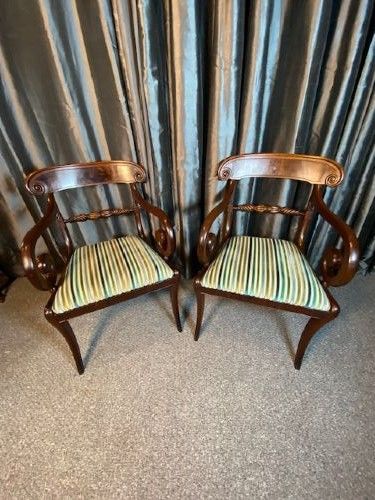
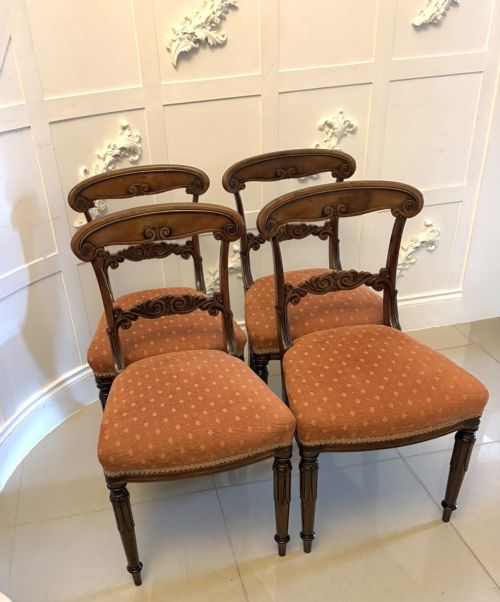






Regency Scrolled Dining Chairs
Regency scrolled dining chairs bring dramatic architectural curves and classic timber grain to the table.
Regency Scrolled Dining Chairs
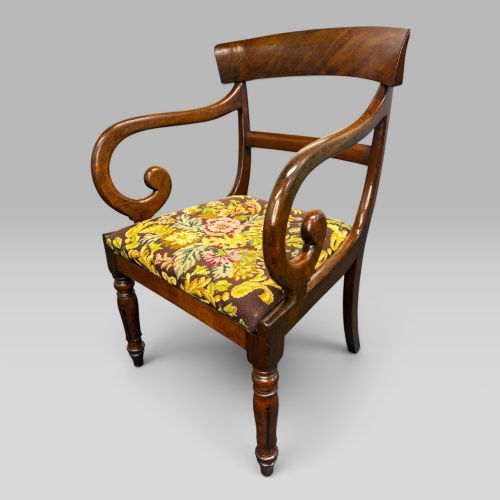
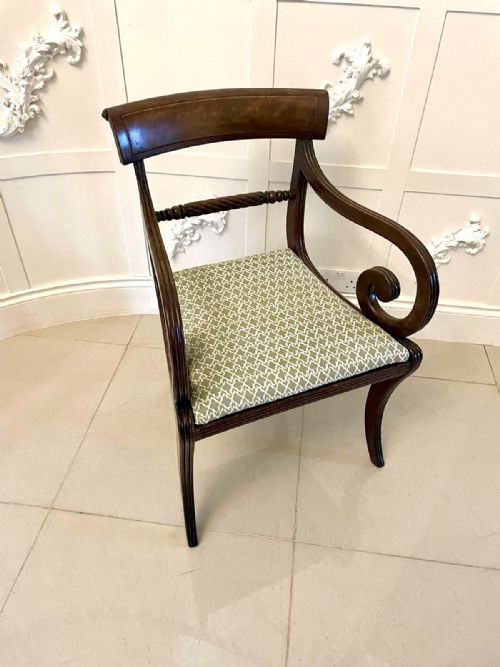
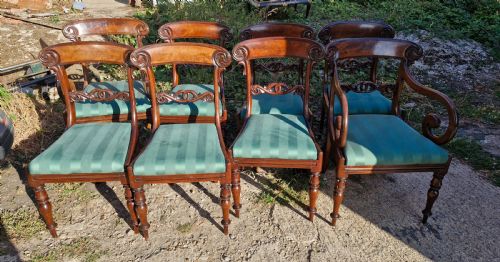
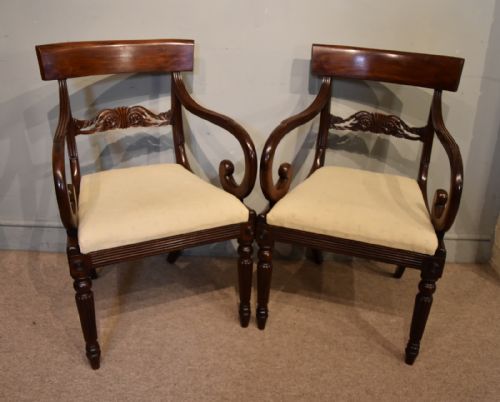
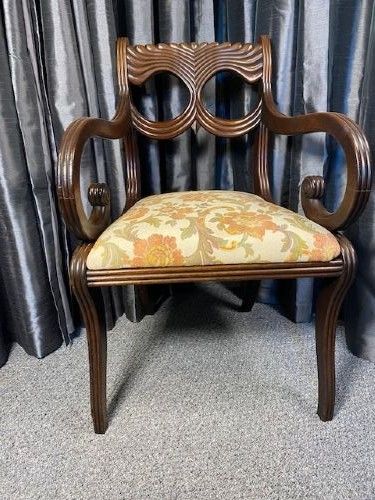
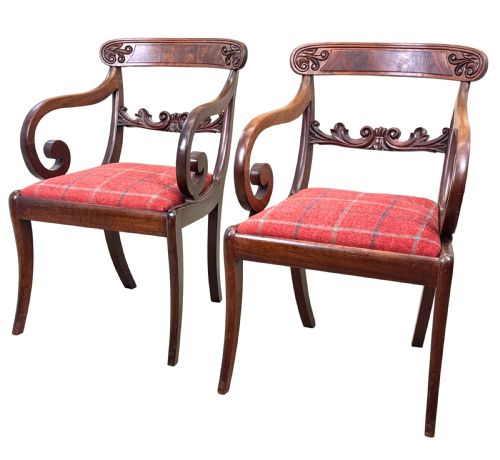
When you search for regency scrolled dining chairs, you look at seating shaped by the distinct design vocabulary of the early nineteenth century and later revival periods. The selections range from single carver chairs and pairs of armchairs to large matched sets numbering up to ten pieces.
Most examples appear in rich tropical hardwoods with scrolling arms, carved backs, and sabre legs suited to formal dining rooms and libraries. You also encounter related forms such as elbow chairs, desk chairs, and library armchairs featuring drop-in seats or needlepoint upholstery.
The catalogued pieces span the Regency proper alongside William IV, Late Georgian, and twentieth-century interpretations in faux birds eye maple. These variations offer traditional seating solutions that balance architectural presence with domestic comfort.
How they were made
Cabinetmakers built these chairs predominantly using solid mahogany and rosewood, prized for their dense grain and deep natural colour. Selected pieces incorporate decorative elements such as brass inlay, ebonised details, and faux birds eye maple finishes.
Upholstery techniques varied from drop-in seats to fixed padding covered in fabric, velvet, or needlepoint. Joinery relied on traditional mortise and tenon methods to support the sweeping curves of the scroll arms and the rake of the back legs.
Listings feature mahogany and rosewood timber alongside decorative alternatives like faux birds eye maple.
What varies in quality
The distinction between standard seating and superior examples rests on the crispness of the carving along the scroll arms and top rails. Timber selection dictates visual weight, with well-figured rosewood and dense mahogany elevating the presence of a set.
Cohesion within larger sets of eight or ten chairs indicates whether pieces originated together as a unified commission or were assembled later. Refined proportions in the sabre legs and the integration of brass inlay separate accomplished workshop output from simpler production.
MUNRO
The Regency Scrolled Dining Chairs Glossary
- Carver
- An armchair, typically designed for the head of a dining table, featuring supportive side arms. These chairs often match a set of smaller side chairs.
- Elbow chair
- An alternative term for an armchair, describing seating with wooden or upholstered supports for the arms. They frequently serve dual roles as desk or library chairs.
- Sabre leg
- A concave, outwardly curving leg that tapers toward the foot, common in seating from the early nineteenth century. This form adds dynamic movement to the chair frame.
- Drop-in seat
- A removable upholstered frame that drops into a recess within the wooden seat rails. This construction allowed for straightforward recovering over generations.
- Needlepoint
- Hand-stitched canvas embroidery utilised for durable and decorative chair upholstery. It appears frequently on period desk and elbow chairs.
Regency Scrolled Dining Chairs: Frequently Asked Questions
How do I spot a true period piece?
Examine the timber shrinkage, joinery methods, and secondary woods beneath the drop-in seat frames. Genuine early examples display hand-cut joints and appropriate patina accumulated over centuries of use.
Compare the carving style and proportions against documented pieces from the Regency era. Revival pieces from later decades often reveal subtle differences in machine tooling and timber preparation.
Can I mix carvers with standard chairs?
Placing arm carvers at the head and foot of a dining table while running side chairs along the flanks follows traditional dining room etiquette. This arrangement balances the visual weight of the scrolling arms across the room.
Ensure the timber tones and leg styles align reasonably well when combining separate purchases into a unified dining setting.
How do I care for rosewood and mahogany?
Keep wooden frames away from direct sunlight and radiators to prevent the dry timbers from splitting or fading. Regular dusting with a soft cloth maintains the natural lustre of the polished grain.
Apply professional beeswax sparingly if the finish appears dry, avoiding modern silicone-based polishes that degrade antique surfaces over time.
Are these chairs comfortable for daily use?
Most period dining chairs feature supportive upright backs designed for formal dining rather than lounging. The integration of scroll arms on elbow chairs provides a natural resting place for the arms during long meals.
Upholstered drop-in seats can be re-sprung or re-padded by a specialist to achieve modern levels of seating comfort without altering the exterior appearance.