





Regency Rosewood Nest Tables
Regency rosewood nest tables are clever, graduated quartetto sets that slide neatly together, offering exceptional surface space without cluttering a room.
Regency Rosewood Nest Tables
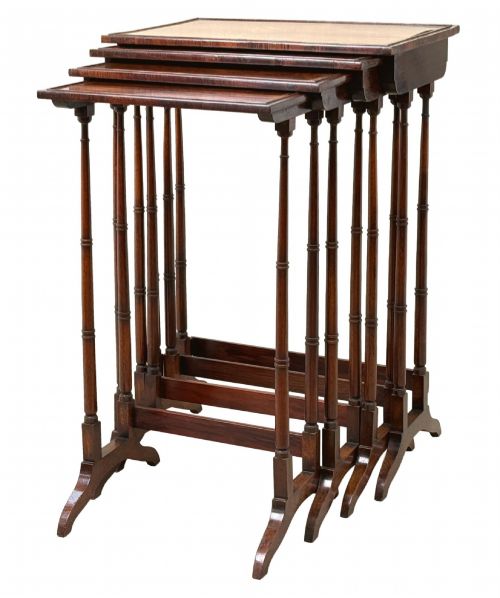
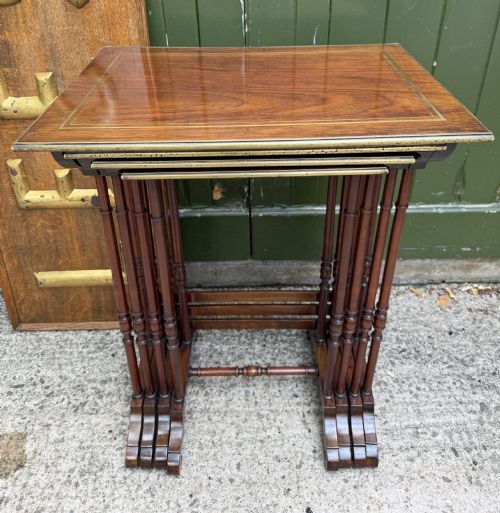
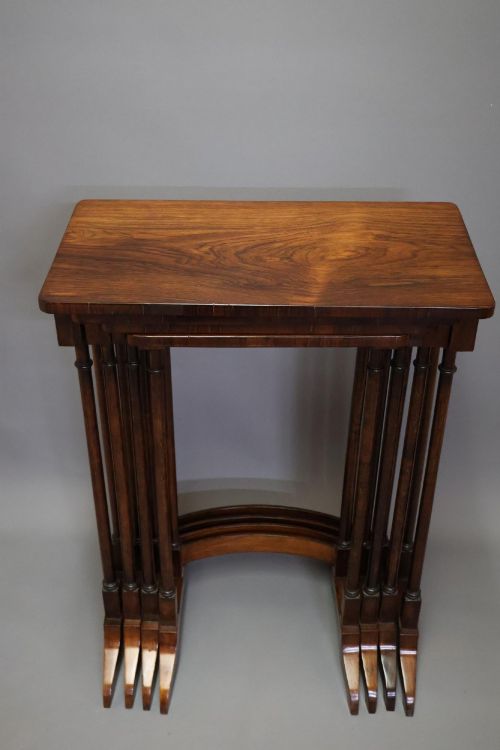
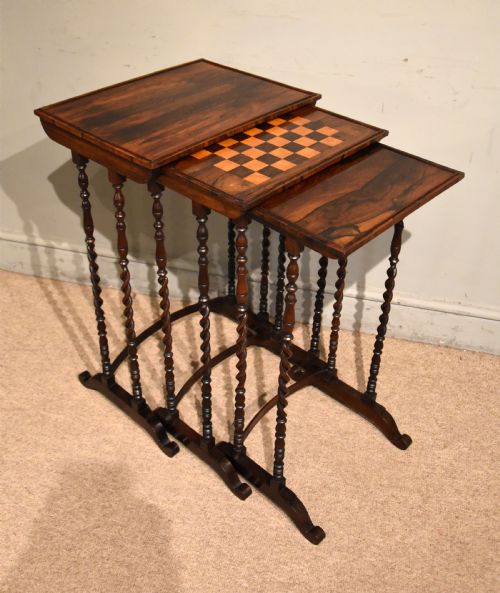
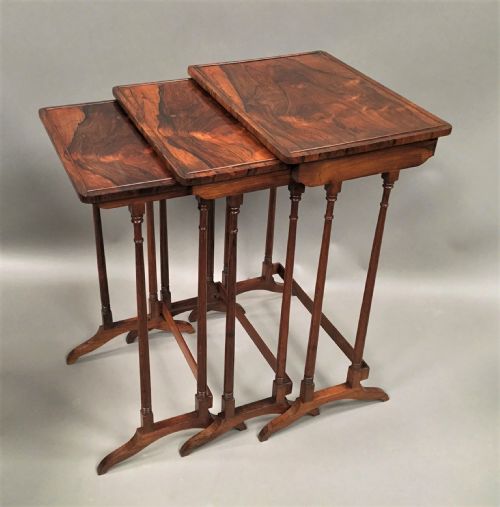
Regency rosewood nest tables appear primarily as sets of three or four graduated occasional tables designed to fit one beneath another. These pieces emerge from the Regency and Georgian periods, offering distinct space-saving utility alongside striking decorative character.
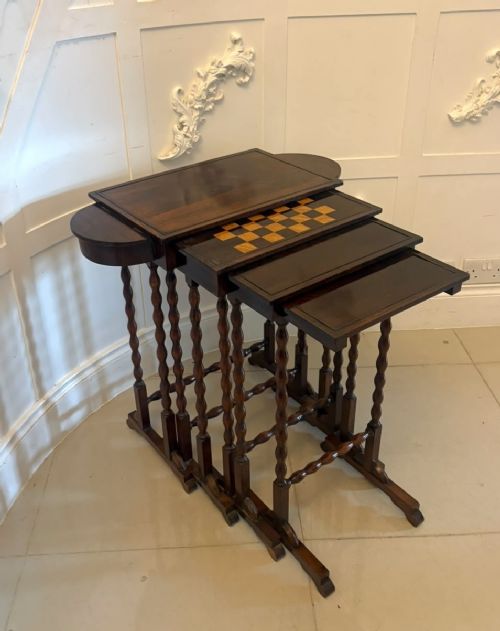
The version most commonly met on this page is the quartetto set of four, constructed from rich rosewood and featuring slender turned supports. Sets of three also feature regularly, occasionally incorporating specialised surfaces such as integrated chess boards.
Makers of the era utilised the compact nature of these tables to provide multiple surfaces for tea, work or display that could be stored away instantly. Their presence in a room reflects the refined domestic arrangements of early nineteenth-century interiors.
Materials and Construction
Cabinet makers relied heavily on dense, highly figured rosewood, often complemented by contrasting stringing in boxwood or satinwood. Brass inlay and delicate turning appeared on finer examples to accentuate the slender uprights and trestle feet.
Regency Rosewood Nest Tables Retail Price Guide 2026
Typical asking prices for regency rosewood nest tables among the pieces listed under this phrase on Sellingantiques today, from the lower quarter to the upper quarter. They describe what is for sale here now, not the wider market.
Listings feature rosewood, satinwood, brass, boxwood and leather across various occasional table forms.
Judging Quality and Craftsmanship
Quality rests upon the depth of figure in the rosewood veneer and the precision of the graduated sizing, which allows the tables to nest flush. Superior examples display crisp turning on the legs and restrained, elegant brass or lightwood inlay rather than heavy-handed ornament.
The structural integrity of the delicate framework dictates longevity, as poorly executed joints lead to wobbling in the smaller, lower tiers. Original surfaces with a warm, uncompromised patina distinguish the finest survivals from heavily restored pieces.
Gillows·W and C Wilkinson London
The Regency Rosewood Nest Tables Glossary
- Quartetto
- A matched set of four graduated tables designed to nest together. This term was widely used in the early nineteenth century for these specific suites.
- Rosewood
- A dense, heavily figured timber prized for its dark grain and purple-brown contrast. It formed the primary material for high-status Regency occasional furniture.
- Stringing
- Thin inlaid lines of contrasting light wood, such as boxwood or satinwood, used to edge table tops and legs. This technique adds linear definition to dark timbers.
- Simulated rosewood
- Painted or stained wood mimicking the grain pattern of genuine rosewood. Cabinet makers utilised this method on secondary timbers or for specific decorative effects.
- Trestle support
- A base structure consisting of two upright feet joined by a stretcher. This form provided stability for slender occasional tables.
Regency Rosewood Nest Tables: Frequently Asked Questions
How were nest tables used in Regency homes?
These tables served as versatile furniture that occupants could easily move about for serving tea, holding books or writing letters. When not in use, the graduated design allowed them to slide into a single compact stack against a wall.
Their mobility suited the fluid social habits of early nineteenth-century drawing rooms, where furnishings needed to adapt quickly to different activities throughout the day.
What is a quartetto set?
A quartetto set consists of four distinct tables graduated in height and width so that each smaller table slides neatly beneath the next larger one. This configuration maximises surface area while occupying the floor space of only a single small table.
Craftsmen during the Regency period specialised in these harmonious assemblies, ensuring the proportions remained elegant whether the tables were nested or separated.
How do I spot faux rosewood?
Simulated rosewood involves painting or staining a lighter timber, such as beech, to imitate the characteristic dark grain patterns of genuine rosewood. Closer inspection reveals brushwork or a lack of natural timber depth under the polish.
Cabinet makers of the era employed this technique alongside solid rosewood to achieve specific decorative schemes without excessive expense.
Can I use these tables for daily living?
These pieces function well for holding lamps, drinks or small decorative items, provided they are placed where heavy weights will not strain the delicate joints. Their lightweight construction makes them easy to reposition across different rooms as needed.
Treating the antique wood with care and avoiding excessive moisture will preserve the integrity of the original veneer and polish for everyday enjoyment.