



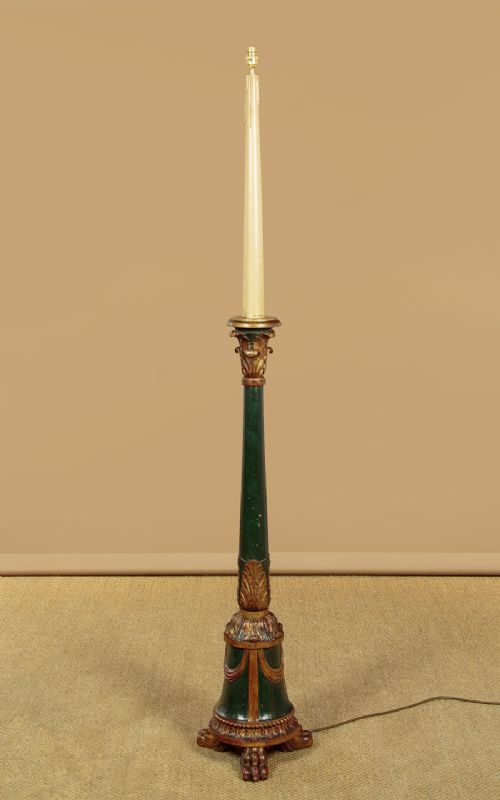
Regency Reading Stand
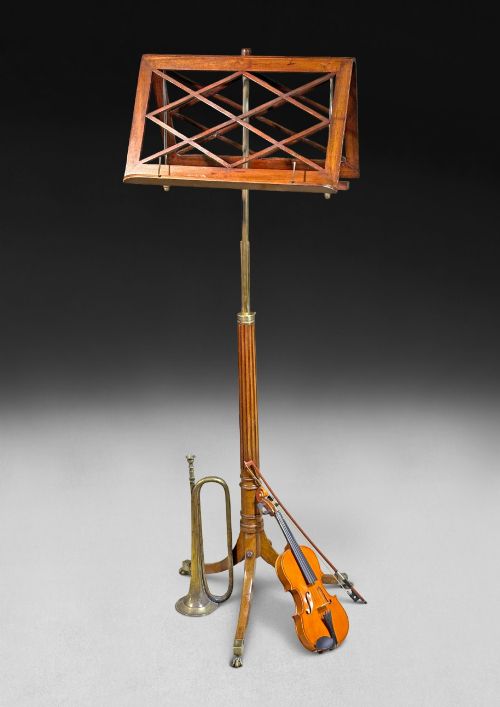
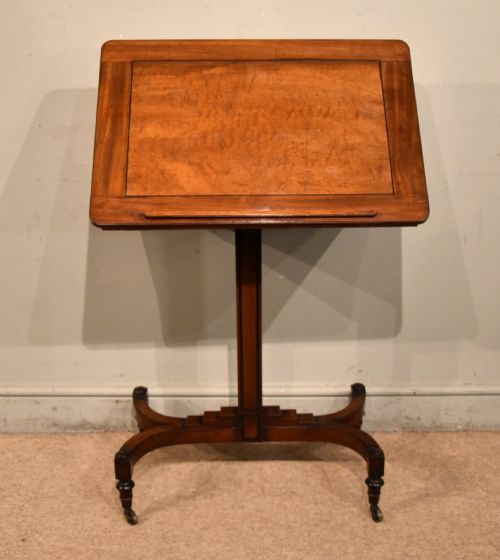
A regency reading stand brings refined adjustable practicality into a room, offering a dedicated surface designed for holding books, music, or papers at a comfortable angle.
Regency Reading Stand
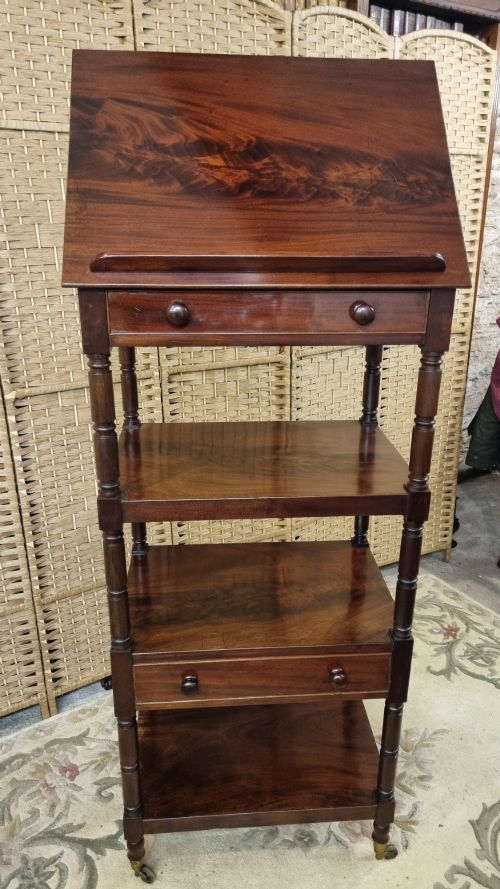
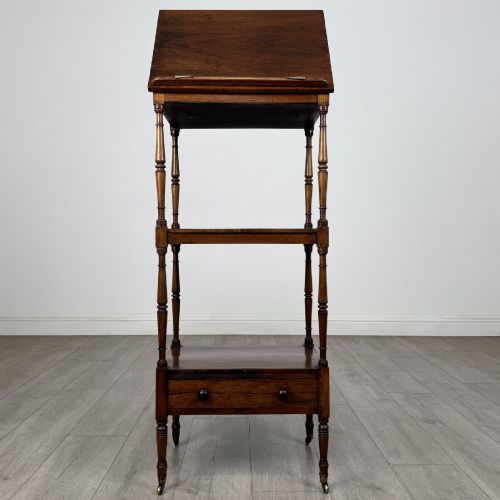
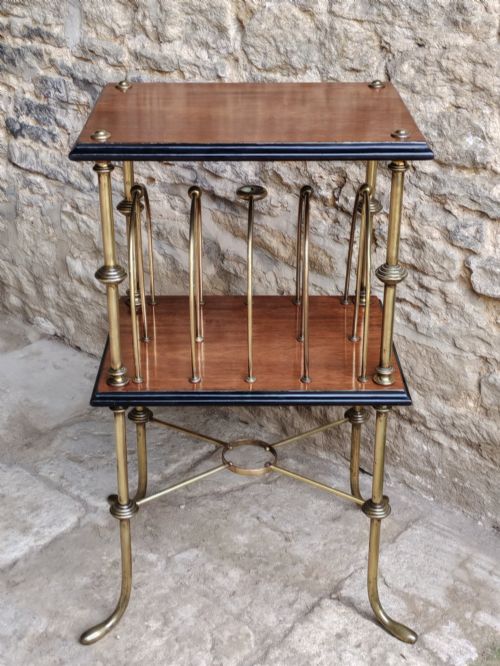
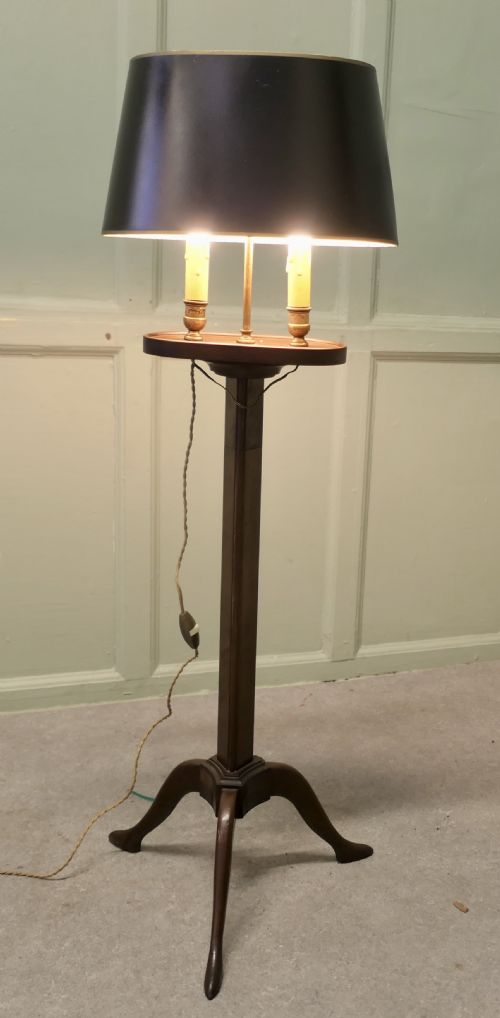
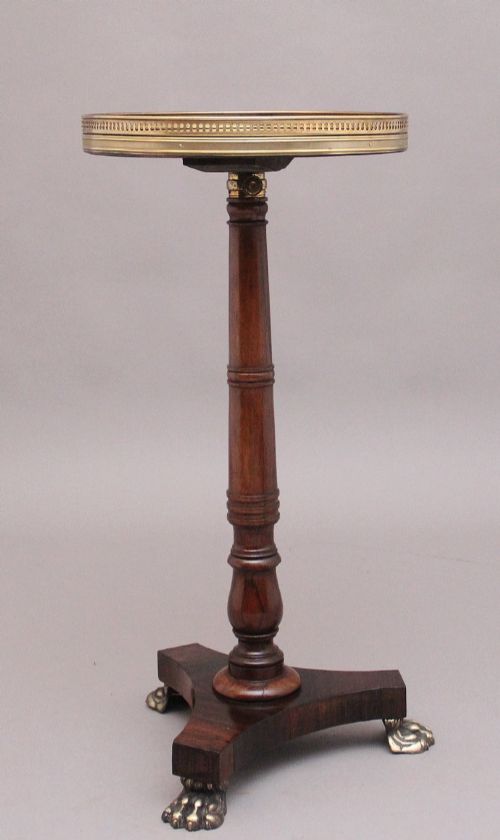
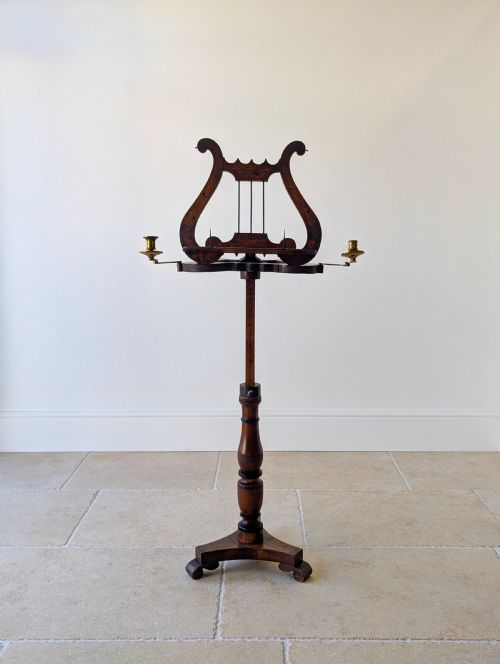
A regency reading stand is a functional piece of furniture designed to support books and documents at an adjustable angle, frequently appearing in forms such as reading tables, music stands, and occasional tables.
The pieces seen on this page span the 19th Century, Regency, and William IV periods, alongside later revivals from the 19th and early 20th centuries.
Mahogany and rosewood dominate the construction of these stands, often paired with brass fittings and adjustable mechanisms that reflect the ingenuity of early 19th-century cabinet making.
Evaluating the Pieces
Quality rests in the precision of the adjustable mechanism and how smoothly the rising columns or ratchets operate without binding.
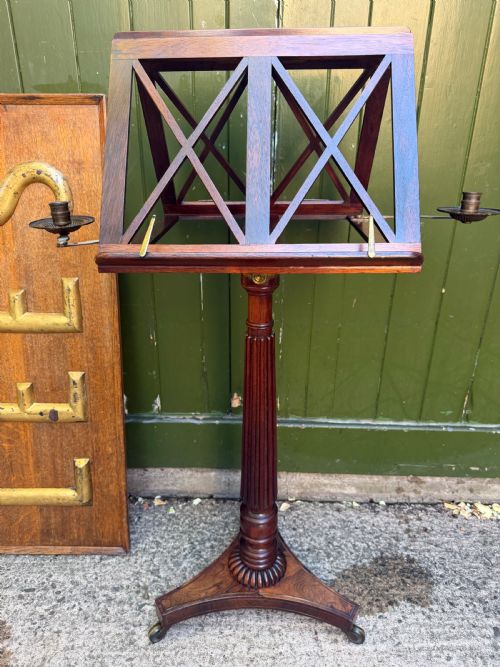
The choice of timber grain, particularly figured mahogany or rich rosewood, together with crispness in brass inlay and turned tripod supports, distinguishes finer examples.
Proportion and structural integrity define the better specimens, ensuring that reading ledges and extending surfaces remain balanced and stable at various heights.
Regency Reading Stand Retail Price Guide 2026
Typical asking prices for regency reading stand among the pieces listed under this phrase on Sellingantiques today, from the lower quarter to the upper quarter. They describe what is for sale here now, not the wider market.
Some versatile stands double as music racks and occasional tables, ready to hold a symphony score by night and a teacup by day.
Gillows
The Regency Reading Stand Glossary
- Regency
- A British design period spanning the early 19th century, noted for classical restraint, architectural lines, and refined use of mahogany and brass.
- Telescopic
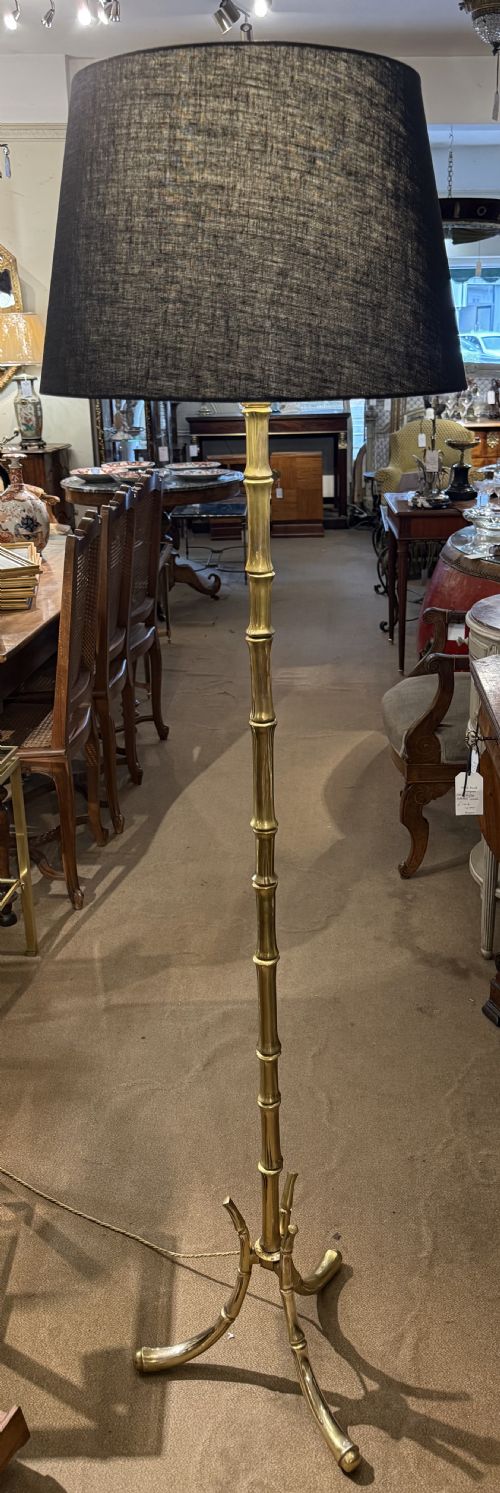
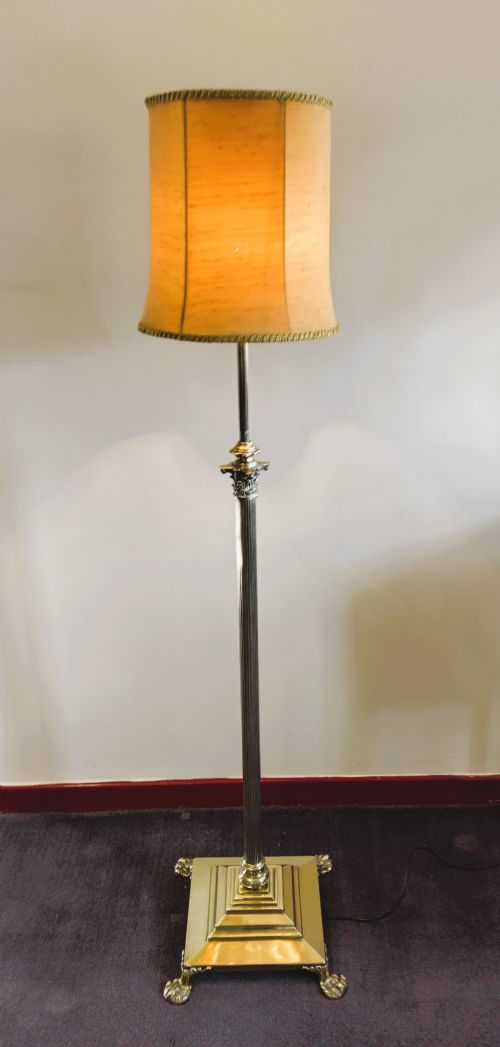
- An adjustable mechanism allowing vertical extension through an inner and outer shaft, commonly found in reading stands and standard lamps.
- Whatnot
- An open set of slender shelves used for displaying or holding books and decorative objects, sometimes combined with reading surfaces.
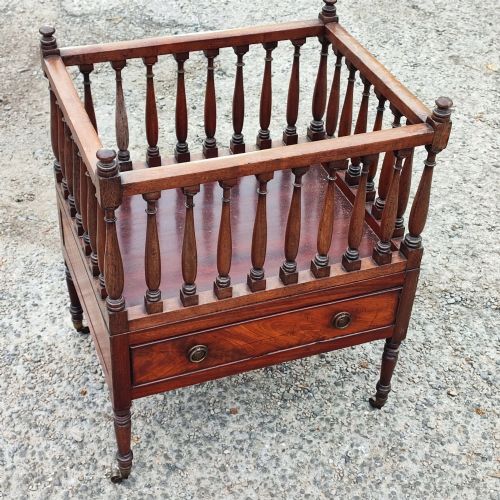
- Canterbury
- A low wooden stand featuring sloped partitions, originally designed for holding sheet music, newspapers, or magazines.
- Lyre-Form
- A decorative support shaped like an ancient musical lyre, frequently utilised in the pedestals of tables and music stands.
Regency Reading Stand: Frequently Asked Questions
What is a regency reading stand used for?
These stands serve to hold books, sheet music, or writing materials at a slanted angle for comfortable viewing.
They were placed beside chairs or desks in libraries and parlours to accommodate readers and musicians.
How do you adjust the height?
Many examples utilise a telescopic brass column secured with a thumb screw or a ratcheted wooden support beneath the reading ledge.
Turning or lifting the mechanism allows the surface to be raised or lowered to the desired reading position.
Are these stands stable enough for daily use?
Most feature sturdy tripod bases or weighted pedestal feet designed to prevent tipping when the top is extended or loaded with books.
Heavier timbers like mahogany and rosewood add natural weight and stability to the base structures.
How can I tell a William IV piece from Regency?
William IV items often display slightly heavier proportions, bolder carved details, and rich rosewood surfaces dating from around 1830.
Regency examples tend toward crisper classical lines and lighter mahogany framing from the early decades of the century.