



Regency Office Furniture
Regency office furniture comprises practical desk forms and writing tables designed with classical restraint to serve the libraries and studies of the period.
Regency Office Furniture
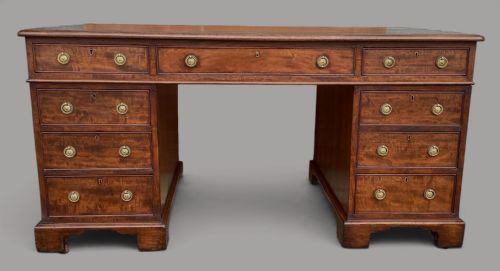
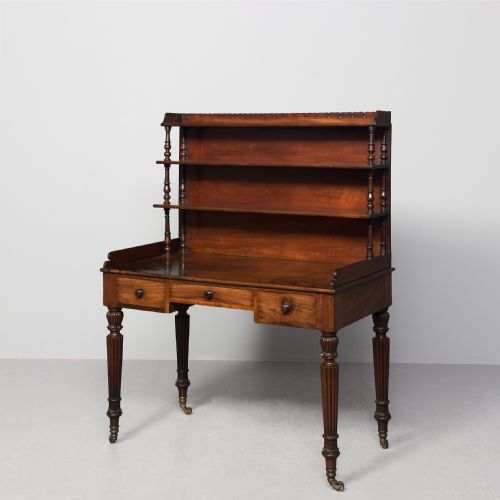
These pieces are primarily desks, writing tables, library tables, and desk chairs designed for study and administration during the early nineteenth century and related periods. A buyer exploring regency office furniture encounters forms ranging from compact writing desks and Davenport desks to large partners desks and pedestal desks.
The materials and styles span the Georgian, Regency, William IV, and Victorian eras, reflecting the shifting tastes of cabinetmakers across the nineteenth century. Mahogany, rosewood, and burr oak dominate the selection, often accompanied by leather inserts, canework, and brass details.
Materials and construction
Cabinetmakers utilised dense timbers like mahogany and rosewood, frequently selecting figured burr oak for prominent surfaces to create visual depth and grain variation. These woods provide the structural integrity required for large library tables and partners desks.
Secondary elements involve brass inlay, brass hardware, and tooled leather writing surfaces that protect the wood and offer a durable medium for writing. Caned panels appear on seating pieces, providing lightweight flexibility alongside sturdy timber frames.
Regency Office Furniture Retail Price Guide 2026
Typical asking prices for regency office furniture among the pieces listed under this phrase on Sellingantiques today, from the lower quarter to the upper quarter. They describe what is for sale here now, not the wider market.
The listings here feature furniture produced across the nineteenth century, encompassing Georgian, Regency, William IV, and Victorian periods.
Evaluating quality and execution
The division between standard workshop production and exceptional cabinet work rests in the choice of timber and the precision of structural joinery. Finer pieces demonstrate superior timber selection, such as uninterrupted burr oak veneers or well-matched mahogany grains across large expanses.
Execution of decorative details like brass inlay and turned supports distinguishes the finer examples from simpler utilitarian items. The integration of functional elements, including internal pigeonholes, secret drawers, and robust pedestals, determines the overall refinement of the piece.
James Mein of Kelso·Gillows·Gillingtons of Dublin·Thomas Myers of Gillows
The Regency Office Furniture Glossary
- Partners desk
- A large double-sided desk designed for two people to work opposite one another, featuring drawers and cupboards on both faces.
- Davenport desk
- A compact small desk featuring a sloping hinged writing surface above a pedestal of side drawers.
- Wellington secretaire chest
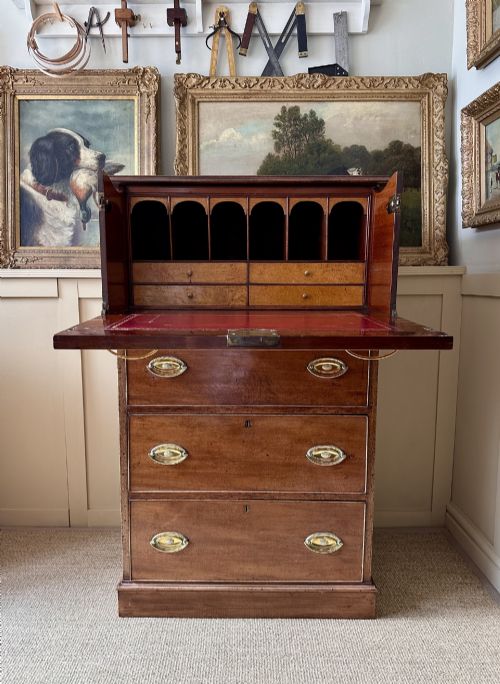
- A tall chest of drawers featuring a locking side stile that secures all the internal drawers simultaneously.
- Library table
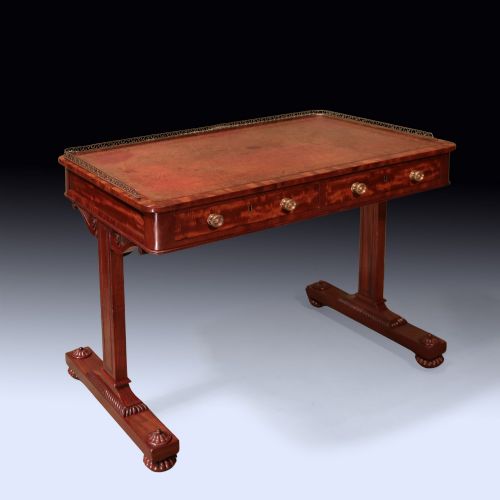
- A freestanding table designed for the centre of a room, often fitted with frieze drawers for storing papers and books.
- Kneehole desk
- A compact desk with a central recessed space for the user's legs, flanked by pedestals of small drawers.
Regency Office Furniture: Frequently Asked Questions
What is a partners desk?
A partners desk is a large, double-sided form built to accommodate two people working face-to-face. These pieces typically feature drawers and cupboards accessible from both sides.
They were intended for shared offices, libraries, and grand studies during the Georgian and Regency periods.
How do I identify a Davenport desk?
A Davenport desk is a compact form recognisable by its sloping, hinged writing surface set above a pedestal of side drawers. They often incorporate hidden compartments and stationery wells.
Their smaller footprint made them popular for boudoirs and private writing rooms.
What woods were used?
Cabinetmakers relied heavily on dense hardwoods such as mahogany and rosewood for their durability and rich grain. Burr oak was also utilised for prominent surfaces to add decorative interest.
Secondary materials included brass for inlay and hardware, alongside leather for writing inserts.
Are these pieces suitable for daily use?
Most of these desks and chairs were built to withstand heavy daily administration in nineteenth-century studies and libraries. Their solid timber construction and practical forms make them well-suited for modern working environments.
Care should be taken to maintain the leather writing surfaces and polished wood finishes.