


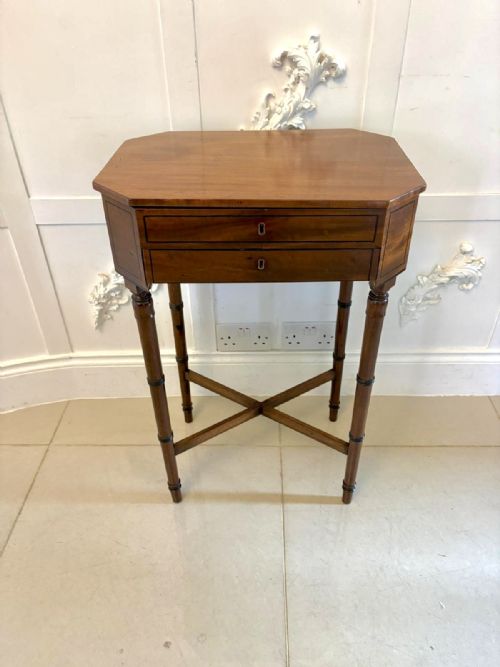


Regency Octagonal Lamp Table
A regency octagonal lamp table brings balanced geometry and dark timber warmth to a corner, perfect for holding a reading light.
Regency Octagonal Lamp Table
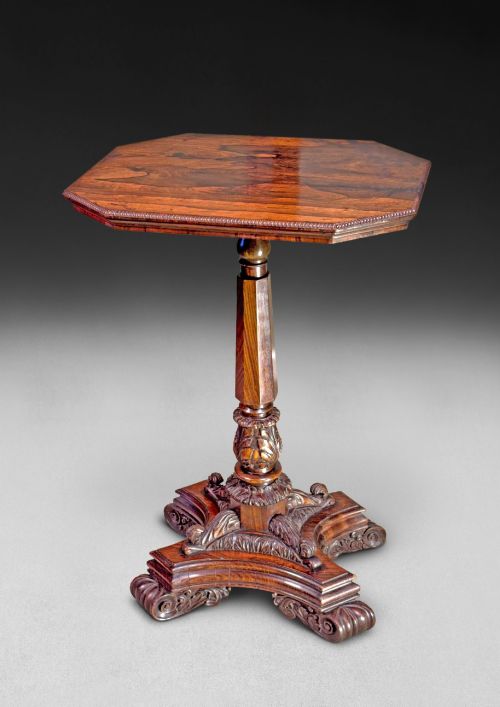
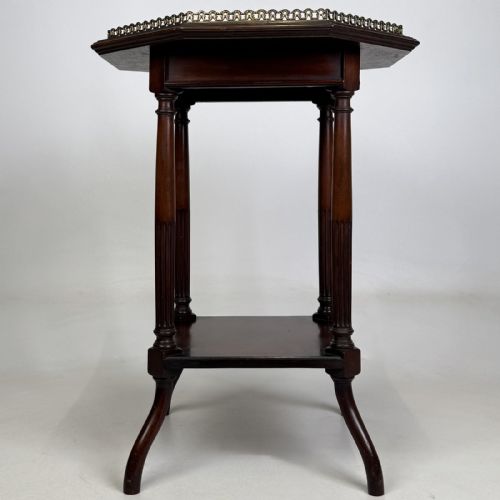
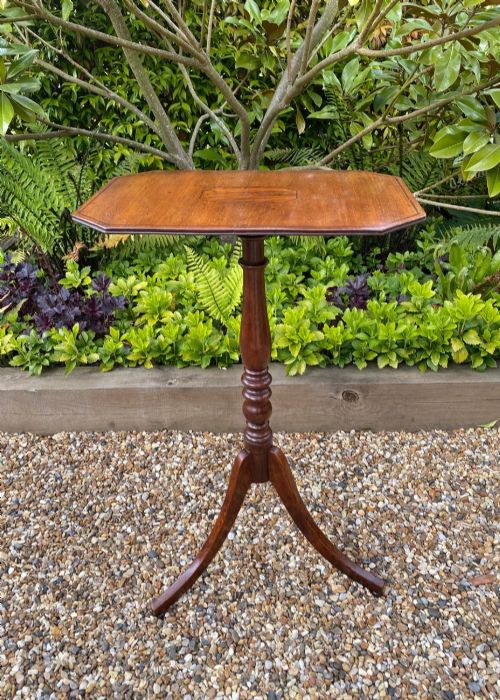
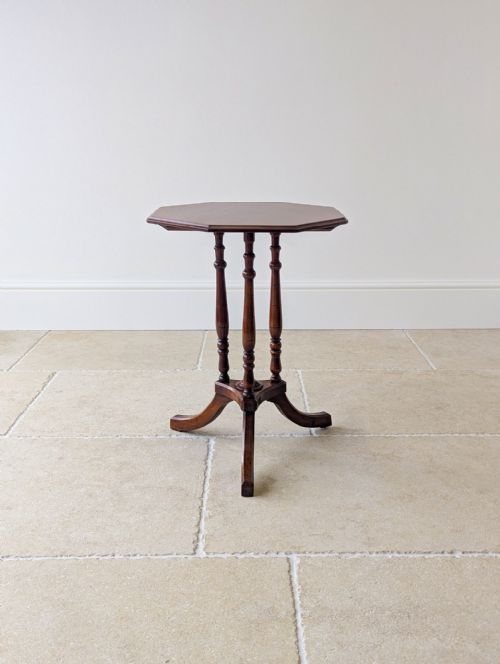
A regency octagonal lamp table is a small surface designed for illumination, characterised by an eight-sided top and origins spanning the Regency, Georgian, and William IV periods. These pieces appear in forms described as side tables, occasional tables, and wine tables, often raised on sturdy central pillars or tripod legs.
The version most commonly met on this page combines a rich mahogany or flame mahogany veneer with the distinctive geometry of an octagonal top. Walnut, rosewood, pollard oak, cherry wood, and yew wood also appear, sometimes detailed with boxwood stringing or brass inlay.
Makers and workshops of the era produced these compact pieces to sit easily beside seating or in corners. Their versatility made them enduringly useful for holding lamps, candles, or sewing baskets.
Materials and Construction
Cabinetmakers constructed these tables using solid native timbers and figured veneers, applying flame mahogany and pollard oak to the tops to create striking grain patterns. Boxwood stringing and brass inlay provided precise linear contrast against the dark wood grounds.
The structural stability of an octagonal top relied on sturdy timber framing, often supported by tripod bases or carved central pillars. These joints allowed the small tables to bear weight securely despite their slender proportions.
Regency Octagonal Lamp Table Retail Price Guide 2026
Typical asking prices for regency octagonal lamp table among the pieces listed under this phrase on Sellingantiques today, from the lower quarter to the upper quarter. They describe what is for sale here now, not the wider market.
Some octagonal tops include clever lift mechanisms and hidden compartments, perfect for concealing small evening necessities.
Assessing Quality and Character
The distinction between standard examples and finer pieces lies in the selection of timber veneers and the crispness of inlay work. Flame mahogany and figured pollard oak demand expert matching, while boxwood stringing requires precise hand-fitting.
Proportion and structural harmony also separate the levels of craftsmanship. Well-balanced tripod bases and refined pillar turnings elevate a simple lamp table into a piece of accomplished furniture.
Gillows
The Regency Octagonal Lamp Table Glossary
- Flame mahogany
- A veneer cut from timber where the branch meets the trunk, producing a rippling, flame-like pattern. This decorative surface was favoured by Regency cabinetmakers for tabletops.
- Boxwood stringing
- Narrow inlaid lines of pale boxwood set flush into darker wood surfaces. It provides a sharp, linear border to tabletop edges.
- Pollard oak
- Timber taken from trees that have been pollarded, resulting in dense, highly knotted growth rings. The mottled grain creates a dramatic textured surface.
- Tripod table
- A small table supported by three legs radiating from a central pillar. This construction prevents wobbling on uneven floors.
Regency Octagonal Lamp Table: Frequently Asked Questions
What is a regency octagonal lamp table?
A small surface featuring an eight-sided top, produced during the early nineteenth century for illumination and general use in reception rooms.
These pieces typically stand on a single pillar or tripod base, combining compact dimensions with distinctive geometric tabletops.
How were these tables used originally?
They served primarily as movable stands for oil lamps, candles, or tea equipment near seating areas.
Some variations included removable sewing baskets or served as wine tables during evening gatherings.
How do I care for a wood veneer top?
Protect the polished surface from direct sunlight and excessive moisture by using coasters and mats.
Apply a light wax polish occasionally to nourish the timber and maintain the natural lustre of the grain.
How do I distinguish Regency from William IV pieces?
Regency pieces often display restrained classical elegance with slender proportions and fine stringing details.
William IV examples tend towards heavier, more robust forms with bolder carved elements and darker timbers.