


Regency Oak Centre Table
A regency oak centre table brings architectural proportion and rich figured timber to the middle of a room, prized for versatility and grain.
Regency Oak Centre Table
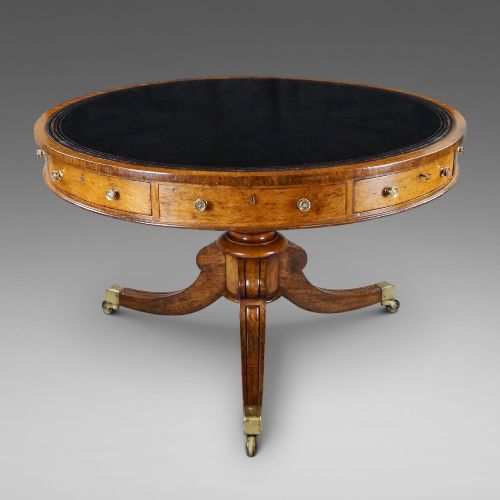
A regency oak centre table stands free in a room, designed to be viewed from all sides rather than pushed against a wall. When you search for a regency oak centre table, you encounter forms ranging from circular library drum tables to tripod occasional pieces and substantial dining tables.
The pieces on this page span the nineteenth century, including strict Regency periods alongside George IV, William IV, and later revivals from the mid twentieth century. Oak forms the structural core, often enriched with figured variations such as pollard or burr timber.
Makers and craftsmen of the period utilised these dense hardwoods to create substantial central furniture, sometimes incorporating secondary timbers like satinwood, yew, or ebony. The resulting objects function equally well as library, breakfast, or lamp tables depending on their proportions.
How they were made
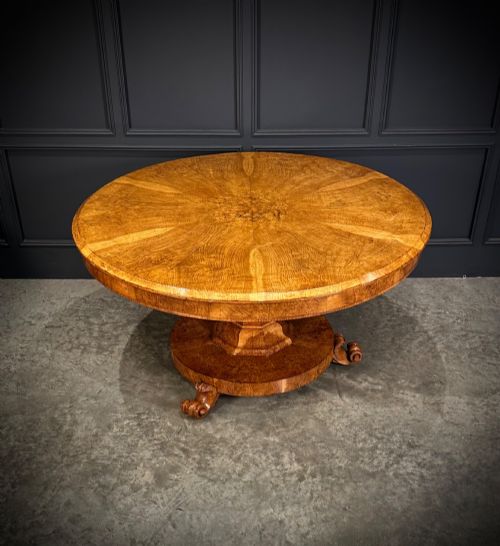
Construction relies heavily on solid oak and figured veneers like pollard or burr oak, selected for striking natural patterns on circular and segmented tabletops. Cabinetmakers applied these decorative veneers over stable foundational timbers to prevent warping across wide expanses.
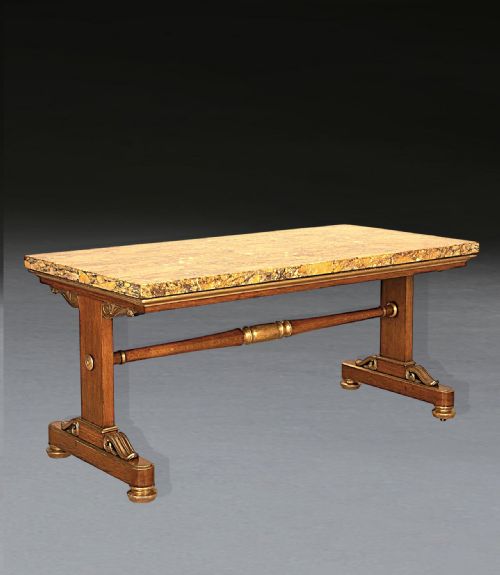
Metal and stone components frequently complement the woodwork, with brass mounts, Siena marble inserts, and giltwood detailing appearing on select examples. Turnery and carved end supports provide the structural backbone for heavy tabletops.
Early nineteenth-century dining tables occasionally doubled as library drums, proving that ancestors also struggled with multifunctional open-plan living.
What varies in quality
The distinction between ordinary and exceptional examples rests in the choice of timber and the complexity of the tabletop figure. Segmented burr oak tops and rich pollard grain demand superior material selection and expert veneer matching.
Integration of secondary materials such as Siena marble, ebony inlay, and intricate giltwood carving elevates the architectural ambition of the piece. Refined joinery in the pedestal or end supports ensures structural integrity alongside visual presence.
The Regency Oak Centre Table Glossary
- Pollard oak
- Timber taken from trees that were pollarded, producing dense clusters of knots and a highly decorative, speckled grain pattern.
- Burr oak
- Wood harvested from growth warts on oak trees, yielding swirling patterns prized for table tops.
- Drum table
- A circular library table with a deep top containing drawers, resembling the shape of a drum.
- Tripod table
- A small occasional table supported by a central pillar resting on three legs.
- Siena marble
- A yellow-gold ornamental marble quarried in Italy, often used for neoclassical furniture tops.
Regency Oak Centre Table: Frequently Asked Questions
What is a centre table used for?
A centre table stands in the middle of a room rather than against a perimeter wall. Historically, these pieces served as central surfaces in libraries, reception rooms, and halls for holding lamps, books, or decorative objects.
Today, they function effectively as freestanding coffee tables or focal points in large spaces, allowing access from all sides.
How do I date a regency table?
Dating relies on examining the timber preparation, construction techniques, and stylistic vocabulary. Pieces from the period often feature distinctive pedestal bases, specific veneer cuts like pollard oak, and characteristic neoclassical or revival proportions.
Comparing structural joints and secondary woods helps distinguish authentic nineteenth-century manufacture from mid-twentieth-century revivals.
What is pollard oak?
Pollard oak comes from trees that were cut back near the trunk to promote dense branching. This pruning creates a tight, highly figured grain filled with small dark knots.
Cabinetmakers utilised these figured sections on prominent surfaces like tabletops to create striking visual movement.