


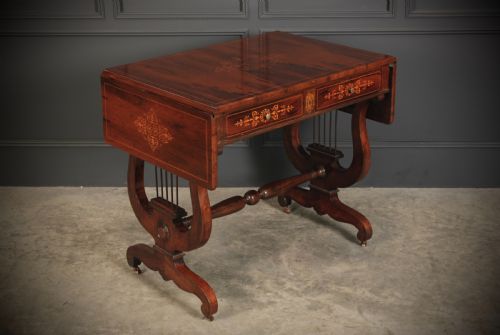


Regency Lyre Base Table
These regency lyre base table pieces are refined wooden furnishings featuring elegant curved supports, offering both traditional utility and striking classic form for any room.
Regency Lyre Base Table
A regency lyre base table brings classical lines and functional surface area to a room, drawing on early nineteenth century design. When exploring this selection, buyers encounter various formats including tea tables, sofa tables, and teapoys.
The evidence shows forms ranging from the Regency period through to later revival pieces from nineteen twenty. Side tables and occasional tables provide practical surfaces whilst retaining the characteristic lyre support structure.
Materials span from rich rosewood and mahogany to pollard oak and burr oak, often enhanced with brass inlay or marquetry. These diverse timbers reflect both Georgian sensibilities and later nineteenth century interpretations.
How they were made
Cabinet makers utilised dense hardwoods such as mahogany and rosewood, shaping them into smooth folding leaves and sturdy pedestals. Timber selection formed the core of the construction process, ensuring structural stability for daily use.
Surface decoration frequently involved intricate brass inlay and marquetry inlay, requiring precise handiwork to embed metal and contrasting woods into the grain. Ebonised wood details and specimen wood arrangements further demonstrated advanced joinery skills.
Some tables double as tea-poys, keeping leaves secure while the lyre base holds up the gossip.
What varies in quality
Quality rests upon the crispness of the carving on the lyre supports and the precision of the brass inlay work. Finer examples display meticulous attention to detail in the grain matching of rosewood and mahogany.
The choice of timber creates a distinct hierarchy, with burr oak, pollard oak, and elaborate marquetry signifying higher levels of craftsmanship. Structural integrity in folding mechanisms and support joints completes the assessment of a piece.
The Regency Lyre Base Table Glossary
- Lyre base
- A structural support shaped to resemble the ancient musical instrument, forming the central pedestal or end supports of the table.
- Tea-poy
- A small box on a stand, originally designed for storing tea, which often shares the characteristic pillar or lyre support structure.
- Marquetry inlay
- Decorative patterns formed by fitting together small pieces of veneer into a timber surface.
- Pollard oak
- Timber taken from trees that have been pollarded, producing a richly figured and mottled grain pattern.
- Sofa table
- A rectangular occasional table designed to stand in front of a sofa, typically featuring drop leaves at either end.
Regency Lyre Base Table: Frequently Asked Questions
What is a lyre base table?
A lyre base table is a piece of furniture featuring structural supports shaped like an ancient stringed instrument. These supports are typically carved from dense timber and hold up a work surface such as a tea table or occasional table.
Such tables became popular during the Regency period and George IV eras. They combine classical architectural motifs with practical domestic utility.
How were these tables used?
These tables served various domestic functions depending on their specific form, such as serving tea from a teapoy or providing a surface beside a sofa. Folding leaves allowed surfaces to expand when entertaining guests.
Smaller variants also functioned as lamp tables or bedside tables in later periods. Their adaptable design made them suitable for multiple rooms in a home.
What woods are common?
Mahogany and rosewood appear frequently in the construction of these tables, valued for their rich colour and durability. Timber choices also include pollard oak, burr oak, and birch.
Inlayers often added contrasting specimen woods to create decorative patterns. Ebonised wood details also featured on specific pieces.
How do I spot a revival piece?
Revival pieces often date to the early twentieth century, such as nineteen twenty, adopting styles from earlier Georgian and Regency periods. Examining the construction methods and timber ageing helps distinguish these later interpretations.
Stylistic cues match original nineteenth century designs but the materials and internal joinery reflect twentieth century workshop practices. This continuity of form allows revival items to sit comfortably alongside older pieces.