

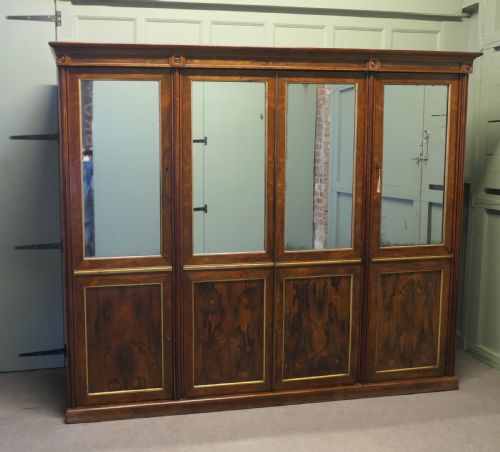
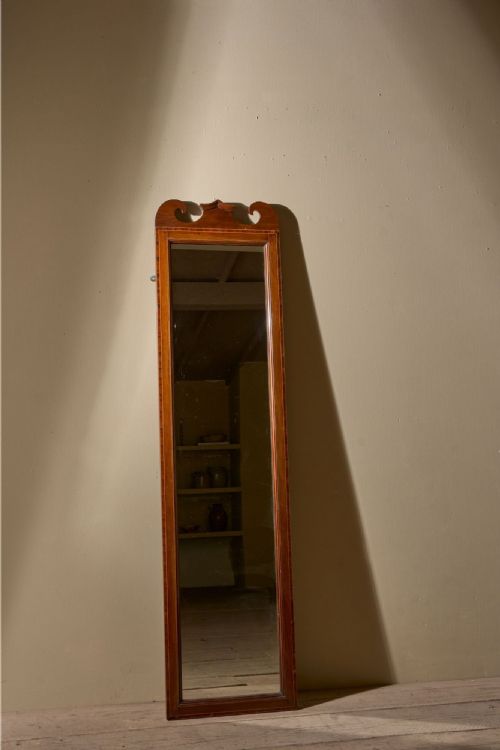
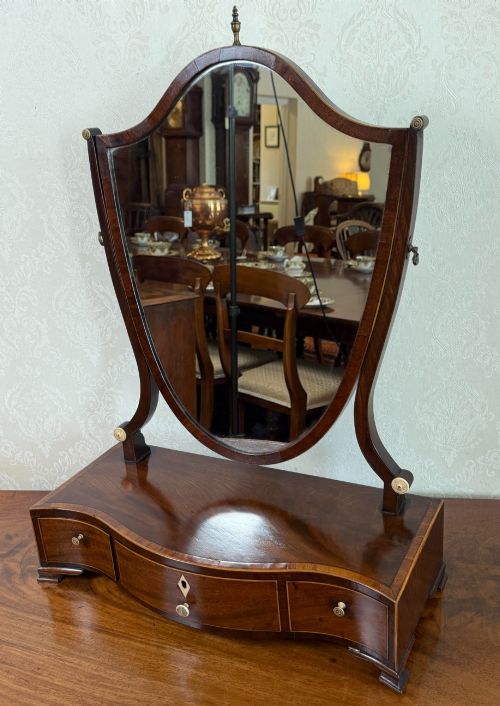


Regency Inlaid Mirror
A regency inlaid mirror brings linear elegance and rich timber tones into a room, offering both practical reflection and architectural depth.
Regency Inlaid Mirror
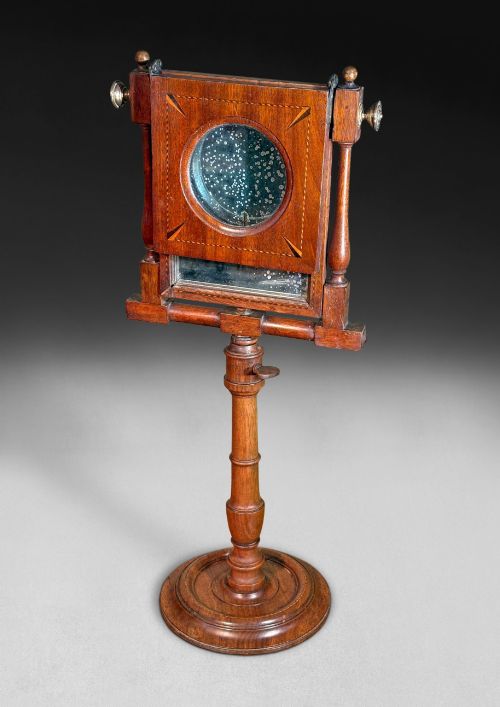
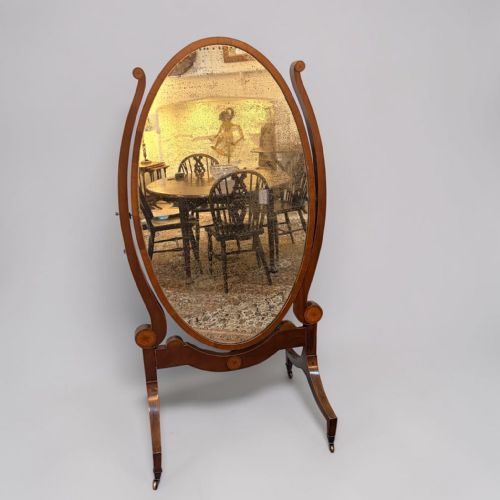
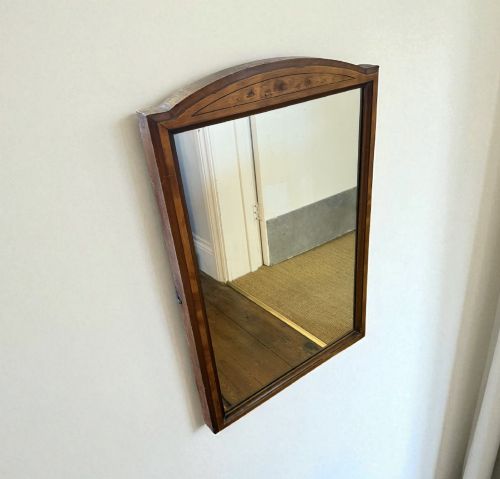
A regency inlaid mirror encompasses a variety of forms designed for both personal grooming and interior decoration, spanning wall-hung pier glasses, overmantels, and freestanding cheval mirrors. These pieces emerge predominantly from the nineteenth century, drawing on Georgian traditions while developing the distinctive styling of the Regency and Grand Regency periods.
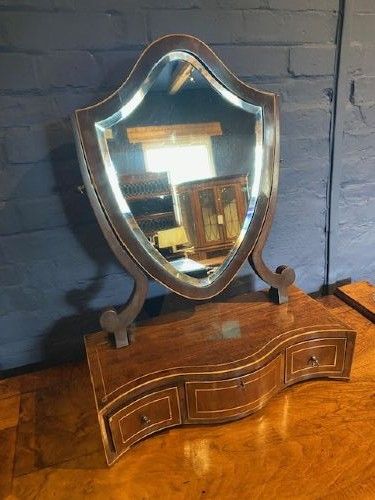
The most frequent form encountered on this page is the dressing mirror or toilet mirror, typically configured to sit atop a dressing table with adjustable swing action. Alongside these smaller pieces, larger wall mirrors and substantial overmantels appear, occasionally accompanied by related case furniture incorporating brass or timber stringing.
Materials and construction
Makers constructed these frames from dense cabinet timbers, relying heavily on mahogany, rosewood, and occasionally walnut, fruitwood, or satinwood veneers. These surfaces received meticulous contrasting stringing and inlay work using boxwood, ebony, bone, or brass detailing.
Mirrors were glazed with silvered mirror glass, housed within solid timber frames or pivoting stands supported by brass fittings and turned columns. Structural joinery and fine marquetry techniques defined the construction, uniting decorative veneers with robust internal carcases.
Regency Inlaid Mirror Retail Price Guide 2026
Typical asking prices for regency inlaid mirror among the pieces listed under this phrase on Sellingantiques today, from the lower quarter to the upper quarter. They describe what is for sale here now, not the wider market.
Several washstands on record conceal a hidden mirror, offering unexpected utility for nineteenth-century grooming behind closed cabinet doors.
Distinctions in quality
Quality rests upon the precision of the cabinetwork and the crispness of the inlaid stringing, where tighter geometric alignment and refined timber selection separate standard pieces from finer examples. The depth of the flame mahogany or the richness of the rosewood grain dictates visual presence.
Hardware and auxiliary fittings, such as original brass pivoting brackets, candle arms, or subtle bone accents, distinguish superior execution. The integrity of the original mirror glass and the harmony of proportions further separate workshops of ordinary skill from masters of the period.
The Regency Inlaid Mirror Glossary
- Cheval mirror
- A freestanding full-length mirror suspended on a vertical frame with pivoting pivots. This allows the glass to tilt to various angles.
- Pier mirror
- A tall mirror designed specifically to hang on the narrow section of wall between windows. It often reflects additional light into a room.
- Overmantel mirror
- A wide mirror intended to be positioned directly above a fireplace mantelpiece. These pieces often feature architectural framing.
- Stringing
- A narrow strip of contrasting timber or light-coloured material inlaid into a channel in the primary wood. It creates sharp linear borders.
- Toilet mirror
- A smaller tabletop mirror used for grooming, mounted on a box base or small drawers. They are frequently adjustable in pitch.
Regency Inlaid Mirror: Frequently Asked Questions
How do I date a regency inlaid mirror?
Dating relies upon stylistic markers, construction methods, and timber choice characteristic of the nineteenth century and the Regency period. Cabinet techniques visible in the backboards and dovetailing provide further chronological indicators.
Secondary woods and the style of brass hardware help narrow the timeframe, distinguishing early pieces from later Victorian interpretations or reproductions.
Where should I hang a pier mirror?
Pier mirrors were originally created to fill the narrow wall space between two windows, maximising natural light in formal rooms. Placing them in similar architectural gaps today maintains their traditional function.
They also work effectively above low sideboards, cabinets, or console tables to create a balanced focal point in a hallway or drawing room.
Are cheval mirrors adjustable?
Most antique cheval mirrors utilise a pivoting mechanism mounted on side pillars, allowing the glass frame to tilt back and forth. This design gave users full-length viewing angles in dressing rooms.
The brass thumbscrews or side pins can be tightened to secure the mirror at the desired angle during daily use.
What is the difference between rosewood and mahogany frames?
Mahogany frames exhibit reddish-brown tones with straight or flame grain patterns, providing a sturdy and classic British cabinet appearance. They frequently feature boxwood or ebony stringing for contrast.
Rosewood frames display darker, highly figured purple-brown grain with contrasting black streaks, often paired with bright brass inlay work for a more ornate visual impact.