





Regency Corner Unit
These pieces known as a regency corner unit are fitted tidy into rooms to hold books and display china without crowding the floor.
Regency Corner Unit
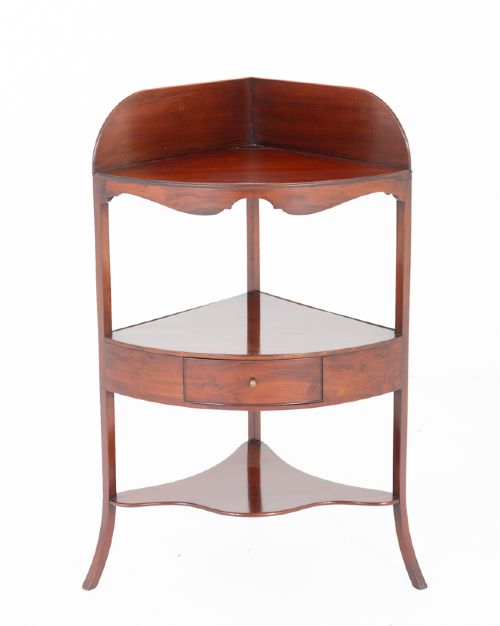
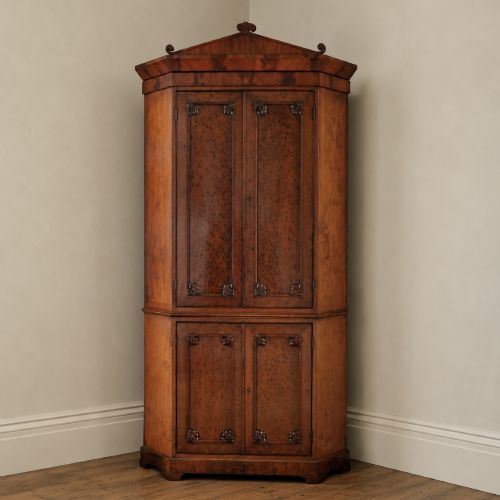
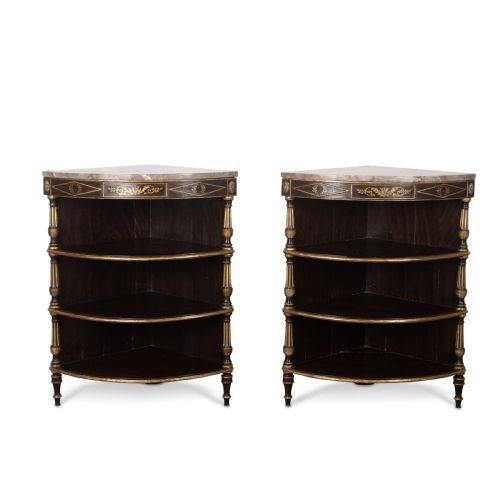
A regency corner unit sits neatly into the angles of a room, taking up space that often goes unused while providing practical storage. The selection includes corner cupboards, corner cabinets, and multi-tiered whatnots designed to fit room angles.
Most examples originate from the nineteenth century, including Georgian, Regency, George IV, and William IV periods. Buyers encounter freestanding floor-standing cupboards, wall-hung versions, and tiered shelving units.
How they were made
Cabinet makers utilised solid timber and veneers, choosing mahogany, plum pudding mahogany, birdseye maple, walnut, oak, and satinwood. Brass details appear on mountings, fittings, and handles across various items.
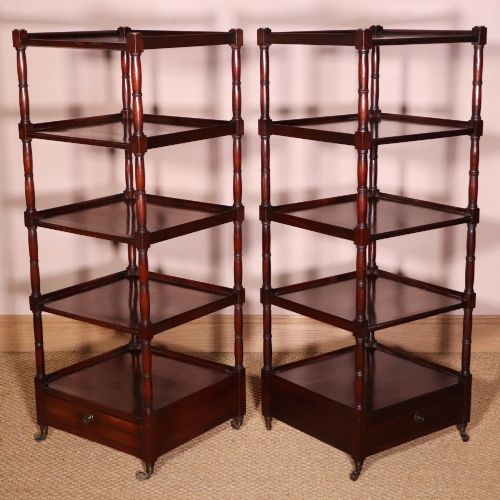
Surfaces feature inlaid details, marble tops, and fine grain work. Tiered whatnots employ upright supports with multiple shelves, while cupboards incorporate panelled doors with working keys.
Regency Corner Unit Retail Price Guide 2026
Typical asking prices for regency corner unit among the pieces listed under this phrase on Sellingantiques today, from the lower quarter to the upper quarter. They describe what is for sale here now, not the wider market.
Some pieces arrive with their original keys, proving that eighteenth and nineteenth century household security was taken very seriously indeed.
What varies in quality
The choice of timber creates distinct visual differences, with figured woods like plum pudding mahogany and birdseye maple marking out finer construction. Subtle string inlay and marble tops separate standard items from grander country house examples.
Proportion and structural balance define the better pieces, whether a five-tier freestanding whatnot or a bow fronted cupboard. Joinery detail and the crispness of turned supports indicate the skill of the maker.
The Regency Corner Unit Glossary
- Whatnot
- A set of open shelves used for displaying ornaments or holding books. These pieces typically feature three to five tiers supported by slender uprights.
- Etagere
- A French term for a freestanding set of tiered shelves. This functions identically to the whatnot and appears frequently in nineteenth-century interiors.
- Plum pudding mahogany
- A highly decorative tropical timber showing mottled, circular grain patterns resembling Christmas pudding fruit. Cabinet makers reserved this expensive material for prominent surfaces.
- Birdseye maple
- A light-figured timber showing small, distinctive dots resembling bird eyes across the grain. It provides a pale contrast to darker mahogany furniture.
- Bow front
- A convex curved cabinet front that projects outward from the corner angles. This shape softens the geometric lines of a room.
Regency Corner Unit: Frequently Asked Questions
What is a regency corner unit?
A regency corner unit is a piece of furniture designed specifically to fit into the ninety-degree angle of a room. These include tall cupboards with doors and tiered shelving units known as whatnots.
They maximise floor space while providing surfaces for display and storage in domestic interiors.
How do I use a whatnot?
A whatnot serves as an open shelving unit for displaying small ornaments, silver, or holding books close to hand. They sit freestanding in corners or against walls.
Their multiple tiers allow organised display without overwhelming smaller reception rooms.
What wood is used?
Mahogany forms the primary timber for these pieces, often featuring rich grain and polished surfaces. Makers also utilised walnut, oak, satinwood, and decorative veneers like birdseye maple.
Brass fittings and occasionally marble tops complement the wooden structures.