

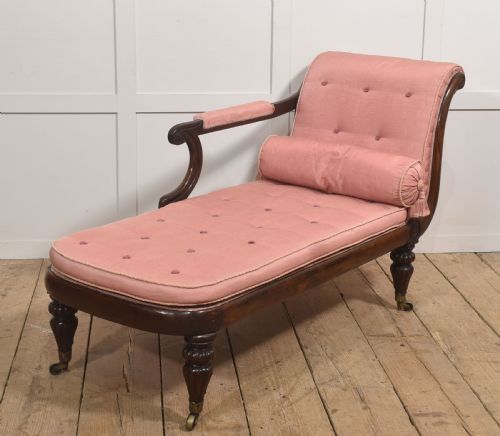


Regency Chaise Lounge
A regency chaise lounge offers structured repose, combining classical elegance with nineteenth-century comfort.
Regency Chaise Lounge
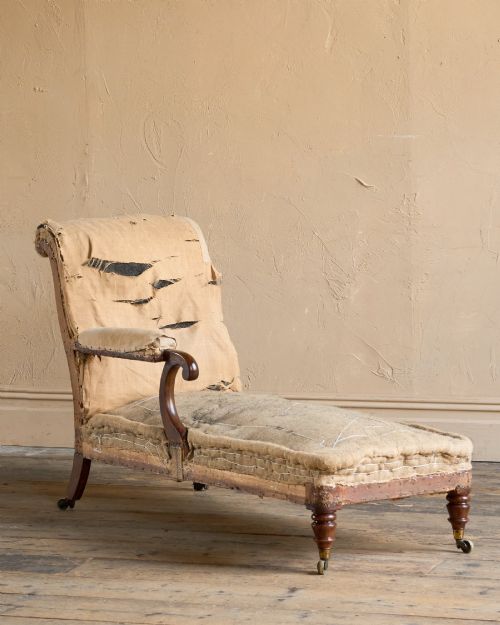
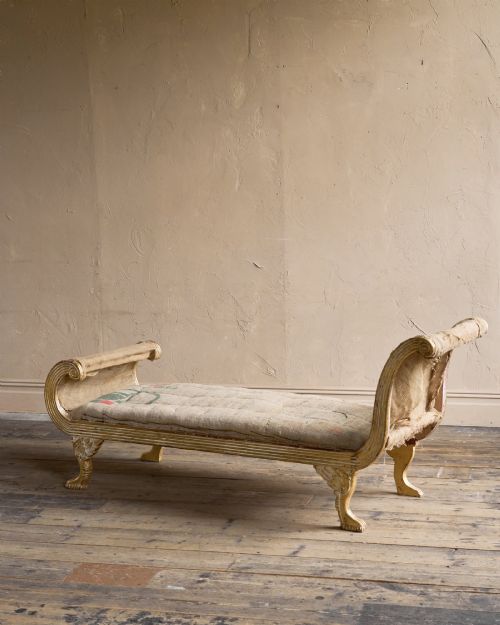
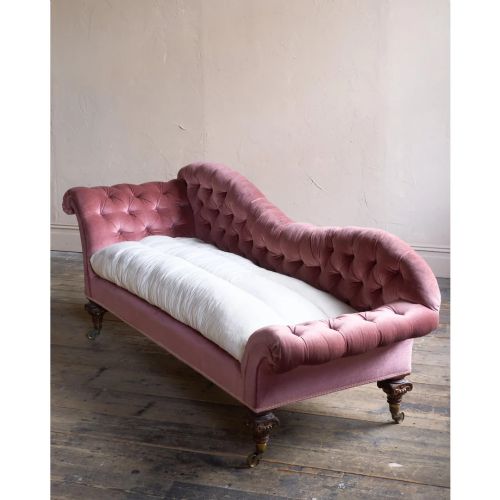
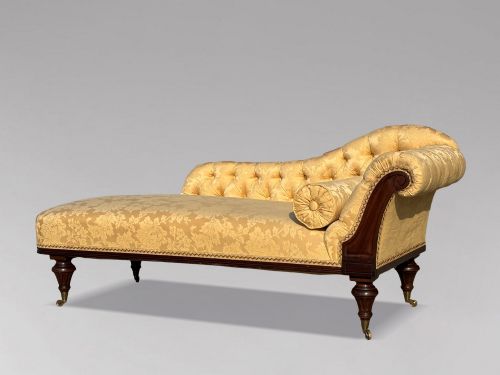
A regency chaise lounge is an elongated seat designed for reclining, combining the form of a chair and a daybed. These pieces draw on classical antiquity, emerging from nineteenth-century design to provide an architectural focal point in a room.
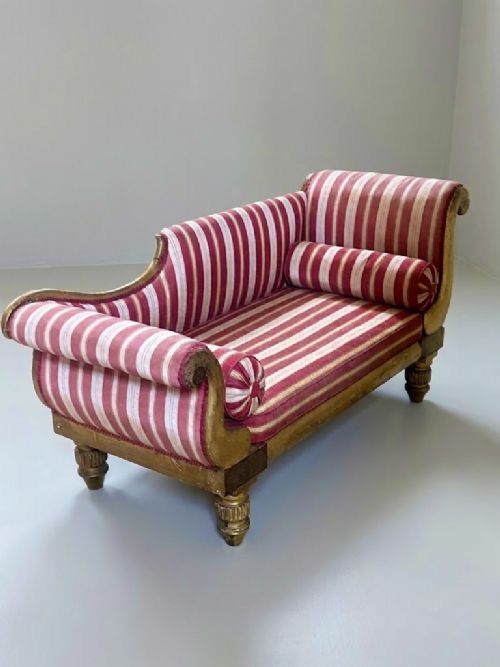
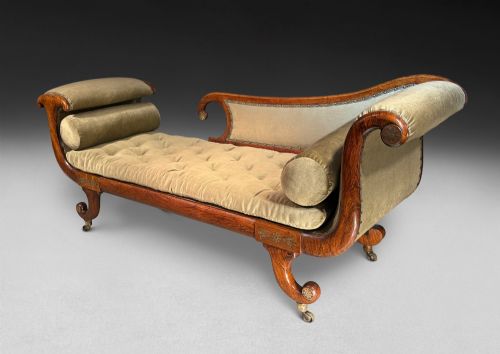
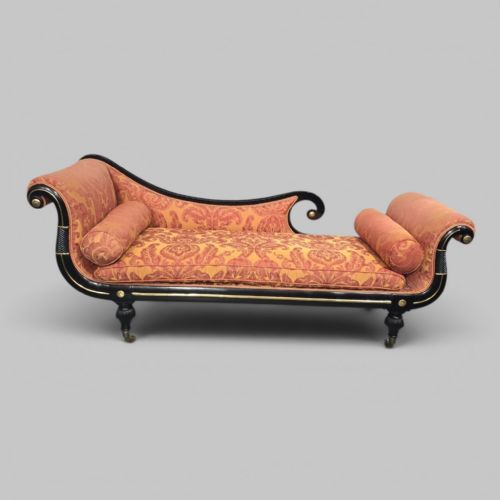
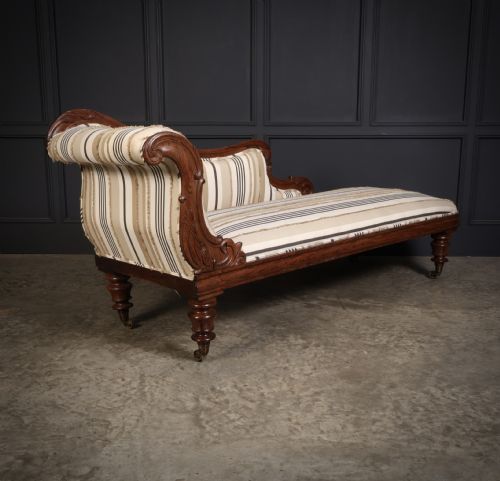
Most examples encountered here date from the nineteenth century, including specific Regency and William IV periods, alongside later echoes. Forms vary from scroll-arm sofas to daybeds and Récamier styles, often featuring distinct architectural legs.
The materials span solid woods, simulated finishes, and various textiles. Mahogany and rosewood form the structural backbone of these daybeds and chaise longues, frequently paired with damask, velvet, or silk upholstery.
How they were made
Makers utilised dense hardwoods such as mahogany and rosewood, alongside simulated rosewood finishes and ebonised timber. These woods were shaped into scroll arms, ionic column legs, and sweeping frames that supported the upholstered body.
Detailing often involved brass inlay set into the wooden framework to highlight the grain and linear precision. Caning appeared on specific seating surfaces, providing a lighter texture alongside traditional fabric upholstery.
Regency Chaise Lounge Retail Price Guide 2026
Typical asking prices for regency chaise lounge among the pieces listed under this phrase on Sellingantiques today, from the lower quarter to the upper quarter. They describe what is for sale here now, not the wider market.
Listings feature mahogany, rosewood, and simulated rosewood alongside brass inlay and cane seating across nineteenth-century periods.
What varies in quality
The choice of primary timber creates a clear distinction across pieces, moving from standard woods to solid rosewood and finely figured mahogany. Finer examples incorporate simulated grain work or precise brass inlay directly into the wooden structure.
Upholstery choices and internal framing integrity separate standard production from exceptional pieces. The execution of classical elements, such as ionic column legs and carved scroll arms, defines the overall refinement of the form.
Gillows·Willian Trotter·Syrie Maugham
The Regency Chaise Lounge Glossary
- Chaise Longue
- An upholstered long chair for reclining, combining a seat and a footrest into one continuous form. This seating type became popular for domestic repose during the nineteenth century.
- Récamier
- A type of daybed featuring two raised ends, named after a famous French portrait. It lacks a full backrest, offering symmetrical support at both extremities.
- Simulated Rosewood
- A painted or stained wood finish designed to imitate the rich grain and deep colour of genuine rosewood. Craftsmen utilised this technique on alternative timbers to achieve a luxurious appearance economically.
- Ionic Column
- A classical architectural column style featuring scroll-shaped ornaments on the capital. These decorative supports frequently appear on the legs of nineteenth-century seating.
- Damask Fabric
- A reversible figured textile woven on a jacquard loom, displaying patterns formed by contrasting weaves. This material appears on upholstery to add texture and subtle pattern.
Regency Chaise Lounge: Frequently Asked Questions
What is a regency chaise lounge?
A regency chaise lounge is a nineteenth-century reclining seat designed for interior lounging, drawing on classical Greek and Roman forms.
These pieces feature an elongated seat with a raised headrest, functioning as a hybrid between a sofa and a single bed.
How do I identify a William IV chaise longue?
William IV pieces typically date from the 1830s and display heavy mahogany or rosewood construction with robust scroll arms.
They often incorporate architectural elements like carved legs and substantial wooden frames, separating them from lighter Regency designs.
Where should I place a daybed?
A daybed works well floating in the middle of a large room or positioned against a focal wall to display its architectural profile.
Ensure there is sufficient surrounding space to appreciate the scroll arms and column legs from multiple angles.
What woods were used for these daybeds?
Nineteenth-century makers primarily utilised mahogany and rosewood, alongside simulated rosewood and ebonised timber surfaces.
Solid hardwoods provided the structural strength needed for the sweeping curves and heavy scrollwork characteristic of the period.