



Regency Caned Tub Chair
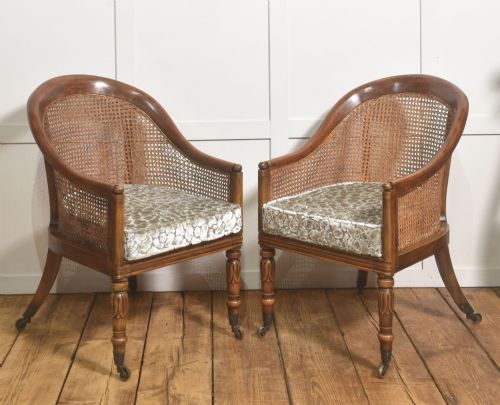
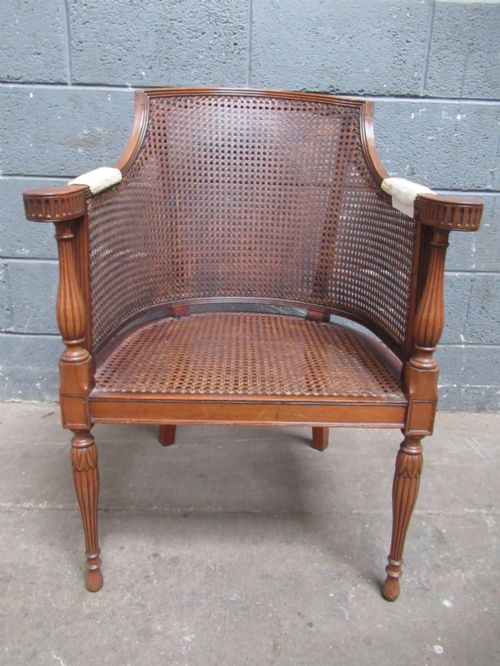
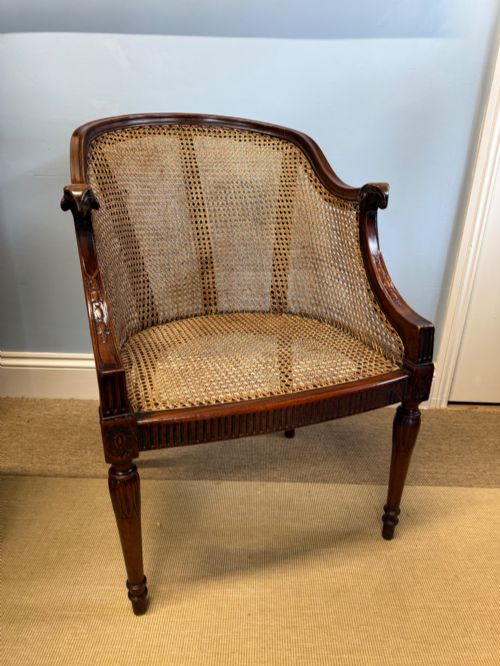
These regency caned tub chairs are classic library seating built for comfort, combining sturdy mahogany frames with woven rattan panels.
Regency Caned Tub Chair
A regency caned tub chair is a distinctive seating form defined by a rounded, enclosing back and sides that transition smoothly into armrests. These armchairs appear in periods ranging from the early nineteenth century through to Edwardian and later revivals, reflecting enduring popularity for library and parlour use.
The versions most commonly met on this page combine mahogany or ebonised wood frames with woven cane work on the back and seat sides. Pieces span genuine Regency examples alongside later twentieth century interpretations built in similar styles.
Makers and craftsmen also produced child size variants alongside standard library armchairs, demonstrating the versatility of the form across different domestic settings.
How they were made
Frames are constructed primarily from solid mahogany, with certain examples utilising ebonised wood or simulated faux rosewood finishes to mimic exotic timbers. Woodworkers shaped the curved tub backs from solid timber components joined with traditional methods.
Rattan cane is woven tightly into the open framework of the back and sides to create a resilient, breathable panel. Brass accents and loose cushions upholstered in leather or fabric complete the construction of these library armchairs.
Regency Caned Tub Chair Retail Price Guide 2026
Typical asking prices for regency caned tub chair among the pieces listed under this phrase on Sellingantiques today, from the lower quarter to the upper quarter. They describe what is for sale here now, not the wider market.
Listings feature mahogany, ebonised wood, and simulated rosewood alongside traditional rattan cane and leather upholstery.
What varies in quality
The refinement of the woodwork dictates much of the distinction between pieces, particularly in the crispness of the turned legs and the smoothness of the curved tub back. Timber selection ranges from plain hardwood to richly grained mahogany or carefully executed ebonised and simulated rosewood finishes.
The tightness and regularity of the cane weaving also separate standard examples from finer library armchairs. Original proportions and attribution to established workshops like Gillows elevate certain pieces above later revivals.
Gillows
The Regency Caned Tub Chair Glossary
- Bergère
- An enclosed upholstered armchair with wooden framing, often featuring cane panels on the back and sides. This French style gained immense popularity in British seating during the Regency period.
- Caning
- The practice of weaving rattan or reed material to form porous panels on chair backs and seats. It provides a flexible yet supportive surface.
- Ebonised
- Wood treated with a dark finish to imitate expensive ebony. Cabinet makers utilised this technique to create striking contrast on library furniture.
- Tub chair
- An armchair featuring a continuous curved back and armrests forming a deep, enveloping enclosure. The shape derives from eighteenth century seating designed for draught reduction.
- Faux rosewood
- A painted or stained surface treatment applied to common hardwoods to replicate the grain and colour of genuine rosewood. This decorative technique was common in Regency cabinet making.
Regency Caned Tub Chair: Frequently Asked Questions
What is a regency caned tub chair?
A regency caned tub chair is a traditional library armchair featuring a rounded, enclosing back and woven rattan panels. These seats combine sturdy mahogany frames with comfortable upholstered cushions.
They appear in authentic early nineteenth century forms as well as later revival styles from the twentieth century.
How were these armchairs used?
These armchairs served primarily as comfortable seating for reading and writing in libraries and studies. The enclosed tub shape provided shelter from draughts in large rooms.
They also functioned as elegant drawing room furniture where guests could sit comfortably for extended periods.
How do you identify a genuine period piece?
Authentic period pieces exhibit the construction methods, timber selections, and decorative details typical of the early nineteenth century. Cabinet makers of that era utilised solid mahogany and precise hand-weaving techniques for the cane panels.
Later revivals from the Edwardian era or the nineteen thirties often replicate these historical forms while using slightly different manufacturing markers.
How do you care for caned furniture?
Caned furniture requires gentle cleaning with a soft brush to remove dust from the woven rattan panels. Keeping the room humidity stable prevents the natural cane from becoming brittle over time.
Conditioning the wood frame with appropriate polish maintains the finish without damaging the woven sections.