


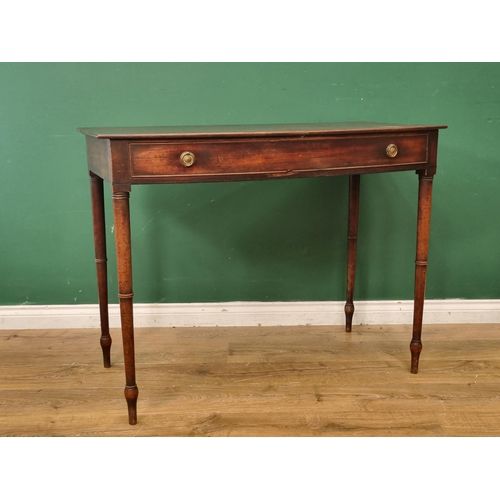


Regency Bowfront Desk
A regency bowfront desk offers curved mahogany surfaces and practical drawers, bringing period elegance and writing space together in one room.
Regency Bowfront Desk
When you search for a regency bowfront desk, you are looking at sophisticated writing furniture defined by a curved front and substantial timber construction. These pieces bridge the gap between working utility and formal display, making them a cornerstone of traditional interior decoration.
The versions you are most likely to meet on this page span the nineteenth century, including pieces made during the Regency and Georgian periods alongside later twentieth-century interpretations. They appear in forms such as kneehole side tables, writing tables, and dressing tables with integrated writing surfaces.
Makers and manufacturers through time adopted the characteristic bow front to soften the geometry of a room while maintaining deep central drawers for storage. The scale ranges from compact side tables to wider pieces featuring multiple drawers and inset leather writing panels.
Construction and materials
Cabinet makers relied heavily on solid mahogany and flame mahogany veneer to achieve the rich grain patterns and warm reddish tones characteristic of the period. This timber was often paired with contrasting stringing and banding in satinwood or ebony to accentuate the curved outlines of the carcase.
Working surfaces frequently incorporate fitted leather inserts for writing, whilst drawer construction utilises secondary timbers alongside brass handles and escutcheons. Bone or delicate wood inlay frequently ornaments the key escutcheons and drawer fronts of finer examples.
Listings feature mahogany, flame mahogany veneer, satinwood, ebony, and brass alongside leather and bone.
Judging quality and finish
Quality rests primarily on the choice of timber and the precision of the veneer work, particularly how smoothly the flame mahogany follows the sweeping curve of the bowfront. Superior examples demonstrate seamless transitions at the corners and meticulous matching of the grain across multiple drawer fronts.
The refinement of secondary details, such as the crispness of string inlay, the substance of brass hardware, and the neat integration of leather writing surfaces, separates standard utility pieces from master cabinet work.
The Regency Bowfront Desk Glossary
- Bowfront
- A convex curved cabinet front that projects outward in an arc. This curved profile softens the silhouette of case furniture and maximises central storage depth.
- Flame mahogany
- A distinct figure of mahogany timber showing rippled, flame-like patterns. Cabinet makers prized this veneer for principal display surfaces.
- Kneehole
- A recessed central space beneath a desk or dressing table designed to accommodate the user's legs. It is typically flanked by vertical banks of drawers.
- Stringing
- Thin inlay lines of contrasting wood used to outline drawers, legs, and tabletops. It provides a sharp visual border against the main mahogany carcase.
- Escutcheon
- A decorative shield or plate surrounding a keyhole. They are frequently cast in brass or inlaid in bone.
Regency Bowfront Desk: Frequently Asked Questions
What is a bowfront desk?
A bowfront desk is a piece of writing furniture featuring a convex, curved front facade that projects outward. These desks combine drawers with a writing surface and showcase the natural grain of mahogany.
They function equally well as writing tables, dressing tables, or decorative side tables in a study or reception room.
How do I date a mahogany desk?
Dating relies on examining the timber species, construction methods, and secondary woods used inside the drawers. Georgian and Regency pieces display hand-cut dovetails and native hardware conventions.
Later nineteenth-century and twentieth-century interpretations often reveal machine-sawn elements or standardised fixings beneath the polished exterior.
How do I care for leather desk tops?
Leather writing surfaces require gentle cleaning with a damp cloth and occasional treatment with appropriate leather dressings to prevent cracking. Avoid placing hot cups or liquids directly on the hide.
Keeping the room humidity stable prevents the underlying timber carcase from expanding and putting pressure on the leather insert.
Where were these desks used?
These pieces originally served in principal reception rooms, libraries, and private dressing chambers of large residences. They provided a designated surface for correspondence and household administration.
Today, they transition easily into modern home offices, living rooms, and hallways as functional display and writing furniture.