

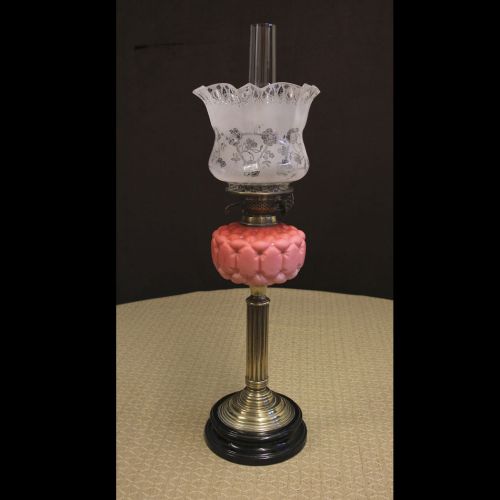

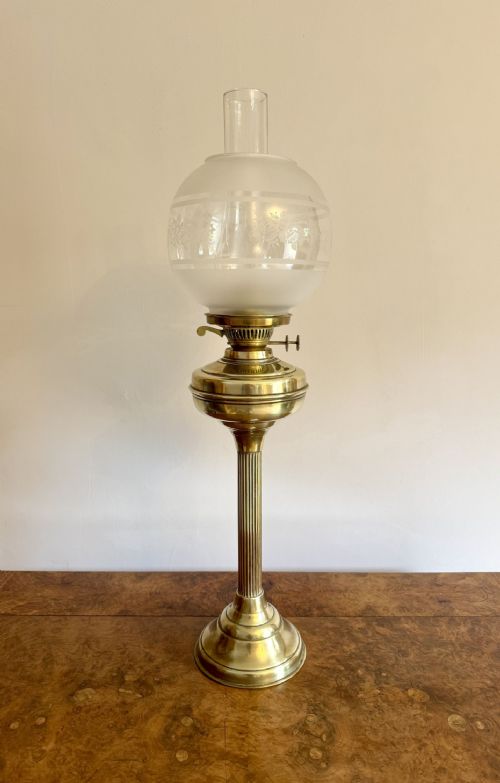


Reeded Glass Lamp
A reeded glass lamp brings refined texture and ambient warmth to a room, offering the subtle linear catch of light that collectors prize.
Reeded Glass Lamp
When you search for a reeded glass lamp, you encounter lighting fixtures defined by vertical fluted moulding in the glass body or shade. The selection spans distinct forms, including table oil lamps, pendant lights, and standard lamps originating from the Victorian era up to the 1930s.
Victorian examples frequently pair brass columns with textured glass reservoirs, while 1920s pieces lean towards opaline glass shades and adjustable metal framework. These lighting pieces reflect the transition from domestic paraffin burning to electric illumination across several decades.
The variants on this page showcase traditional and Art Deco influences alongside French classical designs. Brass, opaline glass, and chrome dominate the physical build of these surviving pieces.
Materials and construction
Makers utilised brass for structural columns, burners, and heavy bases to ensure stability, often combining the metal with hand-moulded glass. The reeded pattern was pressed or blown into the glass while hot, creating uniform vertical channels that diffuse the light.
Ceramic components and silver plate appear alongside standard brass hardware, while fabric sometimes forms the backing for later shades. Craftsmanship in the Victorian and Edwardian periods prioritised durable mechanical adjustments and heavy gauge metalwork.
Reeded Glass Lamp Retail Price Guide 2026
Typical asking prices for reeded glass lamp among the pieces listed under this phrase on Sellingantiques today, from the lower quarter to the upper quarter. They describe what is for sale here now, not the wider market.
Listings feature periods spanning from 1860 to the 1930s, utilising brass, glass, opaline glass, and chrome.
Judging quality in reeded glass
Quality rests in the crispness of the moulded glass flutes and the weight of the underlying brass or metal frame. Superior examples display clean glass free from internal cloudiness and feature robust, well-engineered adjustment mechanisms.
The integration between the glass reservoir and the metal mount reveals the standard of manufacture. Better pieces retain original burners, collars, and heavier gauge metal that maintain structural integrity over generations.
The Reeded Glass Lamp Glossary
- Reeded
- A decorative moulding consisting of parallel raised vertical lines that resemble plant stems. This texture catches and refracts light across the surface of the glass.
- Opaline glass
- An opaque or translucent pale glass developed during the nineteenth century. It diffuses light softly and appears frequently in pendant and table configurations.
- Duplex
- A type of double-wick burner system introduced in the Victorian period. It allows for a brighter flame and greater control over oil consumption.
- Standard lamp
- A tall freestanding floor lamp designed to illuminate a room from standing height. These pieces often feature weighted bases to support adjustable upper stems.
Reeded Glass Lamp: Frequently Asked Questions
How do I date a brass and glass lamp?
Dating relies on examining the manufacturing techniques, burner types, and stylistic cues present in the metal and glass. Victorian pieces often incorporate heavy cast brass bases and complex oil burner mechanisms.
Later pieces from the 1920s tend to introduce chrome elements, simpler electrical fittings, and opaline glass shades reflecting Art Deco preferences.
Were these lamps originally electric?
Many early examples started life as oil or paraffin burning lamps before conversion to electricity during the twentieth century. Burners and reservoirs were adapted to house wiring while retaining the original exterior brass and glass.
Some later pieces from the 1920s and 1930s were manufactured specifically for electric use from the outset.
How should I clean reeded glass?
Cleaning requires gentle washing with warm soapy water and a soft cloth to remove dust from the vertical channels. Abrasive cleaners should be avoided to protect the surface finish of both the glass and the surrounding metal.
Metal components benefit from dry dusting rather than harsh chemical polishes that can strip antique patination.
What is an opaline shade?
An opaline shade is made from milky white or pastel translucent glass that scatters light evenly without harsh glare. This material became popular for pendant lights and desk lamps during the early twentieth century.
The glass texture complements the linear quality of reeded mouldings by softening the emitted light.