

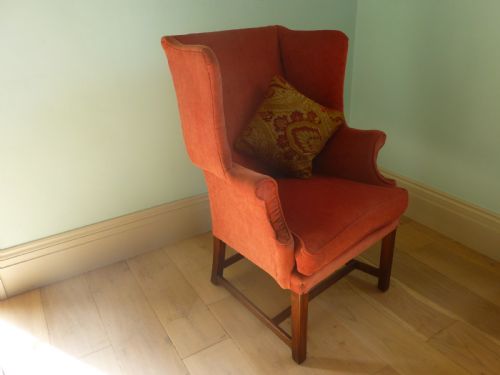
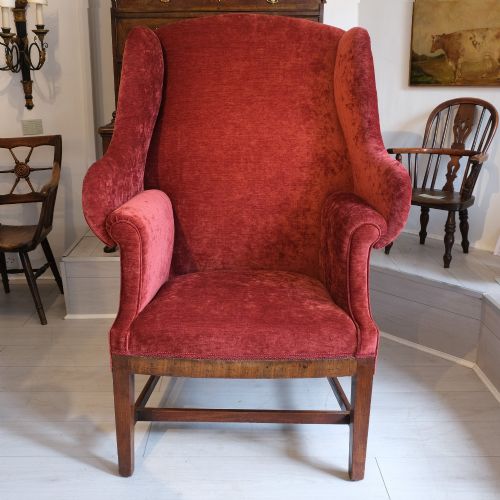
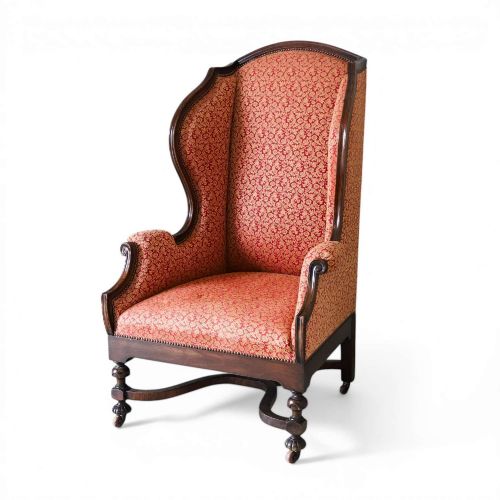


Red Wing Chair
A red wing chair brings high-backed warmth and traditional comfort to a room, drawing on centuries of English seating design.
Red Wing Chair
The red wing chair category encompasses high-backed upholstered armchairs designed to shield the sitter from draughts, appearing in forms from the 18th century through to the 20th century. Buyers most commonly meet examples built in Georgian, Victorian, and Edwardian eras, alongside later revivals of earlier styles.
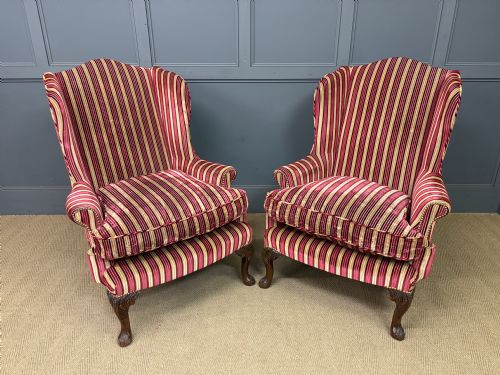
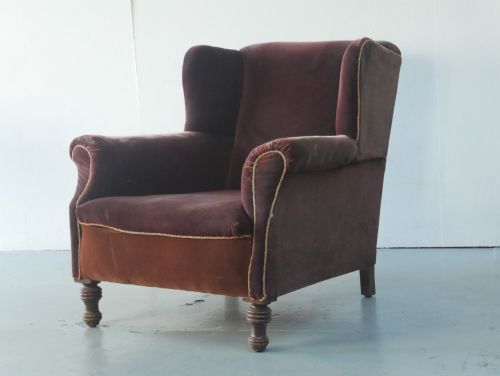
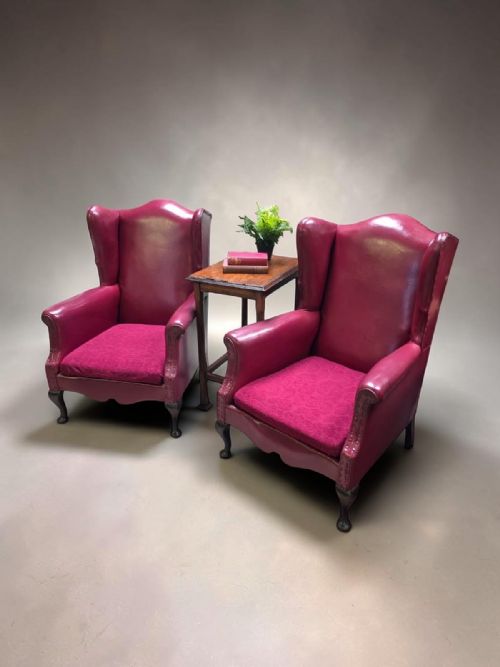
Makers utilised various timber frames, covering them in distinctive red upholstery ranging from leather and damask to velvet and chenille. The selection includes standalone armchairs, pairs, matching footstools, and larger Chesterfield or settee variants.
The lineage spans authentic 18th-century pieces to early 20th-century revivals like Queen Anne, Chippendale, and Carolean styles, often standing on mahogany, walnut, or oak frames with brass details.
Materials and construction
Carpenters constructed the structural frames using hardwoods such as mahogany, walnut, and oak, shaping legs and stretchers to reflect prevailing stylistic revivals. These robust wooden skeletons support deep padding and sprung interiors.
Upholsterers then enclosed the frames in durable textiles and leathers, securing the exterior with materials like cotton, velvet, chenille, and damask. Brass hardware and studs frequently appear along the seams and woodwork.
Red Wing Chair Retail Price Guide 2026
Typical asking prices for red wing chair among the pieces listed under this phrase on Sellingantiques today, from the lower quarter to the upper quarter. They describe what is for sale here now, not the wider market.
Listings span the 18th, 19th, and early 20th centuries, covering Georgian, Victorian, Edwardian, and various revival periods.
Assessing quality and authenticity
Quality rests upon the integrity of the underlying timber frame and the fidelity of the period style, whether an original 18th-century piece or a considered 20th-century revival. Finer examples retain their original structural proportions and supportive upholstery stuffing without sagging.
The choice of covering material and the precision of the upholstery work also define the tier of the piece. Superior specimens feature high-grade leather, rich damask, or heavy twill properly tensioned across the wings and arms.
HOWARD AND SONS
The Red Wing Chair Glossary
- Wingback
- An armchair featuring projecting side panels designed to trap heat and block room draughts. These wings merge directly into the armrests.
- Chesterfield
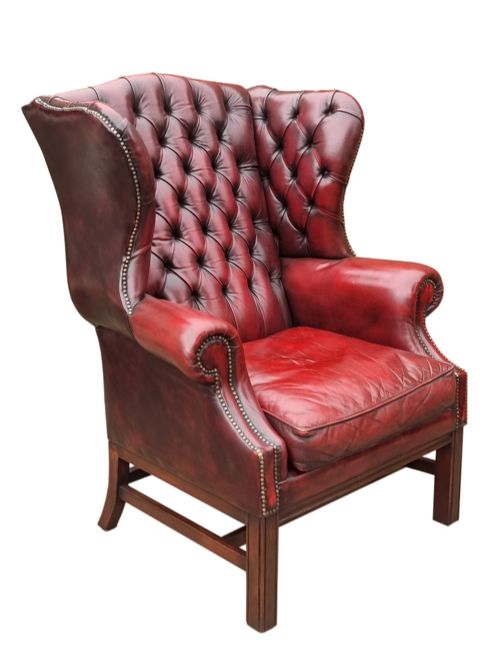
- A traditional upholstered seating style characterised by deep buttoning and rolled arms of equal height to the back. It frequently pairs with oxblood or burgundy leather.
- Damask
- A reversible figured fabric traditionally woven with patterns in rich tones such as red. It provides a formal, textured surface.
- Chenille
- A fuzzy woven yarn resembling a caterpillar, utilised in soft upholstery twills. It offers a tactile, durable finish.
- Carolean Style
- A restoration-era design idiom known for ornate carved woodwork and rich upholstery. Pieces from this revival often employ walnut or hardwood frames.
Red Wing Chair: Frequently Asked Questions
What is a red wing chair?
A red wing chair is a high-backed upholstered armchair featuring protective side panels, finished in red leather, damask, velvet, or chenille. These seats trace their lineage from the 18th century through various Victorian and Edwardian revivals.
Designed originally to block draughts around a fireplace, the form remains a prominent traditional seating choice for studies and living spaces.
Where should I place a wing chair?
These chairs suit corners of living rooms, studies, or bedrooms where the high back creates a private seating nook. Pairing them with a matching footstool enhances the comfort of the deep seat.
Keep them away from direct sunlight to protect dyed leather and coloured textiles from fading over time.
How do I care for leather wing chairs?
Maintain leather upholstery by dusting regularly with a soft cloth and applying appropriate leather balms to prevent drying. Avoid placing the chair near direct heat sources which can crack the hide.
Fabric-covered versions benefit from gentle vacuuming using a low suction brush attachment to remove debris from deep pleats.