




Red Stripe Chairs
Red stripe chairs bring striking linear pattern and period form together, offering seating options ranging from dining sets to intimate boudoir chairs.
Red Stripe Chairs
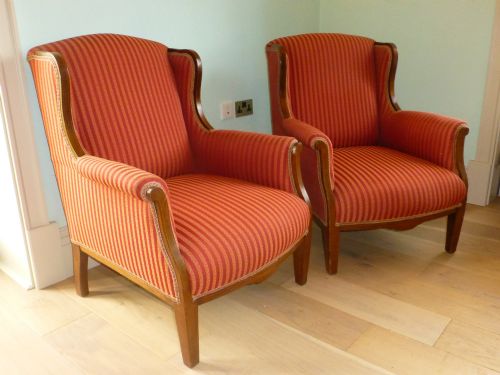
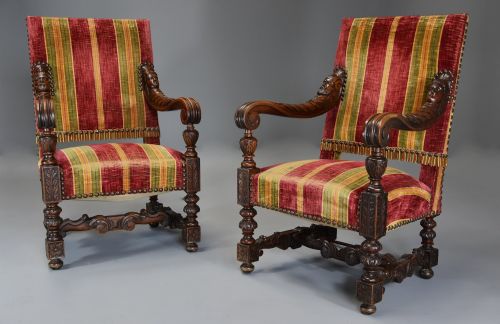
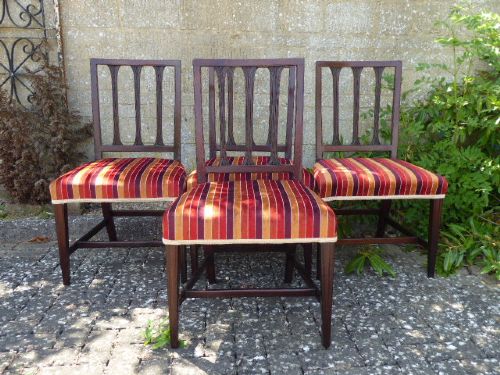
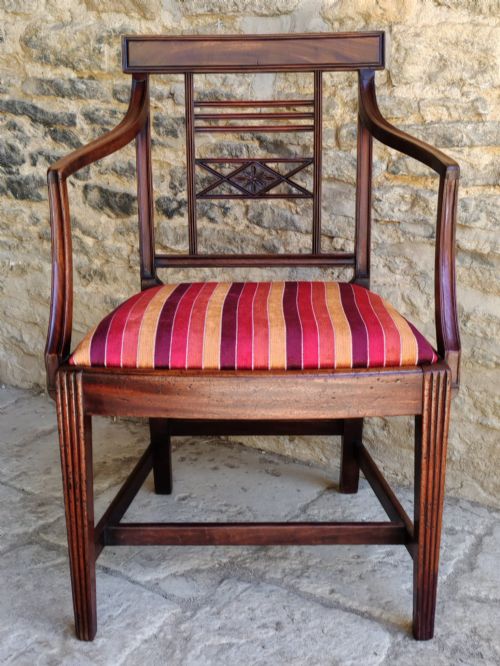
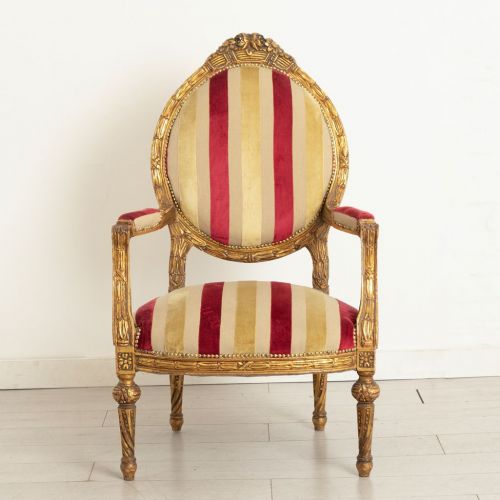
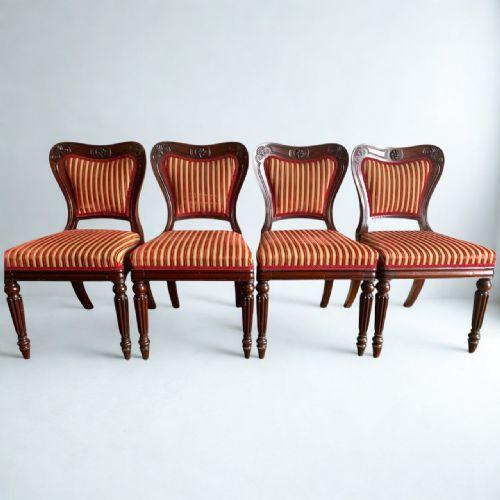
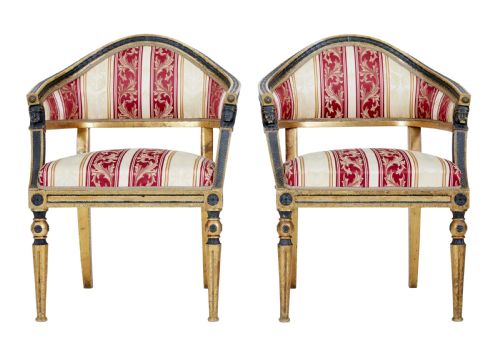
When searching for red stripe chairs, buyers encounter a diverse selection of seating forms spanning the eighteenth century through the twentieth century. The inventory on this page includes dining chairs, armchairs, nursing chairs, and salon settees representing various historical epochs.
The most common forms you will meet here are mahogany dining chairs from the Georgian and Victorian periods, alongside upholstered armchairs and giltwood seat furniture. These pieces combine traditional timber frames with distinctive striped fabric upholstery.
Origins range widely across British, French, Italian, and Swedish workshops, taking in styles from Chippendale Revival and Regency to Louis XVI and French Baroque. Each period brings distinct proportions and carving details to the overarching category of red stripe chairs.
Materials and construction
Makers utilised solid hardwoods including mahogany, walnut, rosewood, oak, and ebonised timber to build sturdy structural frames. Carved details, giltwood finishes, and inlaid mahogany further distinguish the decorative approach of different periods.
Upholstery fabric, velvet, and textile coverings provide the distinctive red stripe visual element across the seating surface. Traditional joinery techniques secure the wooden components, supporting balloon-back designs, open armchairs, and wingbacks.
Red Stripe Chairs Retail Price Guide 2026
Typical asking prices for red stripe chairs among the pieces listed under this phrase on Sellingantiques today, from the lower quarter to the upper quarter. They describe what is for sale here now, not the wider market.
Listings feature mahogany, walnut, rosewood, and giltwood frames paired with textile and velvet upholstery across multiple centuries.
Evaluating quality and execution
Quality in these seating pieces rests upon the crispness of timber carving, the integrity of the frame construction, and the proportion of the design. Finer examples display deeply sculpted scrollwork, cabriole legs, and carefully matched wood grains.
The standard of upholstery work and the selection of textile also dictate the overall success of the piece. Superior items maintain rigorous balance between their period wooden framework and the applied fabric.
The Red Stripe Chairs Glossary
- Balloon-back
- A chair back shaped like a rounded balloon, popular during the nineteenth century. This form frequently appears on Victorian dining chairs.
- Giltwood
- Wood that has been coated with gold leaf or a gold-coloured finish. It is commonly seen on decorative French and Italian armchairs.
- Carver
- An armchair designed for the head of a dining table, featuring supportive armrests. These pieces match larger sets of dining chairs.
- Fauteuil
- An open-framed upholstered armchair with wooden arms originating in France. They often feature carved giltwood or polished walnut surfaces.
- Cabriole leg
- A furniture leg that curves outward and then tapers inward, resembling an animal's leg. This shape is typical of eighteenth-century and revival seating.
Red Stripe Chairs: Frequently Asked Questions
How do I identify period chairs?
Examining the timber species, joinery methods, and carved stylistic details reveals the era of manufacture. Eighteenth-century pieces often employ solid mahogany with restrained carving, whilst Victorian items frequently feature balloon backs and rosewood.
Comparing the proportions and upholstery style against documented examples helps confirm the date. Regional variations in British and continental furniture further aid in placing the piece correctly.
Can I use antique chairs daily?
Most solid timber dining chairs and sturdy armchairs are constructed to withstand regular seating use. Checking the stability of the frame and joints ensures the piece remains structurally sound for daily life.
Delicate giltwood items or fragile salon chairs require a more gentle approach. Placing them in low-traffic areas protects their historic surfaces and delicate carved details.
What defines a nursing chair?
Nursing chairs are typically low-seated upholstered chairs designed for comfort and ease of use in private chambers. They often feature sprung seats and padded backs covered in textile or velvet.
Their compact height and supportive design make them distinct from standard dining or drawing-room seating. Ebonised frames and nineteenth-century dates are common among these pieces.
Where were these chairs made?
The pieces originate from workshops across Britain, France, Italy, and Sweden, reflecting regional design preferences. British makers favoured mahogany and rosewood for dining sets, whilst continental makers produced ornate giltwood seating.
Stylistic markers such as Louis XVI motifs or Regency painted finishes point directly to their geographic origins. Each manufacturing centre contributed distinct cabinetmaking traditions.