



Red Staffordshire Dogs
Red staffordshire dogs bring character to a mantelpiece, offering the traditional charm of Victorian ceramic figures.
Red Staffordshire Dogs
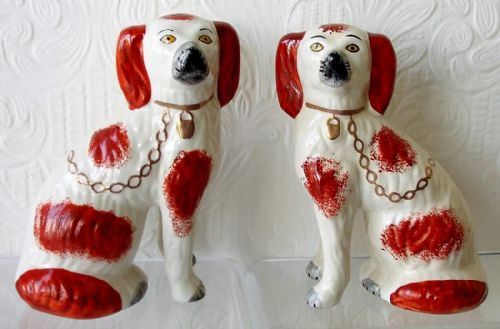
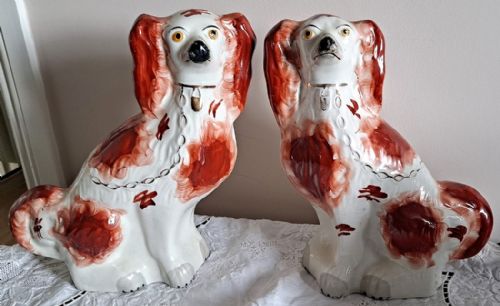
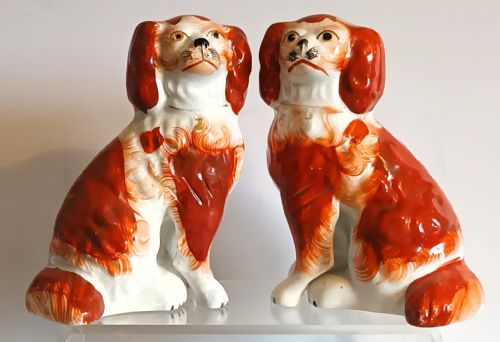
Red staffordshire dogs are ceramic figures shaped as seated spaniels and greyhounds, produced primarily across the nineteenth century. These decorative figurines frequently appear in pairs designed to flank a fireplace or adorn a shelf.
The most common examples on this page are Victorian spaniels, often called comforter spaniels or wally dogs. Makers also produced variations including greyhound inkwells and models with baskets or bush tails.
Dating ranges across the period from the Regency era through to eighteen eighty. Collectors encounter various numbered sizes, indicating the scale of the original moulds used by the potteries.
How They Were Made
The materials combine ceramic bodies with painted enamel decoration and fired glaze surfaces. Some examples incorporate separate leg modelling beneath the main body of the seated animal.
Red Staffordshire Dogs Retail Price Guide 2026
Typical asking prices for red staffordshire dogs among the pieces listed under this phrase on Sellingantiques today, from the lower quarter to the upper quarter. They describe what is for sale here now, not the wider market.
Some spaniels wear padlocked chains painted in gilt, guarding a secret only the Victorian fireside knew.
What Varies in Quality
Quality rests upon the crispness of the moulding and the precision of the hand-painted enamel details. Finer examples display clear facial expressions and carefully applied gilt accents rather than hasty brushwork.
The weight of the ceramic body and the uniformity of the glaze surface differentiate standard output from superior pieces. Size also influences distinction, with larger numbered pairs commanding greater visual presence.
The Red Staffordshire Dogs Glossary
- Comforter spaniels
- Staffordshire ceramic figures modelled on Queen Victoria's pet spaniel, Dash. These dogs traditionally sat on hearths to greet visitors.
- Earthenware
- Porous pottery fired at lower temperatures than porcelain. Most nineteenth-century figures utilise this practical ceramic body.
- Enamel
- Opaque vitreous paint fused to the pottery surface during firing. This technique provides the characteristic red patches and facial markings.
- Gilt
- A thin layer of gold applied to ceramic details such as chains and lockets. It adds a decorative flourish to the finished figure.
- Inkwell
- A small desk reservoir for ink combined with a figurine base. Greyhound examples integrate the writing accessory into the sculptural form.
Red Staffordshire Dogs: Frequently Asked Questions
What are red staffordshire dogs?
Red staffordshire dogs are ceramic mantelpiece figures shaped as seated spaniels and greyhounds. They were widely produced in pottery workshops during the nineteenth century.
Most examples survive as pairs designed to sit facing one another on either side of a fireplace. Their red and white markings emulate popular lapdogs of the Victorian era.
How were they used in Victorian homes?
These ceramic figures served as ornamental furnishings in nineteenth-century parlours and drawing rooms. Placing them on the mantelpiece was a common domestic arrangement.
According to tradition, turning the dogs to face inwards meant the owners were at home, while turning them outwards indicated absence.
How do I date red staffordshire dogs?
Dating relies on stylistic details, ceramic composition, and manufacturing marks such as size numbers. Most pieces date from the Victorian period between eighteen forty and eighteen eighty.
Earlier Regency examples tend to feature finer porcelain bodies, whereas later Victorian output leans towards heavier earthenware ceramics with distinctive enamel patterns.
Why do some dogs have separate legs?
Separate leg construction refers to modelling where the limbs are cast distinctly from the main body. This technique reduces firing cracks in larger ceramic figures.
Potters utilised this method on specific sizes to improve structural stability during the high-temperature kiln process.