


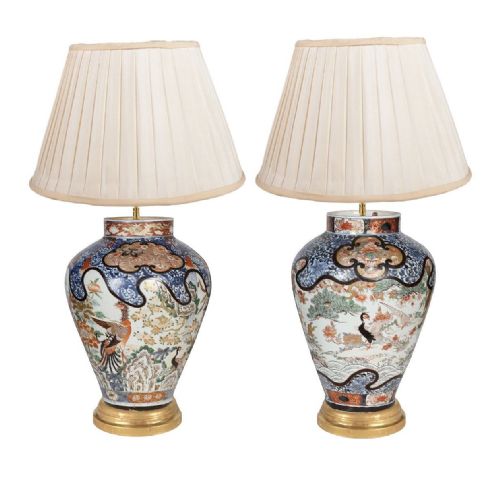

Red Shaded Table Lamp
A red shaded table lamp provides warm illumination, drawing the eye with rich colour across Victorian, Edwardian, and earlier periods.
Red Shaded Table Lamp
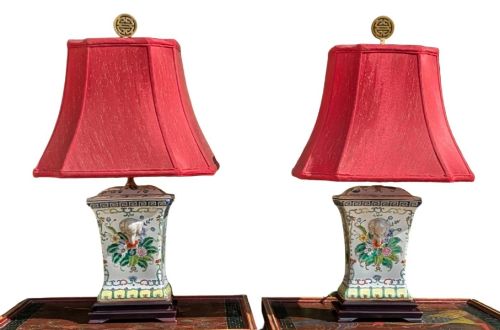
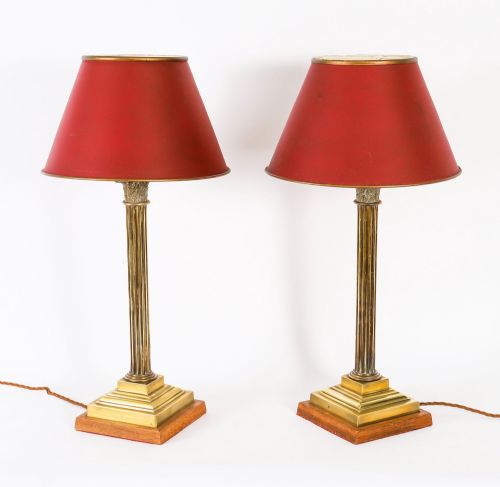
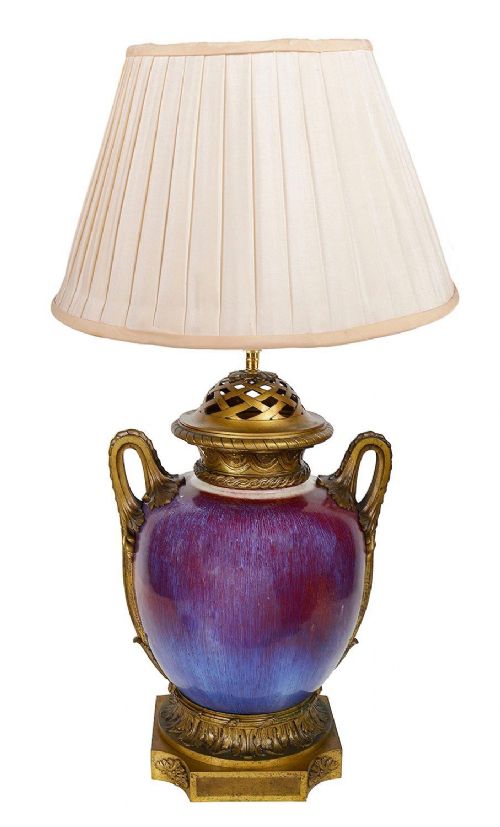
A red shaded table lamp is typically formed by pairing a period base with a contrasting shade, uniting varied materials such as brass, porcelain, and glass. The selections here span the eighteenth century to the early twentieth century, incorporating Victorian and Edwardian examples alongside Chinese and Japanese export vases adapted for illumination.
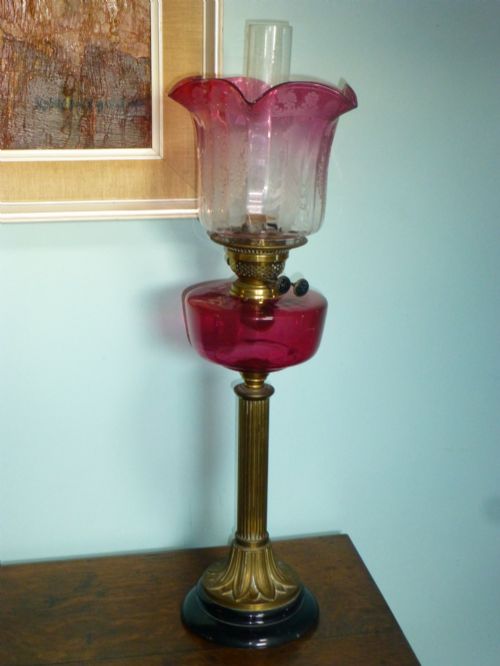
Oil lamps converted to electricity sit alongside dedicated table lamps and figural bronze bases. Buyers encounter classical columns, carved rootwood, and ceramic vessels repurposed into lamps across these listings.
Materials and construction
Metals such as brass, gilt bronze, ormolu, and silver plate form structural columns and bases, often cast and chased with decorative motifs. Wood, enamel, and tole peinte provide alternative bodies.
Ceramic bodies utilise porcelain, celadon, and glass, including cranberry glass and etched ruby glass fonts and shades. Fabric constructs the soft shades that top these diverse bases.
Several converted oil lamps retain their original duplex burners, reminding us of evenings spent reading by steady lantern light.
Judging quality and execution
Quality rests in the crispness of the casting on bronze and brass mounts, the depth of the glaze on porcelain vessels, and the integrity of carved wooden details. Fretwork precision and the preservation of original gilding separate finer pieces.
The harmony between the original vessel and its electrical adaptation affects desirability, as does the retention of matching pairs and authentic period glass components.
The Red Shaded Table Lamp Glossary
- Cranberry glass
- A rich red glass produced by adding gold chloride to the molten batch. It appears frequently in nineteenth century oil lamp fonts and shades.
- Ormolu
- Gilt bronze mounted on decorative objects and furniture. It provides a bright golden surface finish on French and English bases.
- Imari
- Japanese porcelain decorated in underglaze blue and iron red with gold additions. These export pieces often find new life as lamp bases.
- Tole peinte
- Painted sheet metal used for decorative vessels and lamp bodies. It offers a smooth surface for detailed surface decoration.
- Duplex burner
- A double wick mechanism used on nineteenth century oil lamps. It produced a brighter light than single wick designs.
Red Shaded Table Lamp: Frequently Asked Questions
How do I clean a fabric shade?
Dust the fabric regularly with a soft brush or a low-suction vacuum attachment to prevent dirt settling into the weave.
Avoid using water or chemical cleaners unless testing a hidden area first, as older fabrics can weaken or lose their colour.
Are these lamps safe for modern wiring?
Many older lamps retain historic components and benefit from professional rewiring by a qualified electrician before daily use.
Check the plug, flex, and internal lampholder to ensure compliance with current safety standards.
Can I use LED bulbs in these lamps?
Modern LED bulbs work well in period lamps because they generate very little heat compared to traditional incandescent bulbs.
Choose warm white tones to replicate the quality of light intended for nineteenth century and early twentieth century glass and fabric shades.
How do I identify porcelain periods?
Examine the glaze consistency, weight, and hand-painted details beneath any mounting hardware or at the base rim.
Chinese export and Japanese Imari pieces display distinct potting characteristics and pigment tones specific to their century of manufacture.