

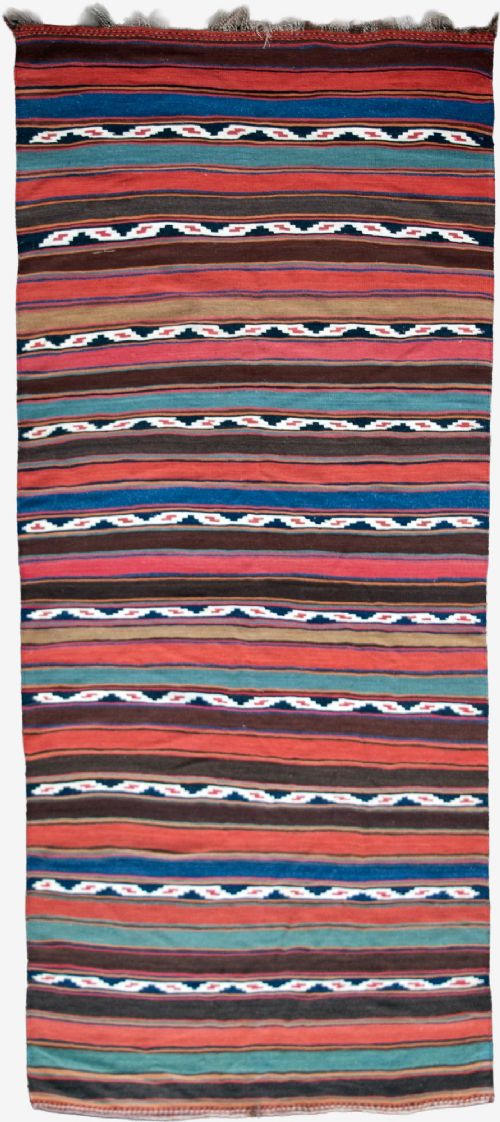
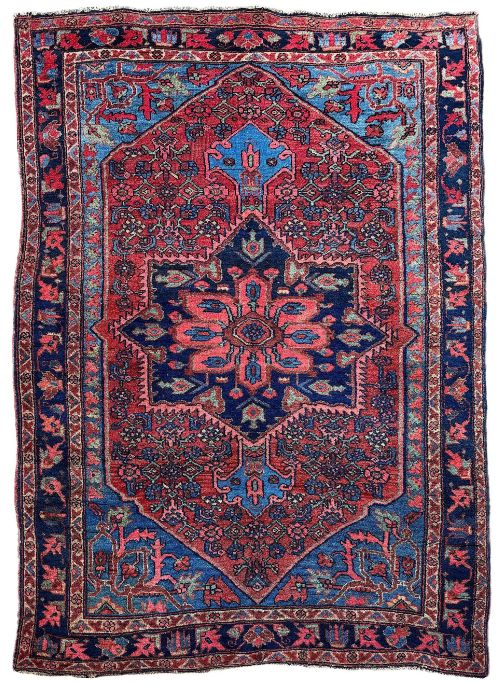
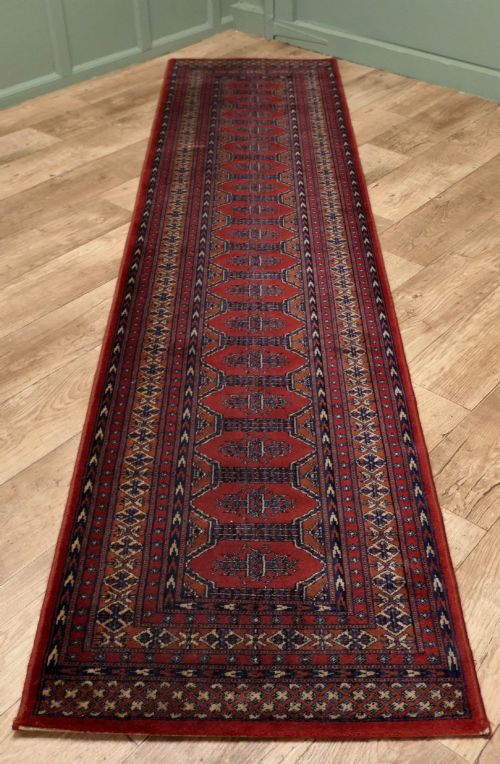
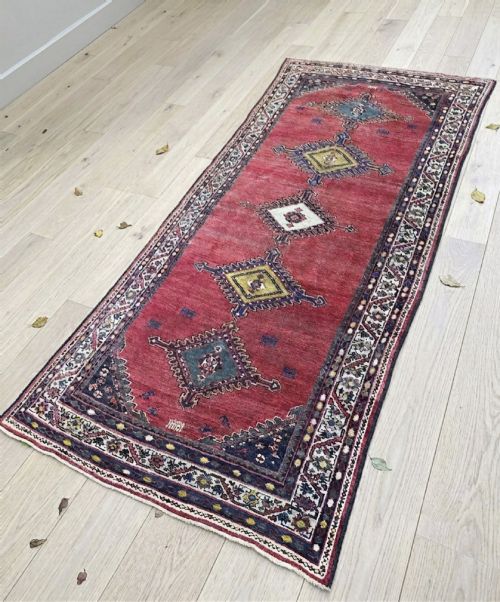
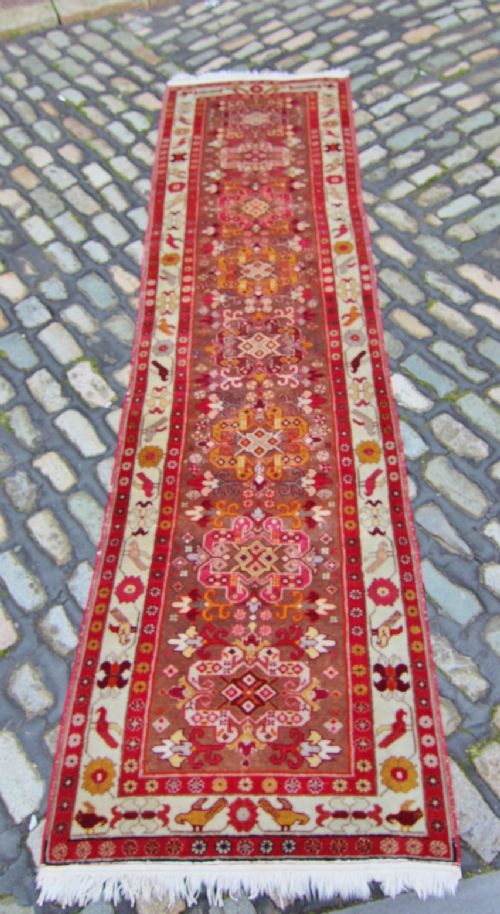
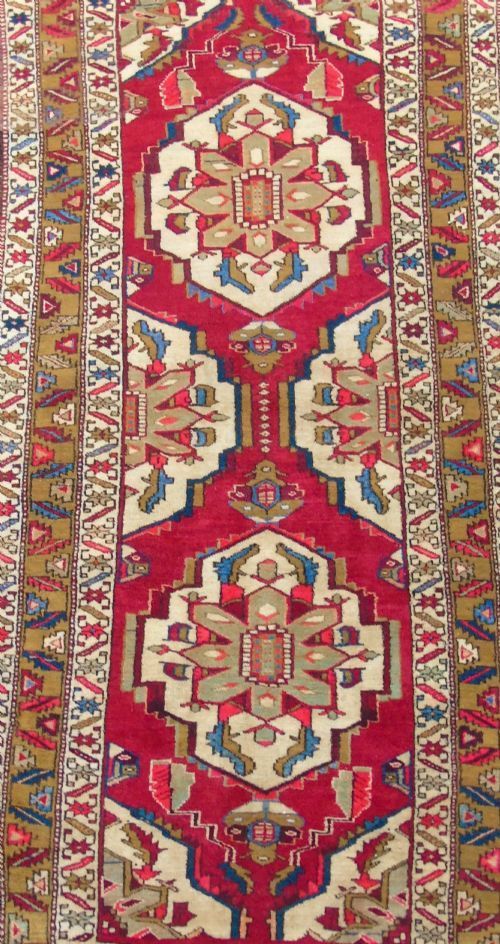
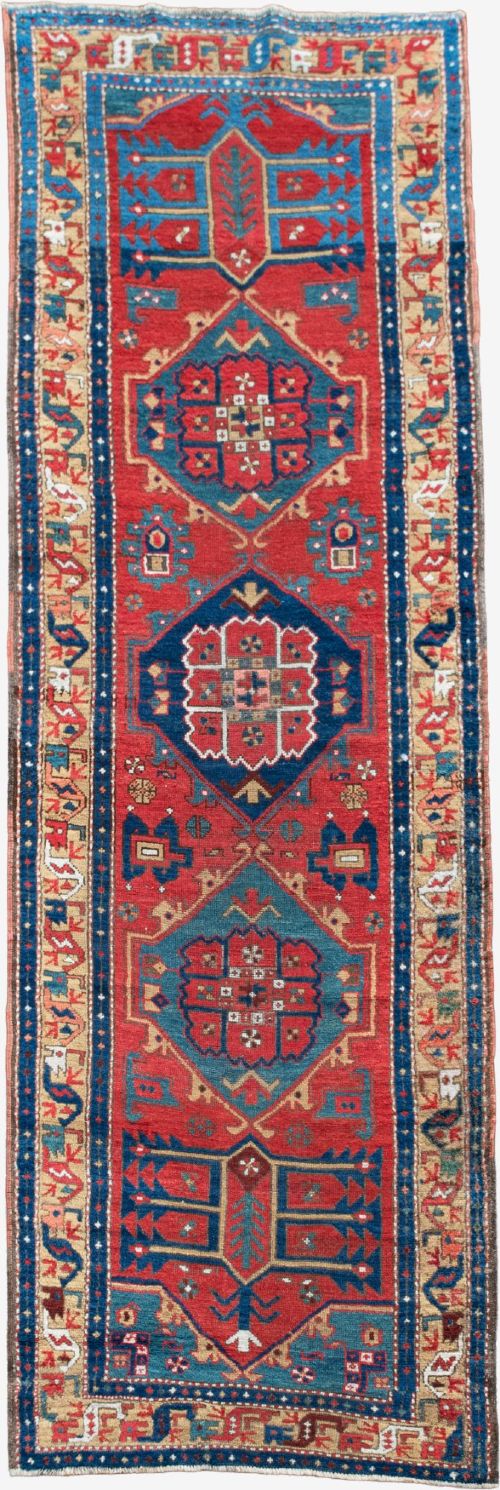
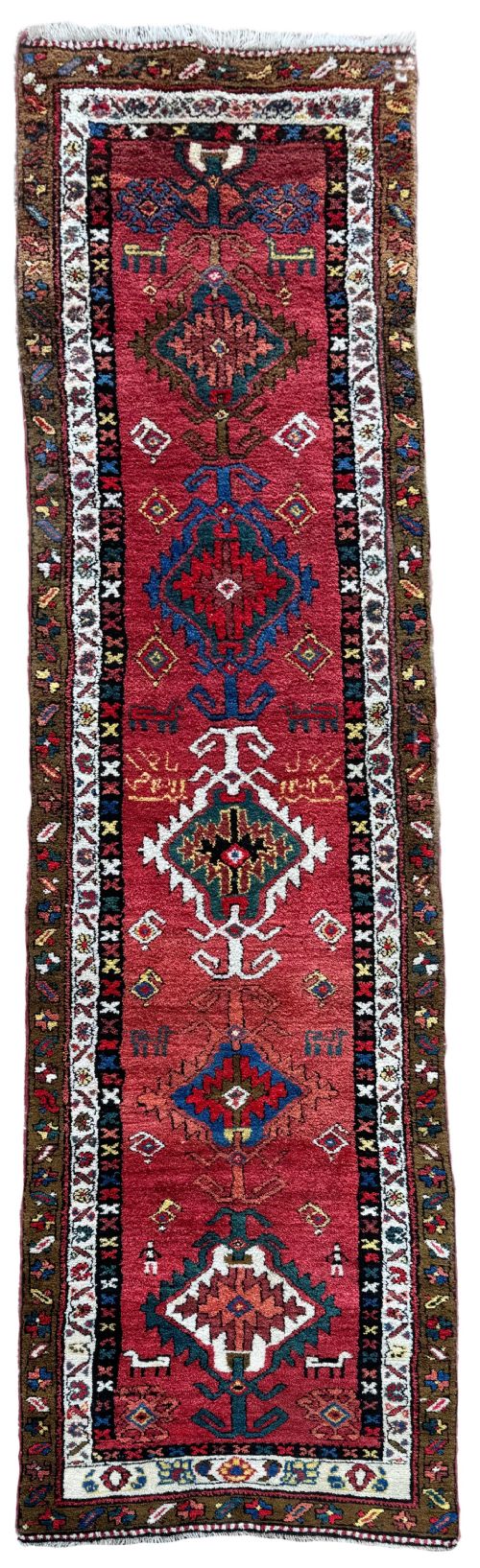
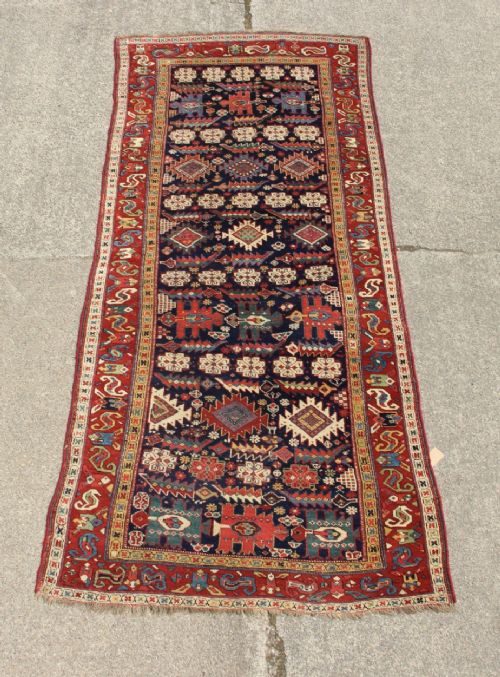
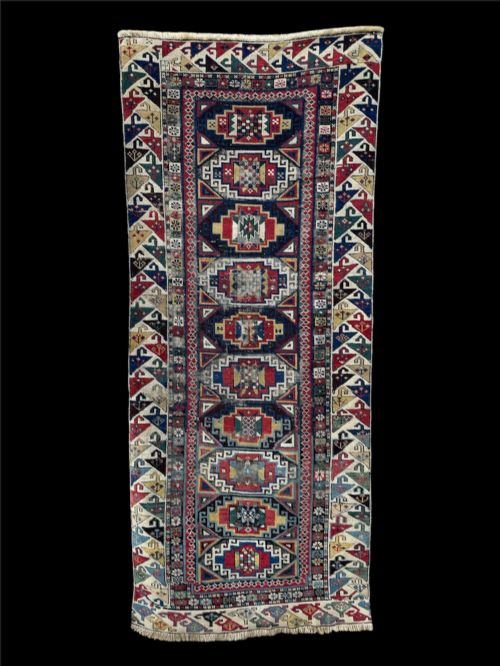


Red Persian Corridor Rug
A red persian corridor rug brings warmth and deep pattern to long hallways, spanning tribal and village traditions from the nineteenth and early twentieth centuries.
Red Persian Corridor Rug
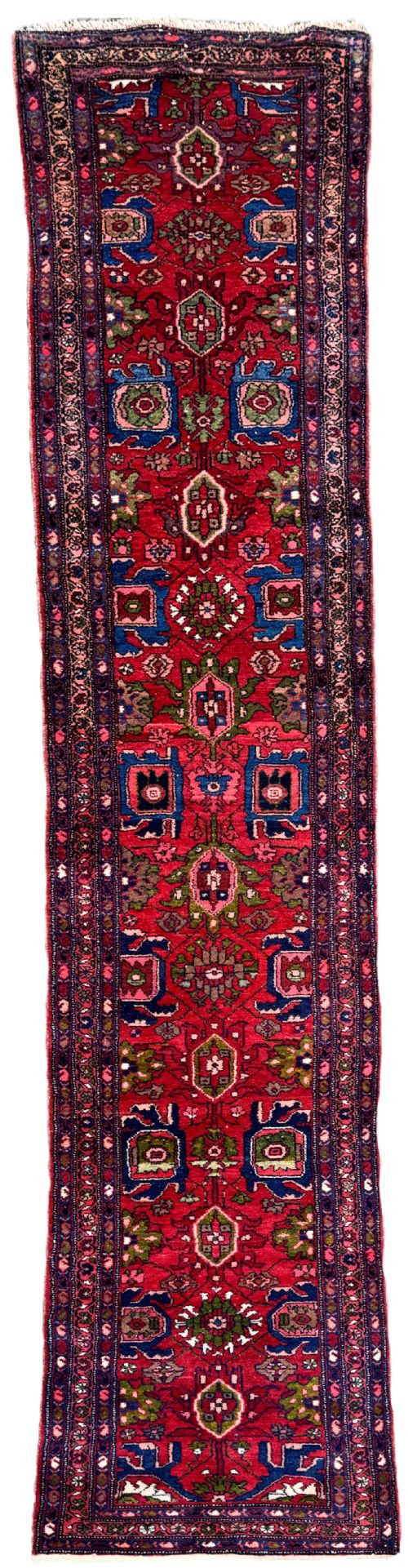
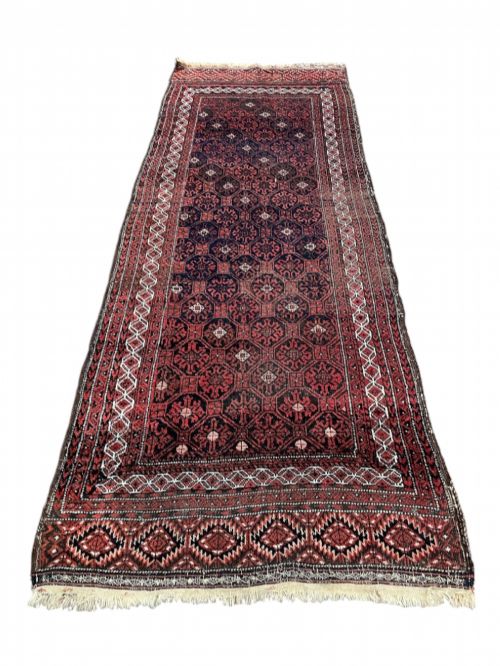
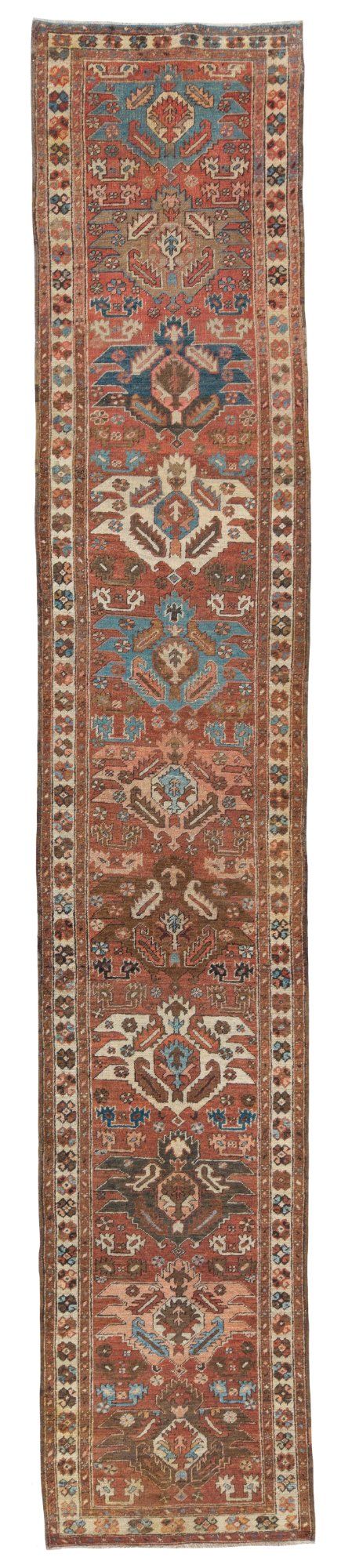
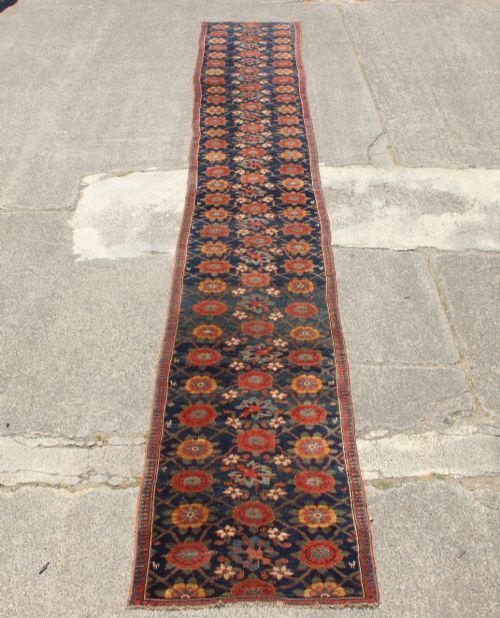
A red persian corridor rug is a long, narrow textile designed for hallways, landings and galleries, often woven in villages and tribal workshops across Persia and the Caucasus. These runners stretch across generous lengths, bringing rich red tones and geometric or floral motifs to circulation spaces. The selection here spans periods from the mid-nineteenth century through to the early decades of the twentieth century.
Buyers meet specific regional types such as Heriz, Kurdish, Hamadan, Bakshaish and Karaja runners, alongside Caucasian pieces like Shirvan and Kazak examples. Format proportions vary from narrow strips to wider long rugs known as kellehs, suited to substantial corridors. Each piece reflects the distinctive aesthetic of its weaving origin, whether structured geometric medallions or free-flowing tribal layouts.
How they were made
These textiles rely on a foundation of cotton or wool warp and weft threads, upon which hand-knotted pile is built row by row. Weavers utilised wool, frequently hand-spun, dyed with traditional substances to achieve deep terracotta, madder and brick-red shades. The density of the knotting and the weight of the wool determine the substantial drape and physical presence of each runner.
Structural variations include sturdy wool foundations in older tribal pieces and crisp cotton structures in later village workshop weaving. Edge finishes typically involve overcast selvedges, while ends retain remnants of original flatweave fringes. The interaction between the hand-spun pile and natural dye variations creates the characteristic depth found across these corridor carpets.
Red Persian Corridor Rug Retail Price Guide 2026
Typical asking prices for red persian corridor rug among the pieces listed under this phrase on Sellingantiques today, from the lower quarter to the upper quarter. They describe what is for sale here now, not the wider market.
A few antique runners are charmingly crooked, reflecting the unhurried rhythm of village looms where straight lines bowed to human hand.
What varies in quality
Quality rests in the handling of the wool, the saturation of the red dyes, and the crispness of the drawing within the design. Finer knot density allows intricate motifs such as the Mina Khani pattern or Heriz geometry to resolve with sharp clarity. Runners with balanced proportions and consistent pile height hold their visual impact across long expanses.
The character of the abrash - natural shifts in dye saturation resulting from different dye batches - adds visual resonance to finer examples. Well-drawn borders frame the central field harmoniously, whereas lesser pieces exhibit compressed or hurried motifs. The overall integrity of the wool and the structural stability of the foundation separate standard village runners from exceptional tribal works.
The Red Persian Corridor Rug Glossary
- Runner
- A long, narrow carpet format specifically proportioned for corridors, hallways and stairs. These pieces guide movement through architectural spaces.
- Kelleh
- A large format rug, broader than a standard runner yet longer than a traditional room-size carpet, often originating from Kurdish or Persian tribal weavers.
- Abrash
- Subtle tonal variations within a single field of colour, caused by changes in dye batches or hand-spun wool lots during weaving.
- Mina Khani
- A traditional repeating geometric pattern of stylized flowers linked by a lattice network, frequently encountered in Kurdish and Persian village weaving.
- Warp
- The vertical foundation threads stretched tightly on the loom, carrying the tension of the textile and often visible at the fringed ends.
Red Persian Corridor Rug: Frequently Asked Questions
How do I choose the right length for my hallway?
Measure your corridor while leaving an equal margin of bare floorboards or stone visible around the edges of the rug. Long runners provide a continuous pathway of warmth without overwhelming the floor space.
Consider the placement of doors and furniture clearance when selecting narrow formats to ensure smooth operation.
Are these runners suitable for high traffic areas?
Hand-knotted wool construction offers natural resilience against daily foot traffic in busy hallways and landings. The dense pile absorbs heavy use while maintaining its structural integrity over decades.
Using a quality underlay provides additional cushioning and prevents slip on hard flooring surfaces.
How do I identify a Kurdish runner?
Kurdish pieces often feature robust wool foundations, heavier handles, and bold geometric or tribal motifs executed in rich saturated reds and blues. The weaving structure tends to feel substantial and grounded.
Regional variations display characteristic border arrangements and distinctive use of abrash across the field.
What is the difference between Heriz and Hamadan runners?
Heriz runners typically present large-scale geometric medallions and architectural framing woven with crisp structure. Hamadan pieces draw upon diverse village traditions, often displaying all-over shrub designs or repeated Herati motifs.
Both styles utilise durable wool, but their visual rhythms reflect different weaving districts in north-west Persia.