


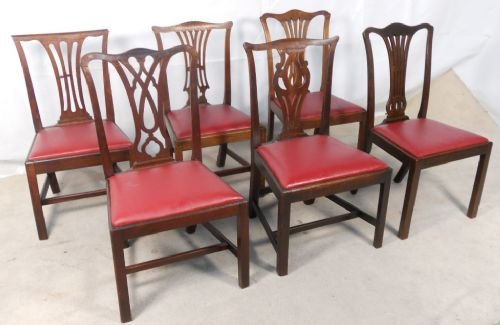

Red Leather Wood Chair
These red leather wood chair examples combine rich timber frames with upholstered seats, offering both solid construction and striking visual warmth for any room.
Red Leather Wood Chair
A red leather wood chair brings together durable hardwood frames and supple leather hides, forming a seating choice that appears across multiple periods from the eighteenth century through to the early twentieth century. When searching for a red leather wood chair, buyers encounter various forms including dining chairs, desk chairs, and large armchairs.
The pieces on this page span styles such as Victorian, Georgian, Chippendale Revival, and Art Nouveau. Mahogany is the most frequent timber foundation found alongside oak and walnut, paired with burgundy or red leather upholstery.
Dining chairs often appear in large sets of eight, ten, or twelve, while pairs of armchairs and single corner chairs offer alternative options for studies and drawing rooms. The designs range from simple nineteenth-century desk seats to ornate French Renaissance Revival armchairs.
Materials and construction methods
Makers utilised dense timbers such as mahogany, oak, and walnut to build sturdy frames capable of supporting daily use over generations. Wood turning, carving, and joinery techniques shaped the legs, backs, and arms, often incorporating brass details or gilded elements.
Leather hides were stretched over padded seats and secured with metal tacks or brass studs, creating durable surfaces that aged with use. Button back upholstery techniques also appear on larger salon chairs and armchairs from the nineteenth century.
Red Leather Wood Chair Retail Price Guide 2026
Typical asking prices for red leather wood chair among the pieces listed under this phrase on Sellingantiques today, from the lower quarter to the upper quarter. They describe what is for sale here now, not the wider market.
Some nineteenth-century desk chairs hide swivel mechanisms beneath unassuming leather upholstery, proving that Victorian workers appreciated a spin.
Distinctions in craftsmanship
The standard of timber selection and depth of hand-carving separate standard utility seating from finer revival pieces. Dense grain mahogany and walnut frames exhibit crisper details on scroll arms and pierced splats.
Upholstery execution and the quality of the leather hide determine the finish of the piece. Fine examples show careful hide preparation and precise placement of brass studwork along the seat rails.
The Red Leather Wood Chair Glossary
- Chippendale Style
- A revival design mirroring the eighteenth-century cabinet maker's aesthetic, typically featuring carved mahogany frames and interlaced splats.
- Corner Armchair
- A seating form designed to fit into room angles, featuring a curved backrest supported by multiple spindles and a central pillar.
- Button Back
- An upholstery method where depressions are formed in the leather by pulling strings or tacks through to the frame, securing the padding in a diamond pattern.
- Carver Armchair
- A sturdy wooden chair with armrests, traditionally placed at the head of a dining table or utilised as a desk seat.
- Scroll Arm
- An armrest shaped into an outward or inward curving spiral, commonly seen on Regency and Victorian seating frames.
Red Leather Wood Chair: Frequently Asked Questions
How do I clean the leather?
Wipe the surface gently with a soft, damp cloth to remove dust and surface dirt.
Avoid harsh chemical detergents that can dry out or discolour the hide over time.
Are these chairs suitable for daily dining?
Many of these pieces were built as dining chairs and remain structurally robust for everyday use.
Check the joints and frame stability to ensure they can handle regular seating demands.
How can I date a wooden chair?
Examine the timber species, joinery methods, and the style of the carved details to align the piece with known historical periods.
Tool marks and the type of screws or nails used also offer clues regarding the manufacturing era.
Can I mix different chair styles?
Pairing chairs from similar periods, such as matching Georgian and Victorian mahogany pieces, creates a balanced interior.
Similar wood tones help tie disparate seating forms together around a single table.