


Red Gilt Bronze Lamp
A red gilt bronze lamp brings genuine warmth and historical weight to a room, combining rich metallic lustre with striking classical forms.
Red Gilt Bronze Lamp
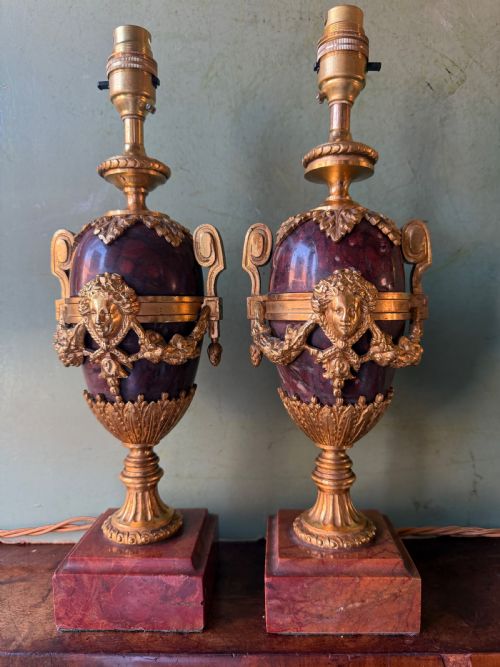
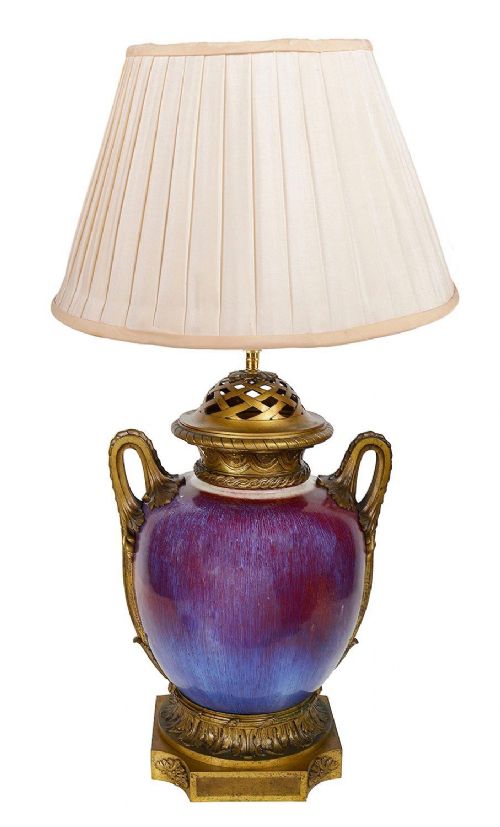
When you search for a red gilt bronze lamp, you encounter table lamps built around contrasting materials such as rouge marble and deep ceramic vases alongside classical metalwork.
The most common examples on this page are French nineteenth century table lamps incorporating ormolu mounts, patinated bronze, and Chinese export vases from earlier periods converted for lighting.
These items span periods from the eighteenth century up to nineteen hundred, taking inspiration from Louis XVI, Neoclassical, and French Empire styles.
How they were made
Makers utilised cast bronze, brass, and ormolu combined with carved rouge marble bases and fabric elements.
Gilding techniques applied gold leaf or mercury gilt to bronze surfaces, creating the characteristic rich finish that endures on these lamp bases.
At least one nineteenth century figure of Victory keeps watch over a red marble base.
What varies in quality
The sharpness of the cast bronze ornamentation and the depth of the gilding set superior examples apart from standard production.
The choice of stone, particularly rich variegated rouge marble, indicates the standing of the original mounts.
The Red Gilt Bronze Lamp Glossary
- Ormolu
- Gilded bronze, usually produced by applying a mercury and gold amalgam to a cast bronze base. This technique was widely employed in French decorative arts during the eighteenth and nineteenth centuries.
- Rouge marble
- A deep red limestone often featuring white or grey veining, frequently quarried in France and used for luxury architectural elements and lamp bases.
- French Empire
- A neoclassical design style spanning the late eighteenth and early nineteenth centuries, characterised by military motifs and heavy classical proportions.
- Sang de boeuf
- A rich ox-blood red ceramic glaze developed in China and frequently adapted into nineteenth century European lighting.
Red Gilt Bronze Lamp: Frequently Asked Questions
Are these lamps originally wired for electricity?
Most pieces originate from the nineteenth century or earlier as candlesticks, vases, or oil lamps before later conversion to electricity.
Rewiring is standard practice to ensure safety while preserving the historic metal and stone body.
How do I identify a Louis XVI style lamp?
Louis XVI style pieces draw upon classical symmetry, featuring restrained proportions, straight fluted columns, and neat foliate ormolu mounts.
They stand apart from the heavier, more martial ornamentation seen in later Empire designs.
What is the difference between ormolu and brass?
Ormolu consists of gilded bronze where gold is bonded to a copper alloy base, yielding a deep, layered metallic sheen.
Brass is a plain copper and zinc alloy with a uniform yellow colour throughout the metal.
How should I clean a gilt bronze lamp?
Gilt surfaces require very gentle dusting with a dry microfibre cloth to protect the delicate gold layer from wear.
Harsh chemical polishes must be avoided entirely as they strip away the historic gilding.