
Red Garnet Jewellery
Red garnet jewellery brings deep, fiery crimson stones together with warm gold and silver settings to create wearable history.
Red Garnet Jewellery
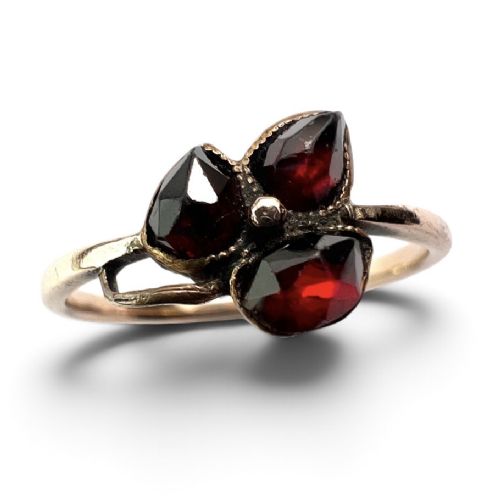
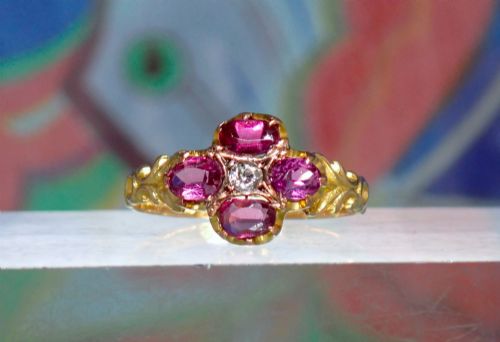
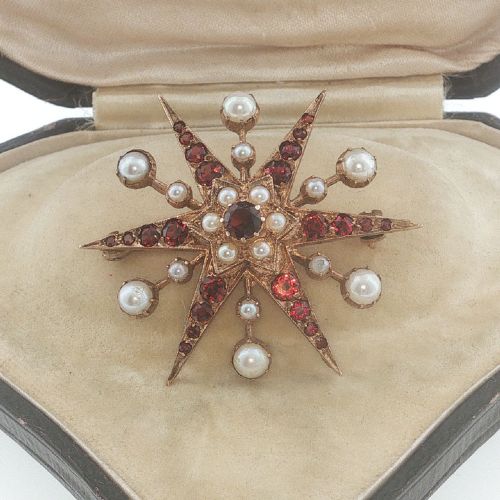
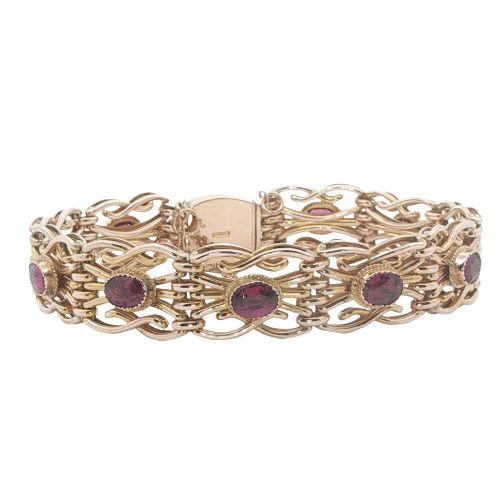
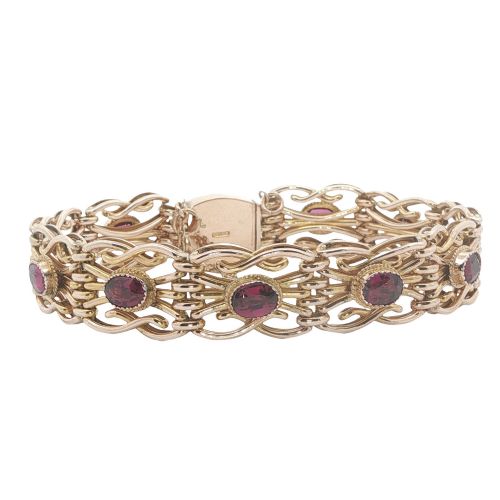
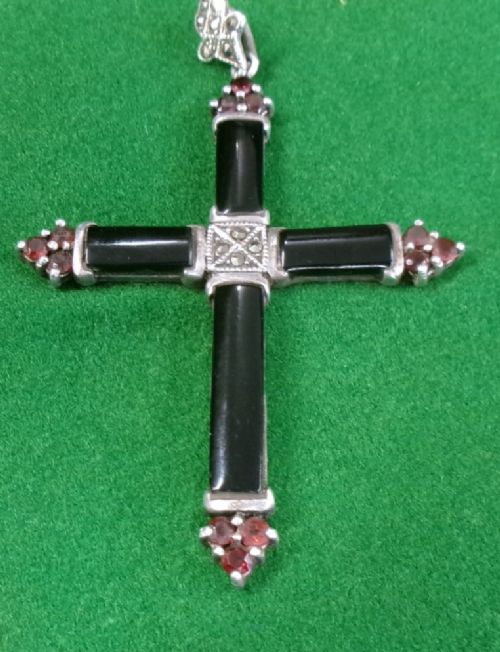
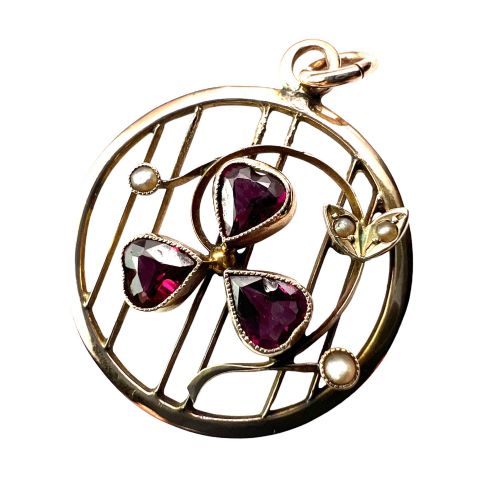
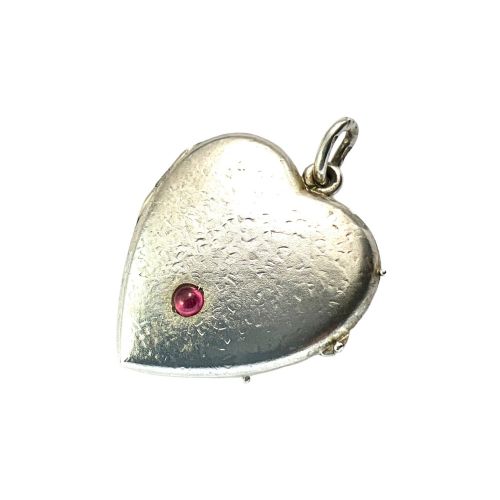
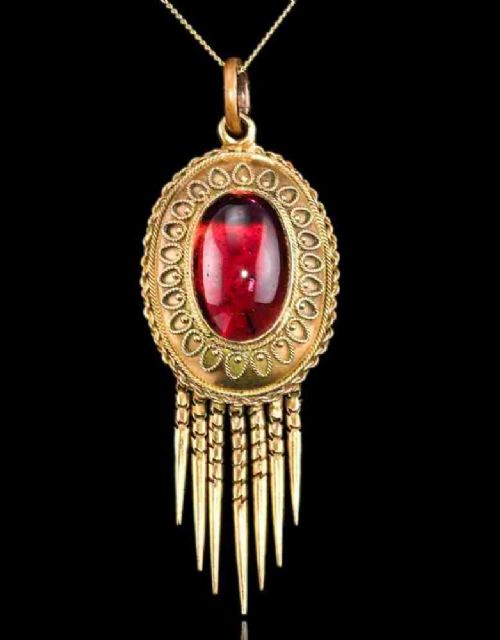
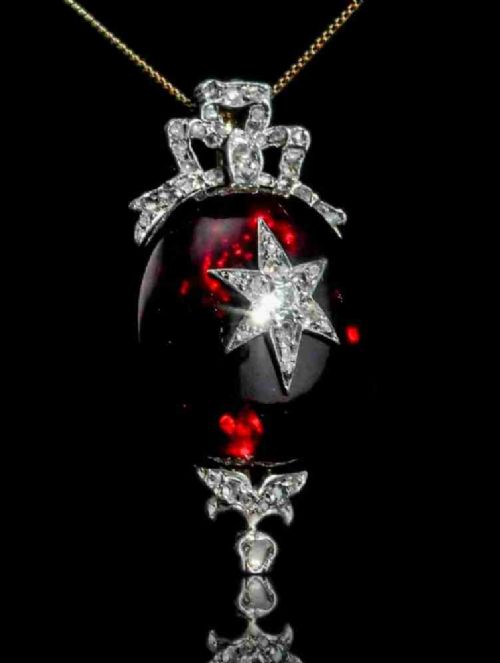
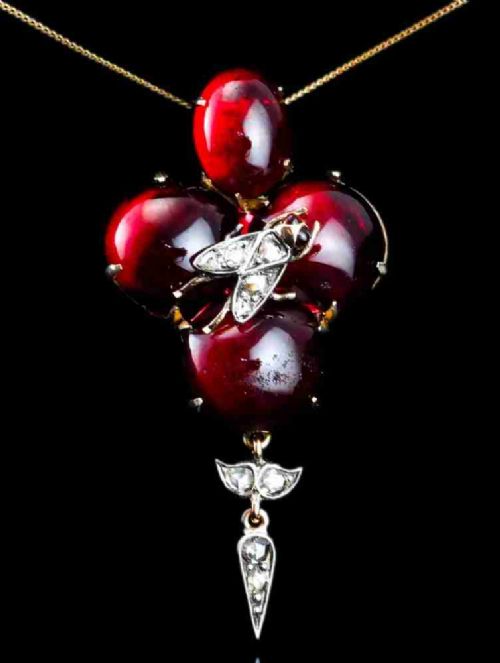
Red garnet jewellery spans multiple centuries, with Victorian and Edwardian examples forming the largest share of what meets the eye on this page. Pieces range from floral cluster rings and starburst brooches to fringe drop necklaces, bracelets, and locket pendants.
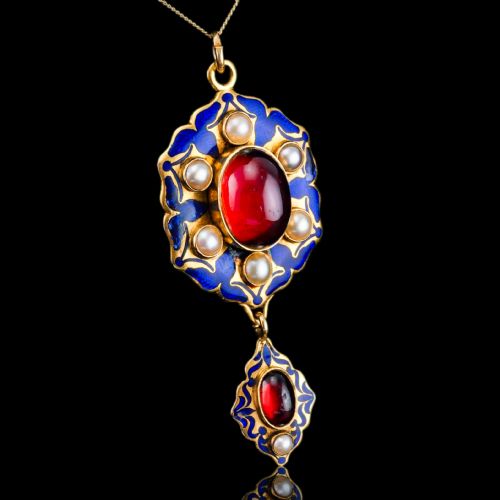
The materials reflect changing tastes across eras, moving from high-carat yellow and rose gold in the nineteenth century toward lighter gold alloys and mid-century modern designs. Garnets frequently appear alongside seed pearls, diamonds, and occasional enamel details to accentuate the stones.
How they were made
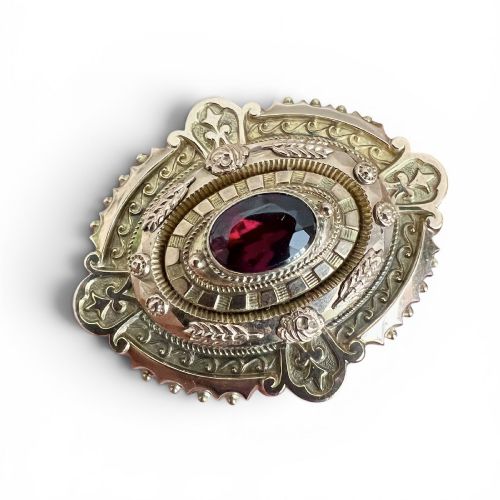
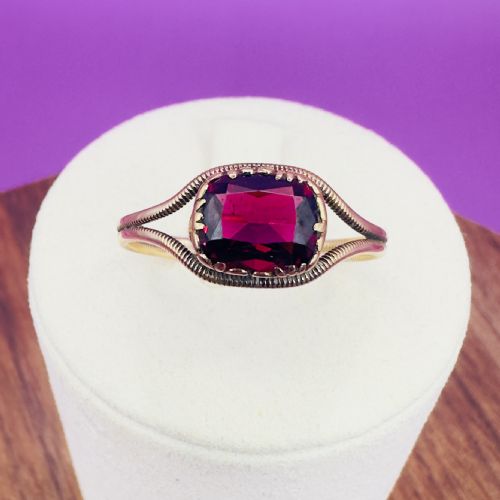
Goldsmiths set stones into 9ct, 15ct, and 18ct gold, as well as silver and silver-gilt, utilising techniques such as closed-back settings in earlier periods and claw or cluster settings later on. Many nineteenth-century items display intricate Etruscan Revival wirework, granulation, or Holbeinesque framing.
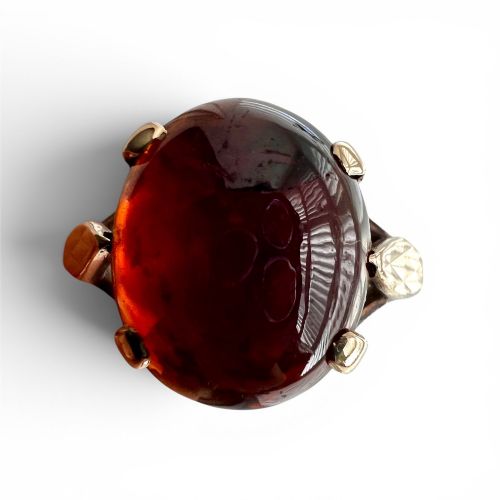
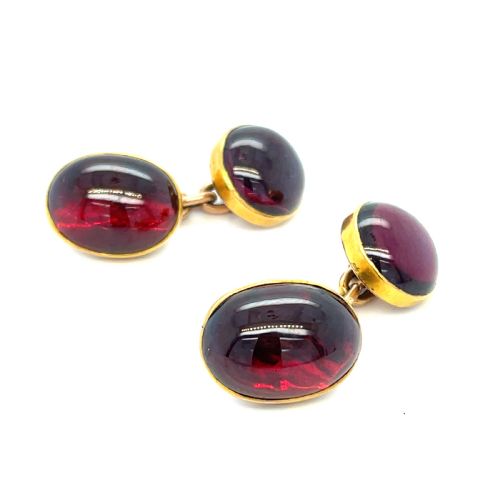
Cabochon cutting and faceted table or round cuts shape the garnets, allowing light to pass through deep red almandine or dark Bohemian stones. Seed pearls are often threaded or pegged into cluster patterns around a central garnet.
Listings span periods from the eighteenth century through to the late twentieth century, utilising garnet, 9ct gold, 15ct gold, 18ct gold, diamond, and pearl.
What varies in quality
Quality rests on the depth of the stone colour, the precision of the goldsmith's work, and the integrity of the setting. Superior items exhibit well-matched stones with vibrant internal flash rather than flat, opaque darkness.
The delicacy of applied wirework, the tightness of seed pearl settings, and the absence of clumsy repairs distinguish finer artisan pieces from standard mass production.
The Red Garnet Jewellery Glossary
- Almandine garnet
- A deep red variety of garnet tending towards violet or brownish tones, frequently found in antique rings and brooches.
- Cabochon
- A gemstone shaped and polished with a smooth, convex dome rather than flat facets.
- Holbeinesque
- A Victorian revival style inspired by sixteenth-century German jewellery design, often incorporating enamel, pearls, and dangling drops.
- Seed pearl
- A very small, natural or cultured pearl used in clusters or floral motifs alongside gemstones.
Red Garnet Jewellery: Frequently Asked Questions
How do I care for antique garnet jewellery?
Clean these pieces gently with a soft, dry cloth and avoid ultrasonic cleaners or harsh chemical dips that might loosen glued seed pearls or degrade old gold.
Store items separately in lined boxes to prevent softer stones or metals from scratching the polished garnet surfaces.
Are these garnets natural?
The stones seen across these Victorian, Edwardian, and mid-century items are natural mined garnets rather than modern synthetics.
Different periods favoured distinct cuts and origins, from small Bohemian rose-cut stones to large cabochons and deep almandines.
How can I tell Victorian from Edwardian pieces?
Victorian jewellery generally employs heavier gold weights, warmer rose or yellow hues, and romantic or revival motifs like Etruscan wirework and heavy cluster settings.
Edwardian designs tend to feel lighter and airier, often incorporating platinum or white gold alongside seed pearls and delicate openwork.
Can I wear a garnet ring every day?
Garnet is a moderately durable gemstone with a hardness around seven on the Mohs scale, making it suitable for regular wear if treated with care.
Antique rings with claw settings or seed pearl accents require more mindfulness to avoid catching on clothing or striking hard surfaces.