

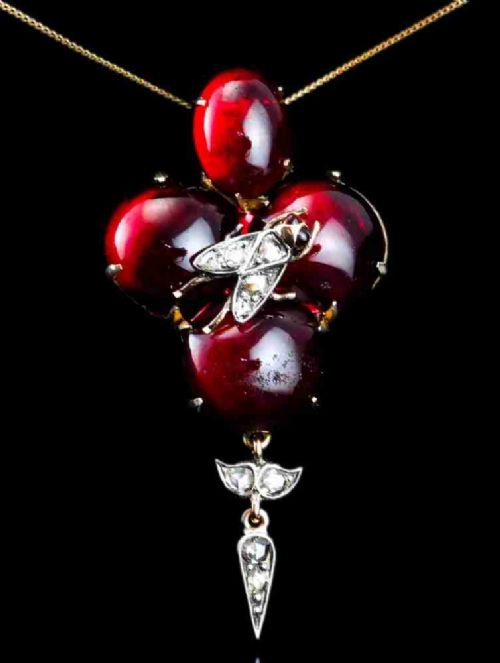
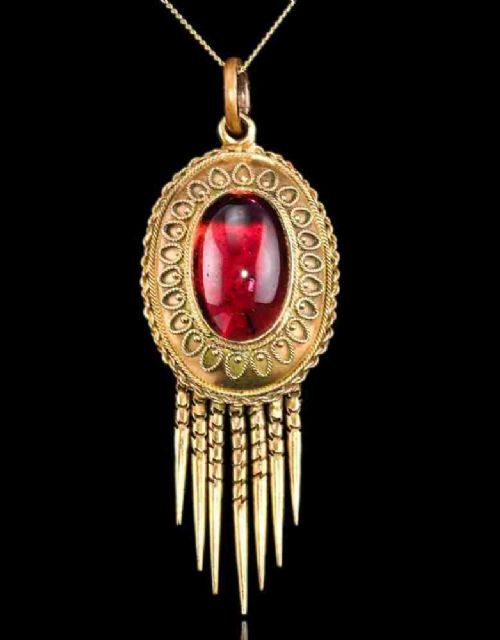
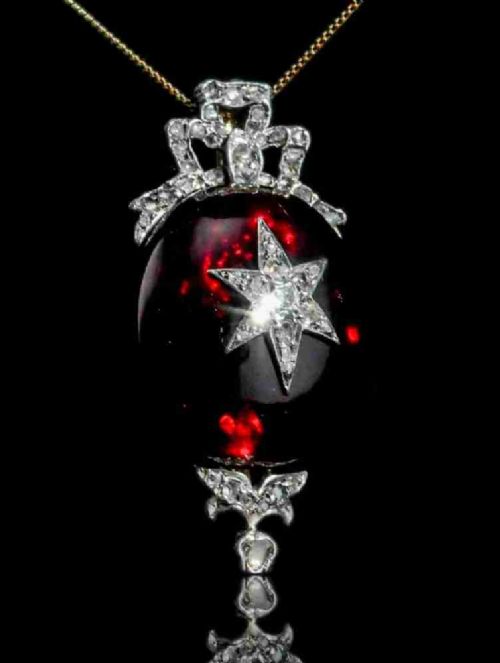
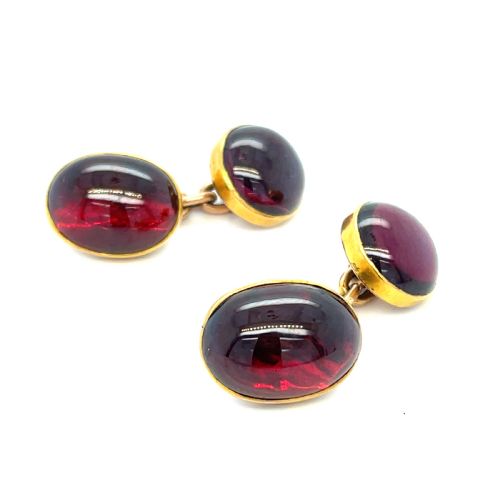
Red Garnet Gold Jewellery
These red garnet gold jewellery pieces bring deep crimson brilliance and warm gold tones together across centuries of fine ornament.
Red Garnet Gold Jewellery
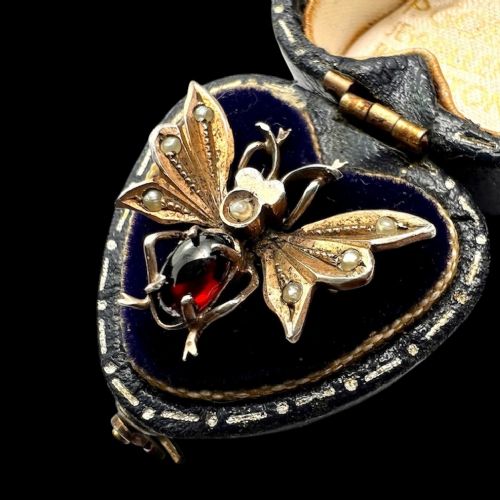
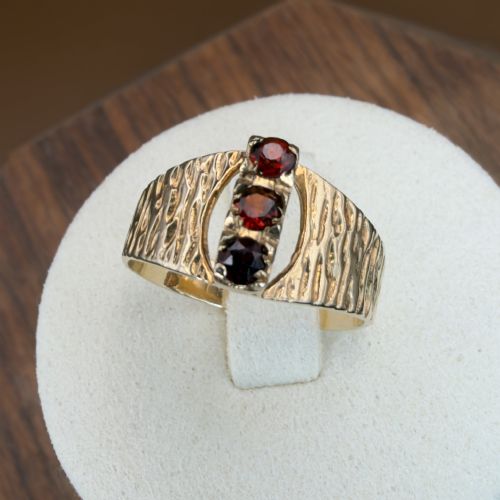
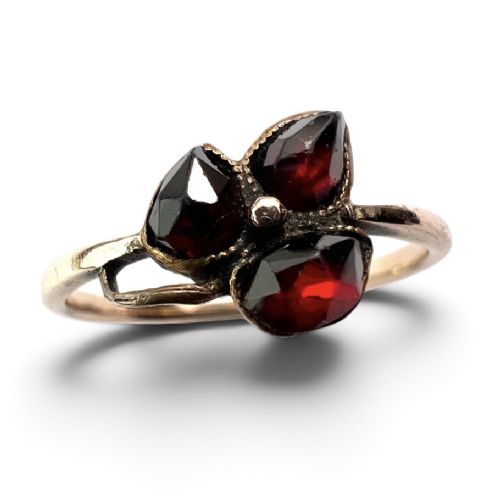
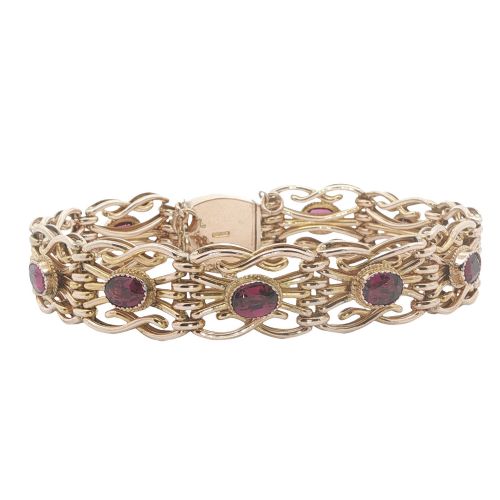
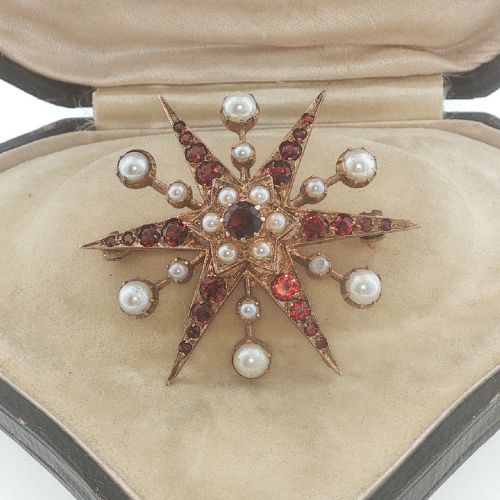
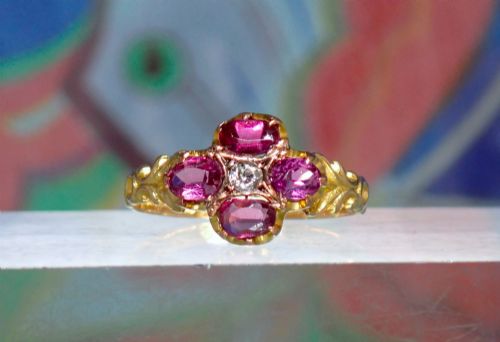
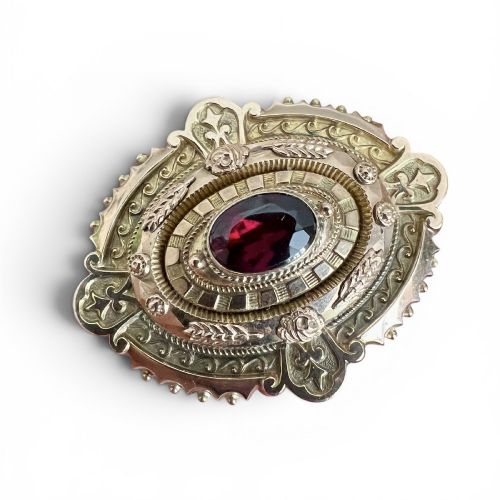
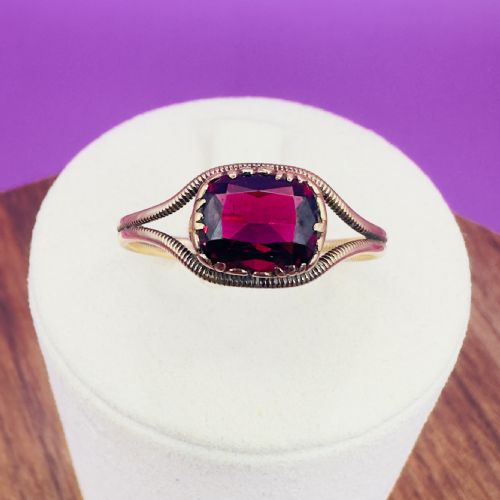
Red garnet gold jewellery encompasses rings, brooches, pendants, bracelets, and earrings created from the Georgian period through to the mid-twentieth century. Buyers seeking these items encounter a rich variety of forms, from cluster rings and starburst brooches to fringe necklaces and drop earrings.
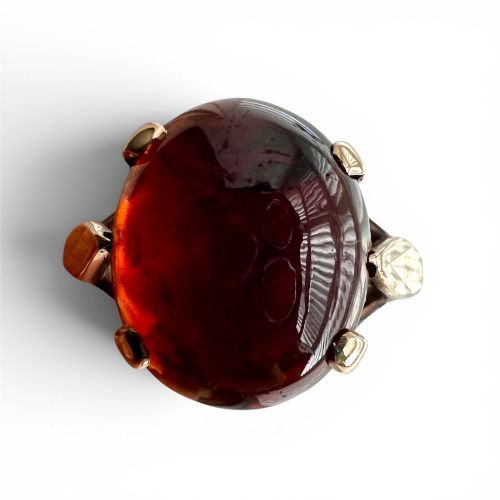
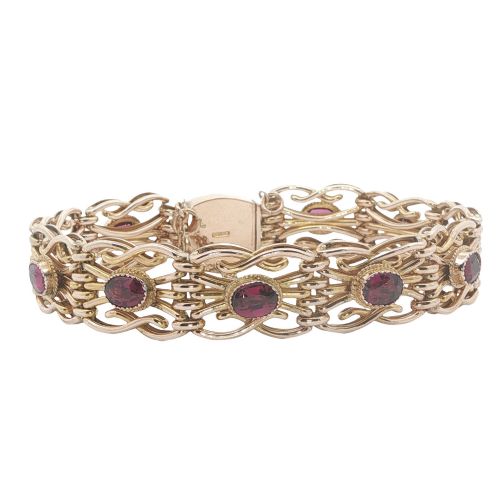
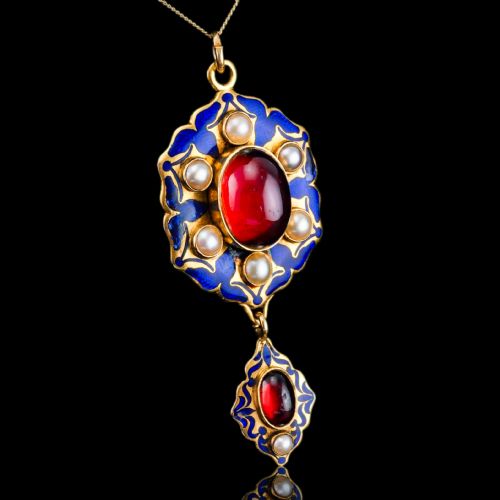
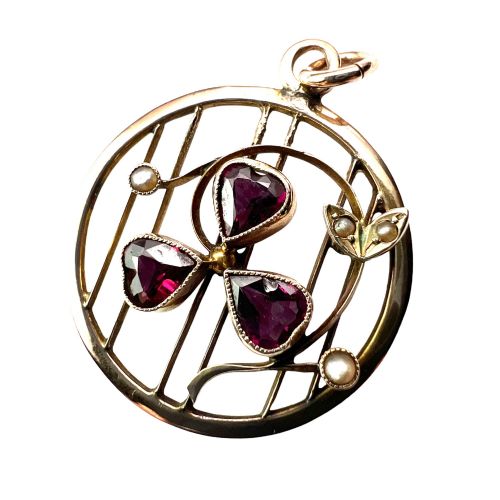
Victorian and Edwardian examples dominate the selection, often showcasing distinct stylistic revivals such as Etruscan and Holbeinesque designs. Pieces range from delicate seed pearl and garnet floral clusters to substantial rose gold bracelets and cabochon rings.
Materials and construction
Garnets are set in varying purities of gold, including 9ct, 14ct, 15ct, and 18ct yellow and rose gold, alongside silver-gilt settings in specific regional pieces. Stones appear as cabochons, table cuts, old mine cuts, and faceted ovals or pears, secured in closed or open-backed settings.
Craftsmanship often incorporates intricate wirework, granulation, and filigree, frequently paired with accent stones like diamonds and cultured or seed pearls to enhance the central red gems.
Red Garnet Gold Jewellery Retail Price Guide 2026
Typical asking prices for red garnet gold jewellery among the pieces listed under this phrase on Sellingantiques today, from the lower quarter to the upper quarter. They describe what is for sale here now, not the wider market.
Some Victorian earrings are shaped as ivy leaves, perhaps reminding wearers of clinging affection during chilly London winters.
Distinctions in quality
Quality rests upon the depth of the garnet's colour, the precision of the stone cutting, and the integrity of the gold work. Rich almandine stones or matched Bohemian garnets demonstrate superior material selection compared to paler or unevenly matched counterparts.
The sophistication of the mounting elevates a piece, distinguishing standard commercial production from meticulous granulation, balanced cluster arrangements, and well-preserved structural detailing.
The Red Garnet Gold Jewellery Glossary
- Almandine garnet
- A dense, deep red variety of garnet frequently utilised in antique cluster rings and bracelets.
- Cabochon
- A gemstone shaped and polished with a smooth, rounded convex surface rather than faceted edges.
- Holbeinesque
- A Victorian revival style drawing on sixteenth-century ornamentation, typically featuring complex pendant designs with suspended pearls and garnets.
- Seed pearl
- Very small, natural or cultured saltwater pearls often clustered around central stones in antique pendants and rings.
- Etruscan Revival
- A nineteenth-century design movement inspired by ancient archaeological discoveries, characterised by intricate gold granulation and wirework.
Red Garnet Gold Jewellery: Frequently Asked Questions
What periods do these pieces come from?
The selection spans several historical eras, featuring pieces from the Georgian and Victorian periods, through Edwardian and Art Nouveau designs, up to mid-century vintage items from the 1950s and 1960s.
Victorian and Edwardian examples are particularly common, representing a large portion of the available antique rings, brooches, and pendant necklaces.
How do I care for antique garnet jewellery?
Antique jewellery requires gentle handling due to age and delicate settings like seed pearls or closed-back foils. Avoid submerging pieces in water or using harsh chemical cleaners.
Instead, wipe them carefully with a soft, dry cloth after wearing and store them separately to prevent scratching the softer gold and stones.
What is the difference between rose gold and yellow gold in these pieces?
Rose gold contains a higher proportion of copper alloy mixed with pure gold, resulting in a warm, pinkish hue that was especially popular during the Victorian and Edwardian eras. Yellow gold retains a traditional golden appearance created by balancing copper with silver.
Both metal colours provide a striking contrast against the deep crimson tones of red garnets.
How are garnets usually cut in older pieces?
Older pieces often feature cabochon cuts with smooth, rounded tops, or rose cuts and old mine cuts with numerous small facets. These traditional cutting styles were shaped by hand to maximise the stone's colour and catch the ambient candlelight or early gaslight.
Later vintage pieces from the mid-twentieth century more commonly display precise modern oval or pear faceting.