




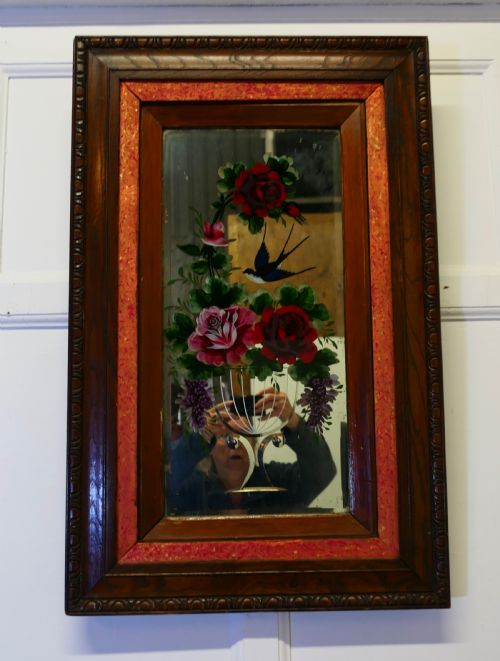

Red Floral Wall Hanging
A red floral wall hanging brings warmth and deep cultural narrative to an interior through centuries-old textile traditions.
Red Floral Wall Hanging
A red floral wall hanging spans diverse global textile traditions, most notably Central Asian embroideries and European woven panels. Buyers exploring this category encounter embroidered suzanis from regions such as Bukhara, Samarkand, and Shahrisabz, alongside French tapestries and British mid-century framed textile art.
The pieces encompass various functional forms repurposed for display, including bed covers, saddle-bags, prayer rugs, and dedicated wall panels. Silk on cotton grounds and wool on felt predominate among the regional needlework, while heavier velvet and tapestry weaves represent European output.
Periods range broadly from sixteenth-century ecclesiastical and domestic hangings up to mid-twentieth-century batik panels and vintage floor coverings adapted for walls. Central Asian examples dated around the nineteenth century form a significant portion of what appears in this selection.
Materials and construction
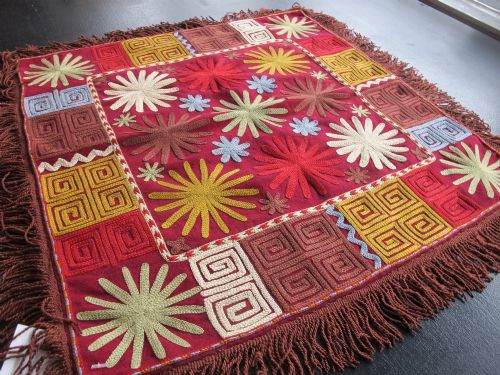
Needlework pieces rely heavily on vibrant silk thread embroidered onto supportive cotton or felt grounds, often utilising natural dyes to achieve deep crimson and madder red tones. Artisans in regions like Persia and Uzbekistan employed chain stitch, appliqué, and satin stitch to build dense botanical motifs.
European and Asian weaving traditions utilise silk velvet, wool, and cotton, sometimes incorporating metallic threads or specialised techniques like ciselé velvet cutting. Framed mid-century examples substitute traditional embroidery with batik methods on cotton textiles.
Rigid materials also appear in the selection through porcelain charger plates and reverse-painted etched mirrors depicting floral themes, offering alternative methods of bringing red botanical imagery onto a vertical surface.
Red Floral Wall Hanging Retail Price Guide 2026
Typical asking prices for red floral wall hanging among the pieces listed under this phrase on Sellingantiques today, from the lower quarter to the upper quarter. They describe what is for sale here now, not the wider market.
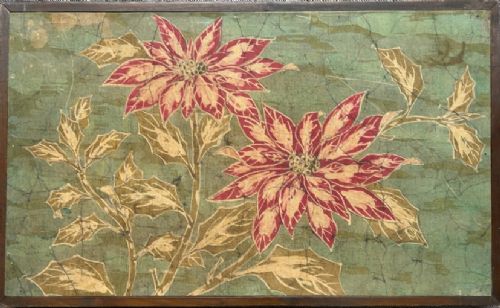
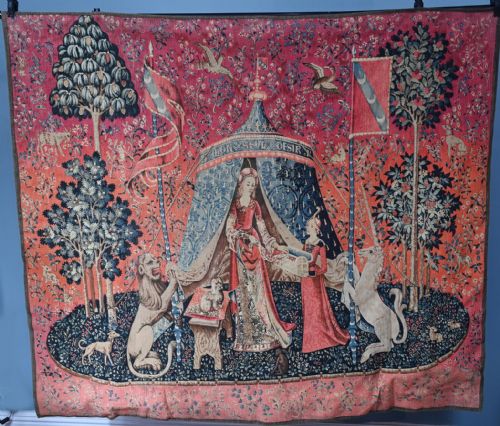
A sixteenth-century French tapestry depicting a lady and unicorn shares space here with bright twentieth-century poinsettia batik art.
Factors determining quality
The intricacy and density of the needlework dictate the standard of embroidered suzanis and rugs, where finer silk threads and complex geometric floral medallions denote superior craftsmanship. The handling of natural dyes creates subtle tonal variations that elevate regional tribal textiles above simpler secondary works.
Structural integrity of the textile ground, whether cotton, felt, or silk velvet, separates well-preserved historic hangings from those compromised by heavy wear or chemical dye degradation. The precision of the weave in European tapestries and Japanese porcelain chargers similarly distinguishes workshop output.
The Red Floral Wall Hanging Glossary
- Suzani
- An embroidered tribal hanging originating from Central Asia, traditionally worked in silk on a cotton ground with botanical motifs. These textiles served various domestic purposes before entering the collector market.
- Ciselé velvet
- A velvet fabric where the pattern is created by cutting parts of the pile while leaving other sections uncut. This technique produces a textured relief effect visible on eighteenth-century panel hangings.
- Palampore
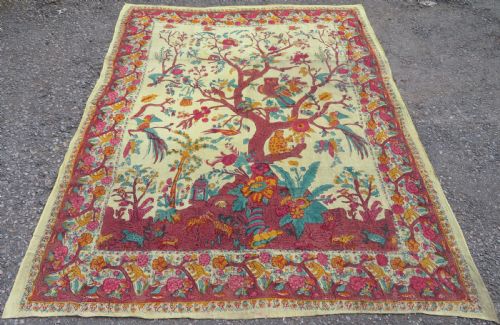
- A large hand-painted and mordant-dyed cotton bed cover or hanging produced in India for export markets. They typically feature elaborate tree-of-life and floral designs.
- Imari
- Japanese porcelain decorated in underglaze blue and iron red with supplementary gold highlights. Chargers from this tradition provide a rigid decorative alternative to fabric wall hangings.
- Batik
- A wax-resist dyeing technique applied to whole cloth, producing patterned textiles with characteristic cracked lines in the dye. Mid-century examples utilise this method for framed botanical art panels.
Red Floral Wall Hanging: Frequently Asked Questions
How were suzanis used originally?
Central Asian suzanis served primarily as dowry items, created by brides and their female relatives to decorate the marital home. They functioned as wall hangings, bed covers, or ceremonial wraps.
Over time, these textiles transitioned into decorative objects for Western interiors, prized for their rich crimson grounds and symbolic botanical embroidery.
Can antique textiles be hung safely?
Historic textiles require careful mounting to distribute their weight evenly across the backing material. Conservation-grade Velcro or fully lined sleeves sewn to the reverse prevent direct tension on fragile silk threads.
Keeping antique panels away from direct sunlight preserves the natural dyes used in nineteenth-century embroideries and woven tapestries.
What is a nim suzani?
A nim suzani is a half-sized version of the standard Central Asian embroidery, produced for domestic spaces that required smaller decorative panels. The term distinguishes these compact pieces from full-scale bed covers.
Despite their smaller dimensions, they exhibit the same dense floral medallion work and silk-on-cotton construction seen in larger examples.
How do I identify Persian Rasht embroidery?
Rasht embroideries originate from northern Iran and are characterised by intricate mosaic-like patterns created through fine silk thread applied to heavy wool felt grounds. Their designs often incorporate small floral medallions and complex scrolling vines.
The combination of glossy silk work against a matte felt backing provides a tactile contrast unique to this regional workshop tradition.