




Red Drop Earrings
These red drop earrings bring together historic metals and stones, offering a rich flash of colour that collectors prize.
Red Drop Earrings
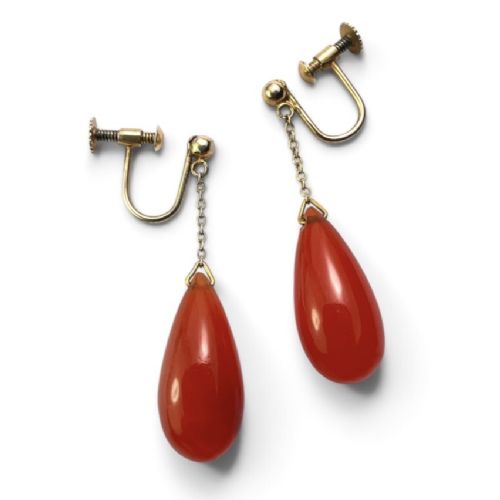
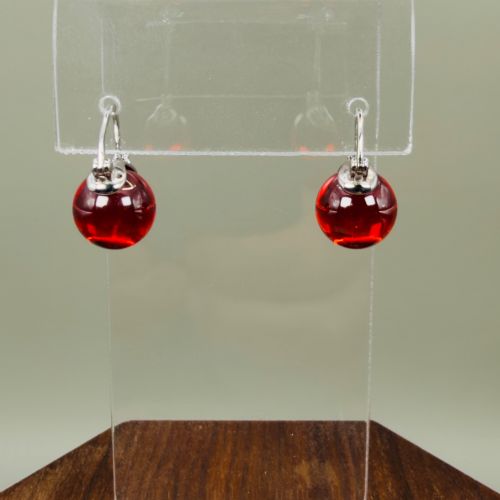
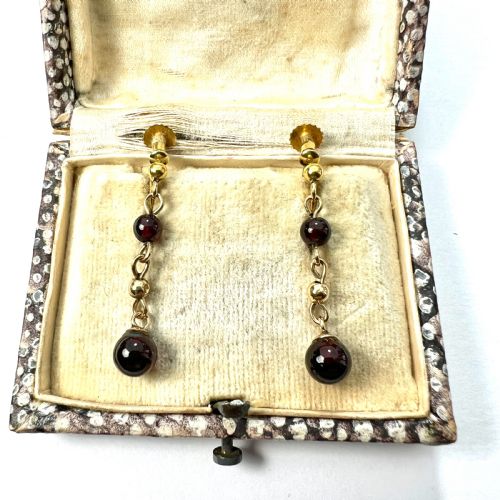
The selection includes garnet, coral, agate, and ruby specimens, paired frequently with pearls or diamonds. Forms vary from simple bead drops to elaborate ivy leaf and bell motifs set in nine-carat or fifteen-carat gold.
Victorian and Edwardian examples dominate the selection, alongside mid-century and vintage twentieth-century pieces. These items serve as wearable history, often retaining their original screwbacks, hooks, or hinge backs.
Materials and Construction
Goldsmiths utilised nine-carat, fifteen-carat, and eighteen-carat gold alongside sterling silver to fashion secure settings for fragile gems. Stones such as garnet, coral, and red agate were hand-carved or faceted into pear, cabochon, and bead shapes.
Craftsmen employed techniques like filigree work, Etruscan revival granulation, and secure prong settings to hold precious materials. Metal components were soldered by hand, creating articulated drop sections that move naturally when worn.
Listings feature nine-carat gold, fifteen-carat gold, and sterling silver paired with garnet, coral, and ruby across Victorian and Edwardian eras.
Assessing Quality and Execution
Superior pieces display crisp hand-carving in organic materials like coral and agate, alongside closely matched stones with deep, even colour saturation. Metalwork shows fine detail, such as precise granulation or secure claw settings that firmly anchor heavy garnets.
The integrity of the gold or silver mountings, the retention of original fixings like screwbacks or hinge backs, and the absence of clumsy repairs distinguish finer examples from standard production.
The Red Drop Earrings Glossary
- Cabochon
- A gemstone shaped and polished with a smooth, rounded surface rather than faceted edges. This cut highlights the rich, opaque depths of natural coral and garnet.
- Paste
- Hand-cut glass or lead crystal used in historic jewellery to imitate gemstones. Victorian makers utilised paste to achieve vibrant colour and brilliance.
- Screwback
- A mechanical earring fastening featuring a threaded post and a small screw mechanism. This design allowed non-pierced ears to wear heavy drop earrings securely.
- Hinge back
- A secure earring closure mechanism involving a hinged wire that snaps into a small notch. It provides stability for daily wear on drop designs.
Red Drop Earrings: Frequently Asked Questions
How do I date antique red drop earrings?
Dating relies on examining the metal purity marks, stone cuts, and fastener types. Victorian and Edwardian pieces often feature hand-carved motifs or specific clasp designs like screwbacks.
Consulting the overarching style, such as Etruscan revival work or mid-century modernist lines, further narrows the production period.
Are these earrings suitable for daily wear?
Historic earrings require gentle handling, particularly those set with delicate materials like coral or softer pearls. Checking the security of the hooks and hinges ensures safe usage.
Removing them before sleeping or swimming preserves the historic metal settings and prevents damage to natural gems.
What is the difference between coral and garnet drops?
Garnets are mined silicate minerals offering deep red faceting or smooth cabochon surfaces. Coral is an organic marine material prized for its warm, matte red or pink tones.
Both were popular in nineteenth-century workshops but require entirely different care routines due to their distinct material properties.
How should I clean antique gold earrings?
Cleaning historic jewellery requires mild soapy water and a soft cloth to avoid scratching softer stones like pearl or coral. Harsh chemical dips ruin organic materials and damage historic gold.
Keeping moisture away from glued elements ensures the stones remain firmly seated within their original bezels.