



Red Cased Glass
Red cased glass pieces are layered glass items created to showcase deep colour, and collectors seek them for their striking visual contrast and decorative presence.
Red Cased Glass
When searching for red cased glass, buyers encounter distinctive vessels and decorative items formed from multiple layers of material. These pieces frequently appear in Victorian and early twentieth-century contexts alongside display furniture that complements their appearance.
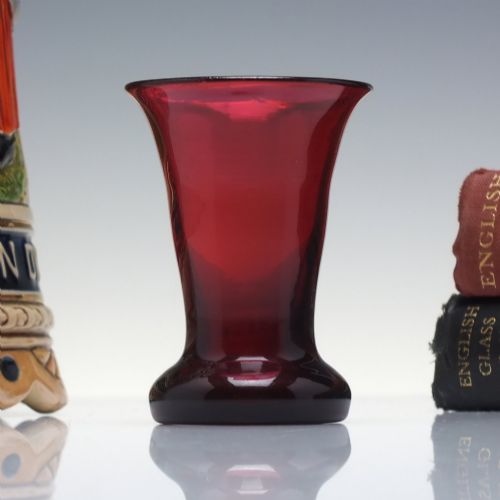
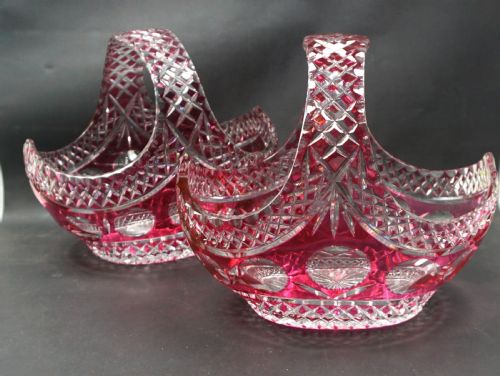
The selection ranges from large decorative baskets and vases to Bohemian flash glass vessels and ruby glass lustres. Such objects reflect the diverse stylistic influences of the nineteenth and early twentieth centuries, including Victorian Bohemian designs.
Originating primarily from continental makers such as Val Saint Lambert in Belgium alongside traditional Bohemian workshops, these items demonstrate specific regional manufacturing traditions. Each form serves primarily as a decorative accent rather than a utilitarian vessel.
Factors determining quality
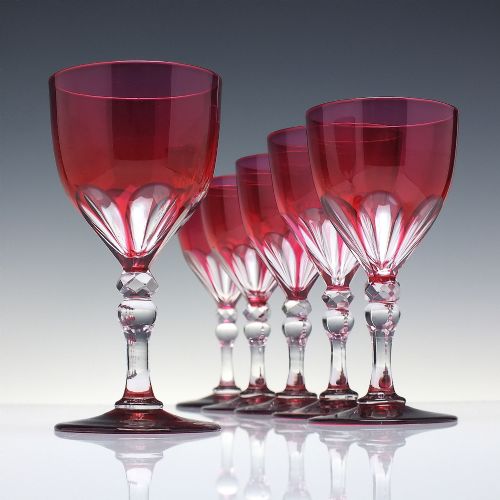
The distinction between standard examples and superior pieces rests on the precision of the glass cutting and the clarity of the colour layers. Finer specimens display crisp edges where the red overlay has been removed to expose the clear crystal beneath.
Proportion and weight also dictate the standard of the item, with heavier, well-balanced vessels indicating greater skill in the glasshouse. The depth of the ruby hue and the absence of internal bubbles further elevate the standing of an individual piece.
Red Cased Glass Retail Price Guide 2026
Typical asking prices for red cased glass among the pieces listed under this phrase on Sellingantiques today, from the lower quarter to the upper quarter. They describe what is for sale here now, not the wider market.
Listings for red cased glass span the Victorian period through to the 1930s, featuring glass, ruby glass, and crystal materials.
Val St Lambert
The Red Cased Glass Glossary
- Cased glass
- A vessel composed of two or more distinct layers of glass fused together during the blowing process. This technique allows artisans to combine different colours or pair a coloured exterior with a clear interior.
- Flash glass
- A thin layer of coloured glass applied over a thicker body of clear or contrasting glass. This method permits deep colour saturation while maintaining light transmission through the vessel walls.
- Ruby glass
- A deep red glass coloured by the addition of gold or copper compounds during the melting process. It remains a defining characteristic of nineteenth-century Bohemian production.
- Lustre
- A decorative tabletop vase fitted with hanging glass prisms that catch and refract light. These ornaments were popular during the Victorian period for mantelpieces and side tables.
Red Cased Glass: Frequently Asked Questions
What is red cased glass?
Red cased glass refers to vessels made with multiple fused layers of glass, typically featuring a vibrant red exterior over a clear or contrasting inner layer. This construction method allows makers to create decorative depth and cut away sections for patterned effects.
Items of this type include vases, baskets, and lustres originating largely from nineteenth and early twentieth-century European workshops.
How do I display these pieces?
These decorative objects work well placed on mantelpieces, side tables, or inside glass-fronted display cabinets where light can pass through the coloured layers. Pairing them with adequate natural light enhances the depth of the ruby glass.
Positioning them away from high-traffic edges protects their surfaces from accidental knocks and preserves their condition.
How do I identify Bohemian pieces?
Bohemian examples often feature heavy cutting, panelled sides, and rich ruby coloration characteristic of nineteenth-century Central European glasshouses. Makers in this region utilised overlay techniques to create striking contrast between the red surface and clear crystal underneath.
Examining the base and the precision of the cut facets helps distinguish these items from later or alternative regional productions.
Are these items purely decorative?
Most surviving examples serve as ornamental vases, display baskets, or mantel lustres rather than functional tableware. Their primary purpose historically was to add colour and elegance to Victorian and Edwardian interiors.
Collectors prize them for their artistic glassmaking techniques and visual impact within a room setting.