





Reclaimed Wood Benches
These reclaimed wood benches span centuries of utilitarian service, offering robust character and honest construction for modern spaces.
Reclaimed Wood Benches
Reclaimed wood benches encompass hard-working seating and functional furniture originating from 18th century, 19th century, and early 20th century workshops, chapels, and agricultural settings. Buyers seeking reclaimed wood benches will encounter diverse forms ranging from pews and daybeds to specialised workbenches and garden seating.
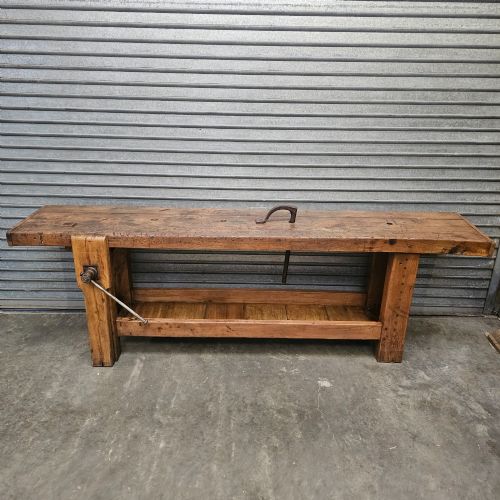
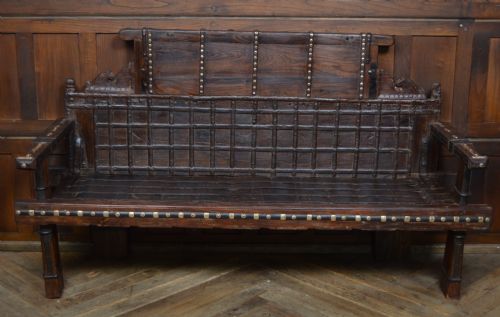
The selection on this page demonstrates strong utilitarian roots, including French artisans' workbenches fitted with vices, Swedish pine workbenches, and rustic low tables. Forms such as the Northern Indian daybed and Bullock cart bench also appear alongside chapel pews and garden benches.
Originating across varied regions, these pieces draw on rustic farmhouse, Victorian country, industrial utilitarian, and Scandinavian country styles. Pine, oak, teak, and assorted hardwoods form the primary structures, frequently paired with iron, cast iron, or wrought iron components.
How they were made
Makers constructed these reclaimed wood benches using solid timbers such as pine, oak, and teak, often salvaged from earlier architectural contexts or built for rigorous daily labour. Structural integrity relied on heavy joinery, trestle supports, and thick wooden tops designed to withstand heavy use in workshops and domestic interiors.
Functional metal elements such as wrought iron, cast iron, and fitted vices appear on industrial and artisan pieces, securing heavy wooden planks together. Painted wood surfaces and well-weathered, silvered finishes record decades of exposure and utility rather than decorative artifice.
Reclaimed Wood Benches Retail Price Guide 2026
Typical asking prices for reclaimed wood benches among the pieces listed under this phrase on Sellingantiques today, from the lower quarter to the upper quarter. They describe what is for sale here now, not the wider market.
Some workbenches arrive complete with historical sawdust still wedged deep inside their functional wooden vices.
What varies in quality
The distinction between standard utility items and finer examples rests upon the integrity of the original construction and the survival of working mechanisms, such as integrated wooden vices on carpenters' tables. Depth of patina, resulting from natural weathering and long service, further separates pieces that retain their honest character from those with altered surfaces.
Proportion and scale dictate the visual weight of each piece, with larger trestle formats and extended pews offering greater presence than low tables or simpler garden seats. The harmonious combination of timber and iron, particularly on industrial and agricultural forms, determines the overall visual balance.
The Reclaimed Wood Benches Glossary
- Trestle
- A structural framework consisting of a horizontal beam supported by two pairs of sloping legs. This form provides exceptional stability for large coffee tables and workbenches.
- Chapel pew
- A long wooden bench originally designed for communal seating in religious spaces. These pieces typically feature simple backs and sturdy pine construction.
- Workbench
- A heavy table used by artisans and carpenters for manual labour, frequently incorporating integrated vices and thick timber tops.
- Patina
- The surface sheen and texture developed through years of handling, use, and exposure to the elements. This quality marks the age and authentic history of reclaimed timber.
- Daybed
- A multipurpose piece of furniture functioning as both a seat and a bed. Northern Indian variants utilise traditional joinery and native hardwoods.
Reclaimed Wood Benches: Frequently Asked Questions
What periods do these benches come from?
The pieces span the eighteenth century, nineteenth century, and early twentieth century. Dates within the listings range from 1890 through to 1920.
Such timelines reflect periods of intensive craft production, agricultural work, and institutional building. Each era imparts distinct construction methods and wear patterns.
How were workbenches used originally?
Workbenches served as heavy-duty platforms for carpenters, artisans, and cheese makers. Integrated vices and thick tops held materials securely during manual labour.
Over decades of trade use, these tables acquired deep surface character, tool marks, and paint splatters. Today, they function as substantial display or dining surfaces.
What materials are most common?
Pine, oak, teak, and mixed hardwoods form the primary wooden structures. These timbers were selected for density, strength, and local availability.
Metal elements such as cast iron and wrought iron frequently reinforce joints or operate mechanical vices. Painted wood and silvered, weathered finishes also appear across the selection.
How do I identify a chapel pew?
Chapel pews are characterised by long, linear seating designed for communal spaces. They often feature panelled backs and simple, durable pine frames.
Their proportions make them suited for placement along hallways or dining tables. The joinery prioritizes structural support over decorative flourishes.
Can garden benches stay outside?
Well-weathered and silvered garden benches are built to withstand outdoor conditions. Exposure to the elements creates a protective, aged patina on the timber.
Historic pieces benefit from sheltered placement during harsher winter months to preserve their structural integrity. Regular assessment of the wood helps maintain their condition.