



Queen Anne Walnut Credenza
Queen Anne walnut credenza describes versatile storage furniture, offering elegant timber figures and traditional revival forms for the home.
Queen Anne Walnut Credenza
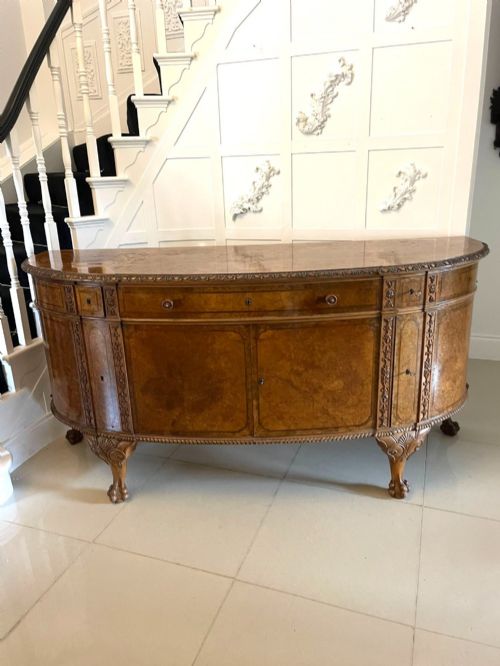
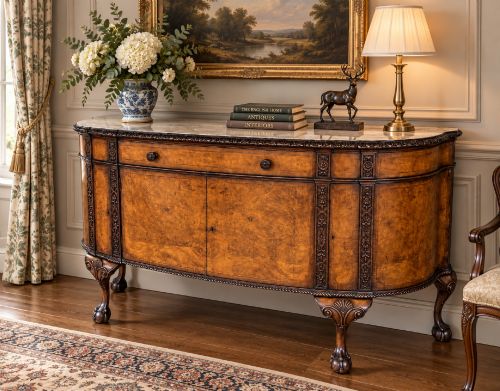
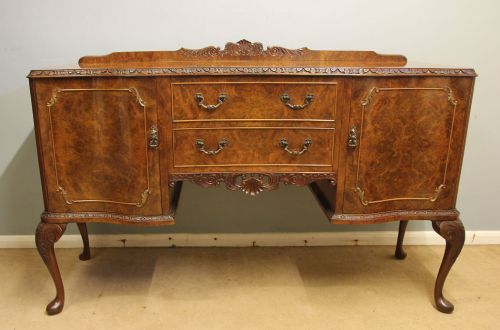
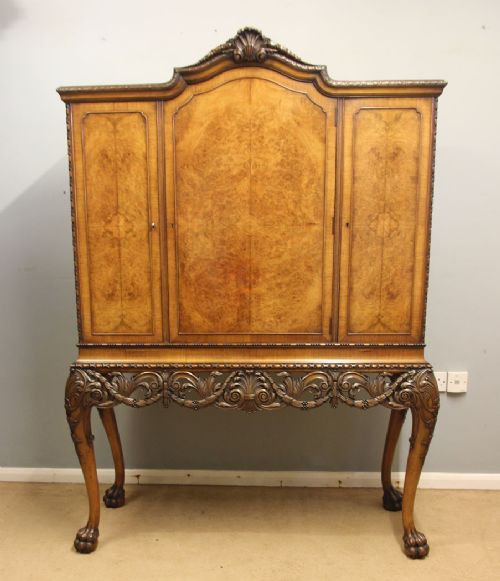
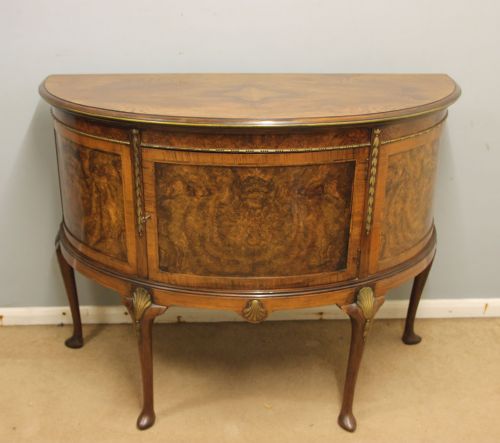
A queen anne walnut credenza search brings up a variety of large storage furniture, including sideboards, side cabinets, and bookcases dating mainly from the early twentieth century and the nineteenth century. These forms draw on Queen Anne style and Queen Anne Revival aesthetics, often presenting shaped fronts and dedicated serving surfaces.
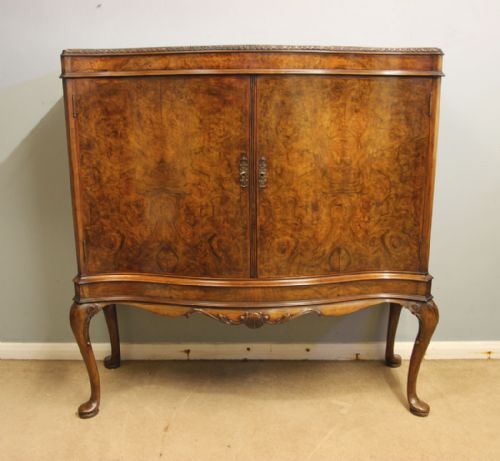
The selection on this page relies heavily on early twentieth-century interpretations, spanning the 1900s through the 1930s, alongside nineteenth-century examples and Edwardian pieces. Formats range from bow-fronted sideboards and serpentine servers to cocktail drinks cabinets and break-fronted open bookcases.
Buyers will encounter multiple configurations designed for display and storage, such as three-door side cabinets, demi-lune servers, and dining room suites. These items serve practical domestic roles while displaying distinct period characteristics through their timber selection and silhouette.
What varies in quality
Quality differences emerge in the selection and application of timber veneers, particularly the visual depth and symmetry of burr and figured walnut surfaces. Superior examples display carefully matched grain patterns across large surfaces like sideboard doors and console tops.
The precision of cabinet joinery and the execution of revival design details, such as carved elements and shaped profiles, set finer pieces apart from standard production. Integration of matching hardware and interior fittings, including cutlery sets or specialised drinks storage compartments, further distinguishes higher-tier items.
Queen Anne Walnut Credenza Retail Price Guide 2026
Typical asking prices for queen anne walnut credenza among the pieces listed under this phrase on Sellingantiques today, from the lower quarter to the upper quarter. They describe what is for sale here now, not the wider market.
Some dining suites arrive with secret compartments designed to keep nineteen-twenties cutlery securely partitioned during dinner parties.
Epstein
The Queen Anne Walnut Credenza Glossary
- Burr walnut
- A timber harvested from walnut tree growths, prized for its swirling, highly figured grain patterns. Cabinetmakers use thin veneers of this wood to create decorative surfaces on furniture fronts.
- Crossbanding
- A decorative technique where a border of veneer is applied around the edge of a panel with the grain running at right angles to the centre. This frames the primary timber surface.
- Demi-lune
- A half-moon shape used for the footprint and top of small sideboards, tables, and cabinets. It allows furniture to sit flush against a wall while offering a curved front.
- Serpentine front
- A furniture front characterised by a curving line that is convex in the middle and concave at the sides. This shape requires skilled carpentry to execute smoothly.
- Breakfront
- A cabinet design where the central section projects forward from the flanking sections. It adds architectural depth and visual structure to large bookcases and sideboards.
Queen Anne Walnut Credenza: Frequently Asked Questions
What is a queen anne walnut credenza?
A queen anne walnut credenza typically refers to sophisticated storage furniture like sideboards, side cabinets, and servers made from walnut timber. These pieces reflect revival design characteristics and early twentieth-century craftsmanship.
They provide functional surface area and enclosed storage, making them suitable for dining rooms and living spaces as display or serving furniture.
How do I date these walnut cabinets?
Dating relies on stylistic clues, construction methods, and materials recorded across pieces from the nineteenth century through the 1930s. Edwardian and early twentieth-century examples often combine traditional revival styles with specialised interiors.
Art Deco influences and cocktail cabinet formats point specifically toward the 1930s, whereas nineteenth-century pieces display heavier structural proportions and simpler timbers.
Where should I place a sideboard or drinks cabinet?
These pieces function well in dining rooms, living areas, or hallways, serving as focal points that combine display capacity with enclosed storage. Drinks cabinets and server consoles work effectively in entertaining spaces.
Ensure adequate clearance for doors that swing open or drop down, particularly on bow-fronted or serpentine configurations.