
Queen Anne Vanity Table
A queen anne vanity table offers classic elegance through figured veneers and cabriole lines, grounding a dressing room with period presence.
Queen Anne Vanity Table
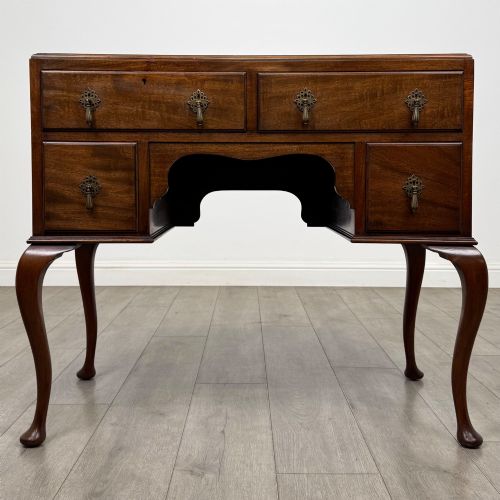
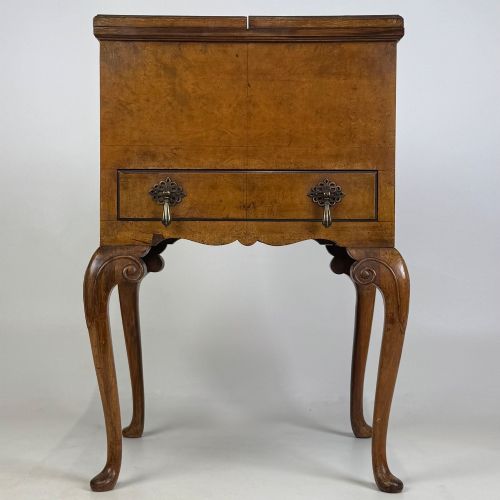
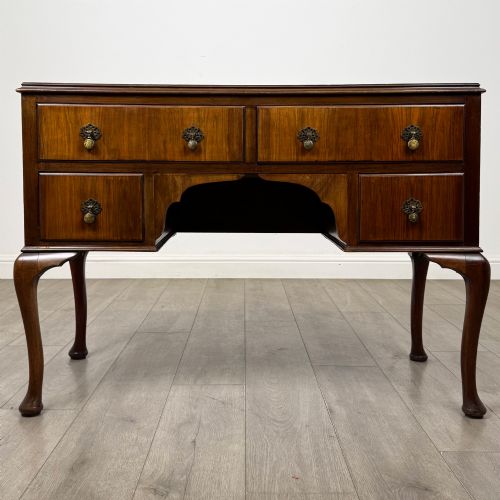
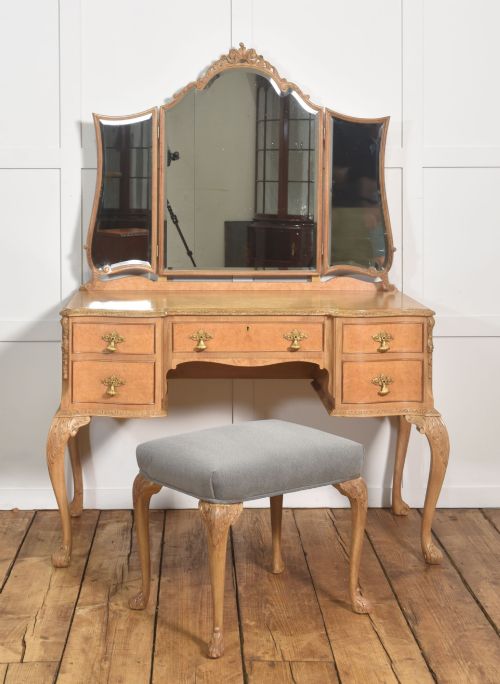
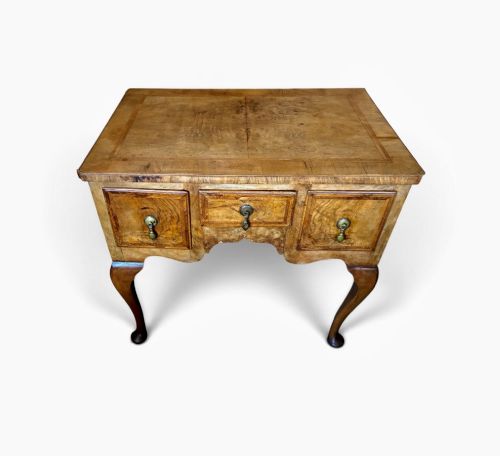
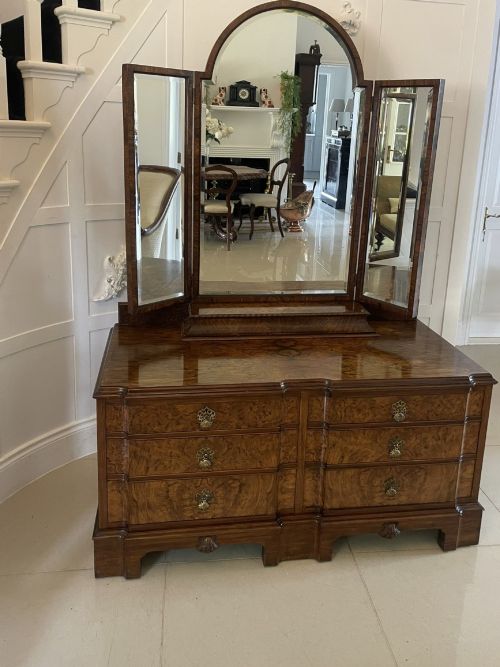
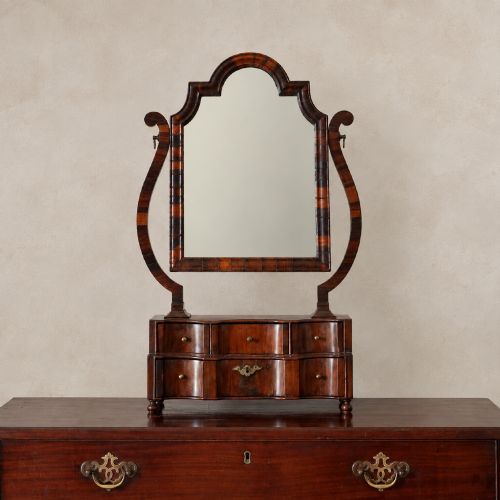
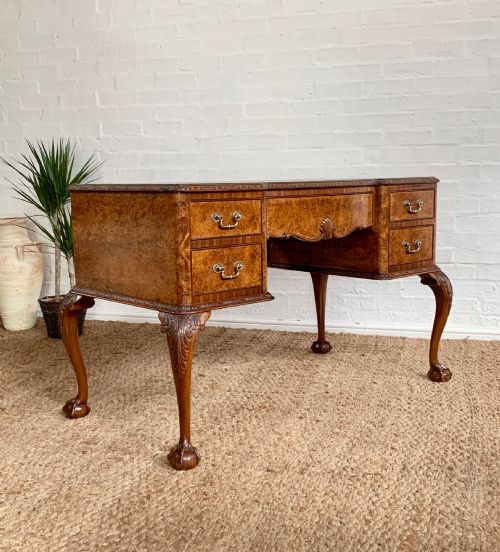
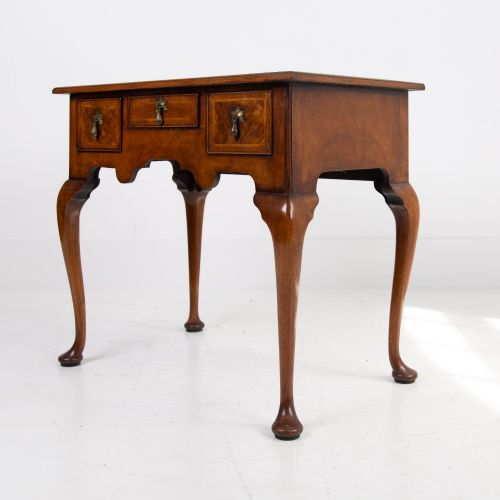
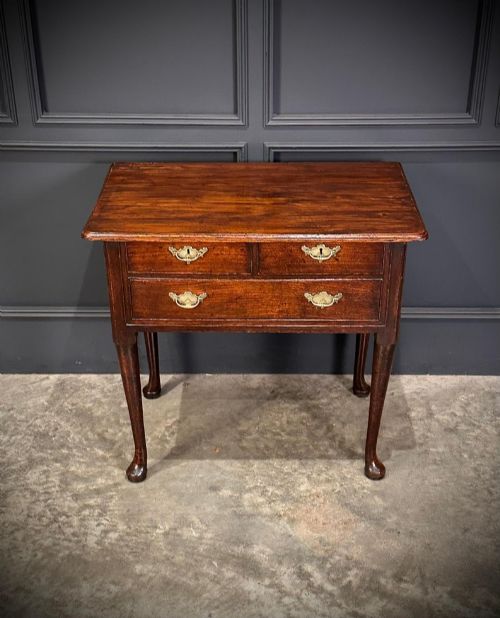
A queen anne vanity table typically encompasses dressing tables, lowboys, and toilet mirrors originating from the eighteenth century or emerging through later revivals in the nineteenth and twentieth centuries. These forms serve daily grooming needs while providing compact drawer space for small personal items.
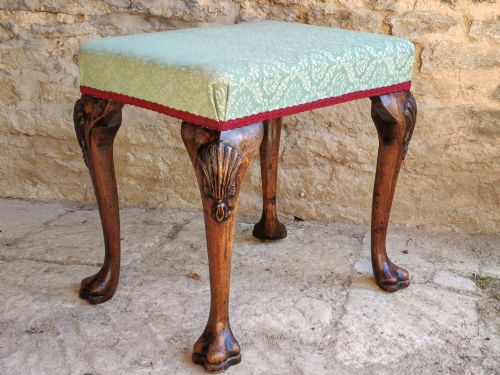
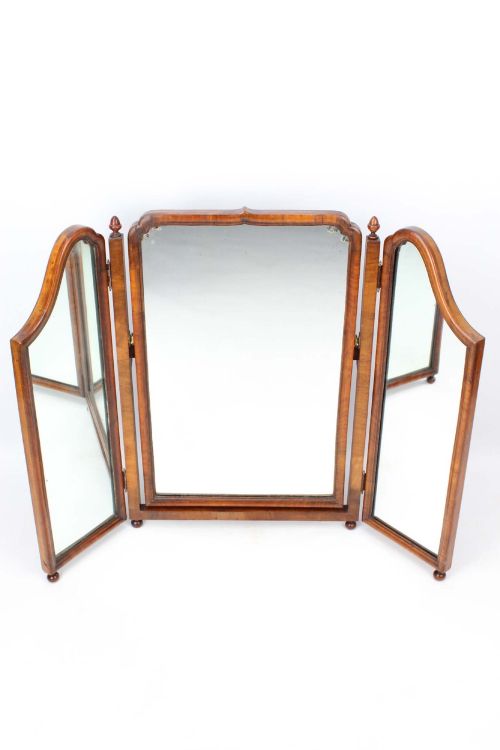
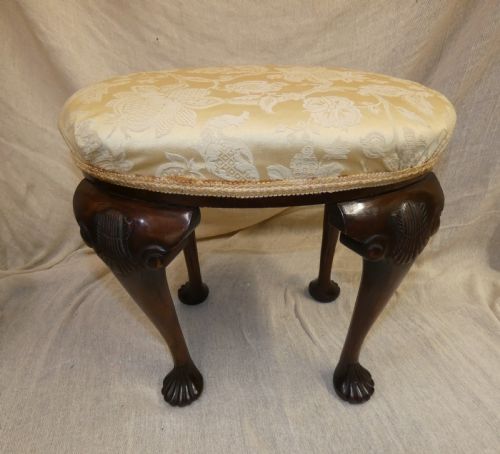
Most examples found on this page display the characteristic materials and revival styling associated with early periods, often paired with matching stools or triple mirrors. Makers across the Edwardian era and the 1920s reinterpreted these traditional shapes using rich walnut veneers and solid timbers.
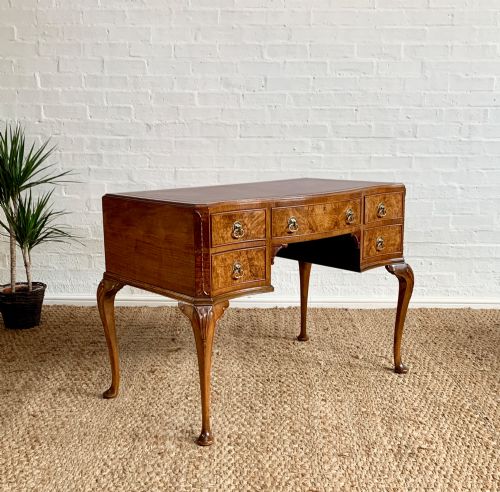
Buyers encounter distinct variations ranging from authentic eighteenth-century oak and walnut lowboys to early twentieth-century dressing desks and Chinoiserie lacquered pieces. Each format retains the core characteristics of the style, prioritising graceful proportions and functional surface areas.
Materials and Construction
Cabinet makers utilised walnut, burr walnut, mahogany, and oak as primary timbers, often applying highly figured veneers to drawer fronts and top surfaces to create visual depth. Solid secondary woods provide internal structure for drawers and framing.
Surface decoration includes traditional polishing techniques alongside specialised finishes such as Chinoiserie lacquer and brass hardware fittings. Writing surfaces frequently incorporate inset leather panels with blind tooling.
Joinery methods rely on traditional dovetailing for drawer construction and pegged joints in earlier pieces, ensuring durable daily utility across centuries of use.
Early cabinet makers occasionally lined hidden desk drawers with secret compartments to store love letters and small trinkets.
Craftsmanship and Proportion
The degree of refinement in the timber selection and veneer matching defines the upper tiers of quality, where grain patterns flow symmetrically across multiple drawers. Lesser examples show simpler timber cuts with minimal attention to pattern continuity.
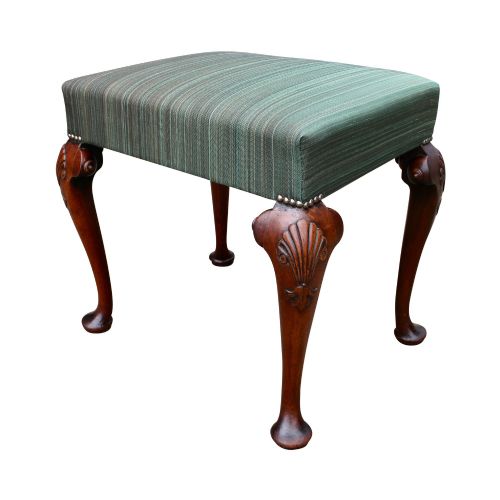
Proportion and the execution of carved details, such as cabriole legs and shell motifs, separate standard production from superior craftsmanship. Sharp lines in the woodwork and original brass furniture indicate higher original manufacture.
Wylie and Lochhead Glasgow·Maples of London
The Queen Anne Vanity Table Glossary
- Lowboy
- A small side table or dressing table featuring multiple drawers and short cabriole legs, developed during the early eighteenth century. These pieces often function as compact writing desks or dressing surfaces.
- Toilet Mirror
- A small adjustable looking glass mounted on a box base containing small drawers, designed to sit upon a table top. Eighteenth-century versions frequently employ burr walnut and laburnum veneers.
- Burr Walnut
- Timber harvested from walnut tree growths, prized for its swirling, highly decorative grain patterns. Cabinet makers applied thin slices of this wood as veneers on prominent surfaces.
- Cabriole Leg
- A furniture leg that curves outward in a convex arc before tapering inward in a concave sweep, terminating in a pad or foot. This form characterises much of the design lineage.
- Chinoiserie
- European decorative art imitating Chinese and East Asian artistic traditions, often executed in lacquered finishes. This style appears on specialised dressing furniture from the revival periods.
Queen Anne Vanity Table: Frequently Asked Questions
How do I identify a true period piece?
Examine the internal construction methods, timber patination, and secondary woods used within the drawer linings. Eighteenth-century pieces display hand-cut dovetails and timber movement appropriate to their age.
Revival pieces from the twentieth century often use machine-cut elements and standardised fixings while faithfully copying the earlier forms and veneers.
Where should I place a dressing table?
These tables suit bedrooms, dressing rooms, or large hallways where their compact footprint and functional drawers provide practical utility. Placing them near natural light enhances the mirror reflection and highlights the figured veneer.
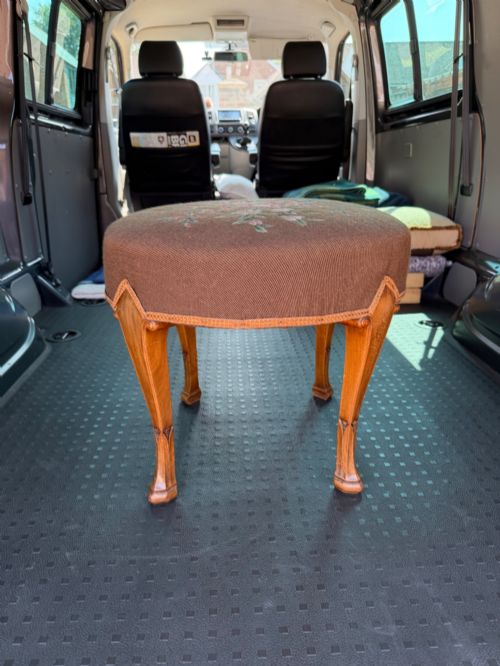
Pairing the table with a matching stool or a low upholstered seat completes the traditional arrangement.
What is the difference between a lowboy and a dressing table?
A lowboy is traditionally a low table with drawers primarily used for storage or as a side surface, while a dressing table specifically accommodates grooming activities often by incorporating attached mirrors.
Many lowboys serve dual purposes as writing desks depending on their height and kneehole clearance.
How do I care for walnut veneer surfaces?
Maintain walnut surfaces by dusting with a soft, dry cloth and avoiding excessive moisture or direct sunlight that can fade the grain. Periodic application of appropriate wax polish preserves the sheen of the timber.
Protect leather writing inserts from spills and heavy pressure to prevent permanent marking.