






Qing Dynasty Silk Embroidery
Qing dynasty silk embroidery brings intricate needlework and traditional motifs into a room, offering rich colour and historic textile art.
Qing Dynasty Silk Embroidery
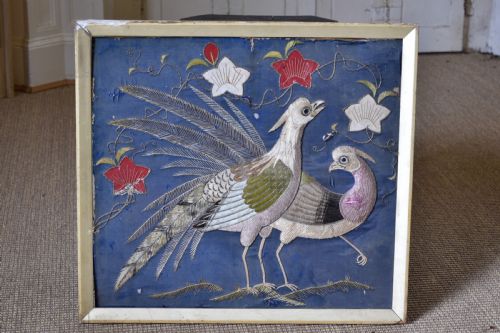
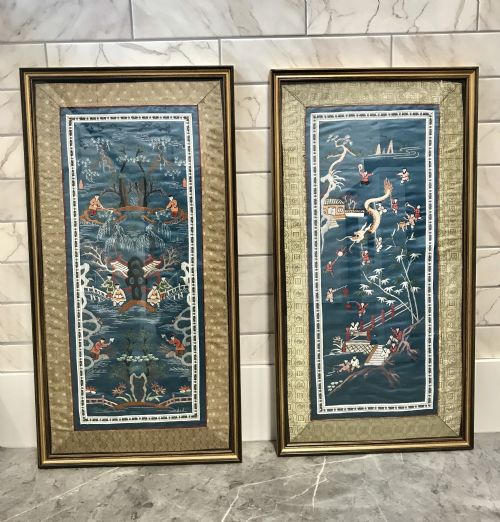
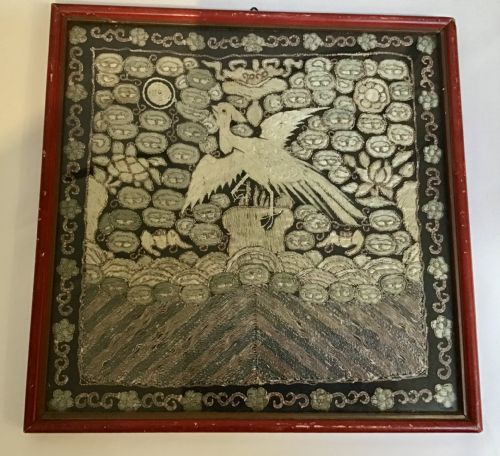
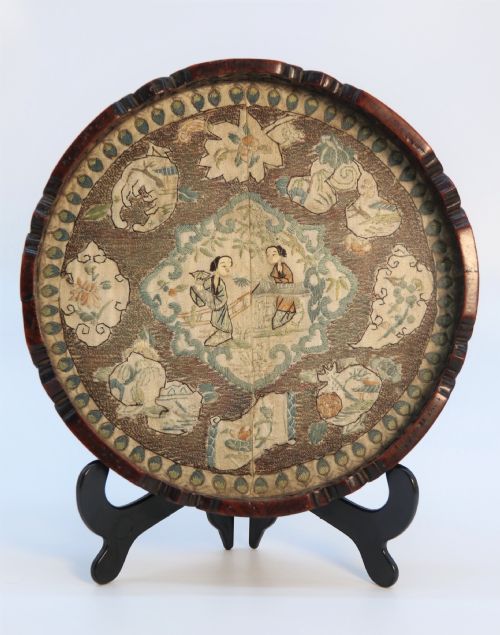
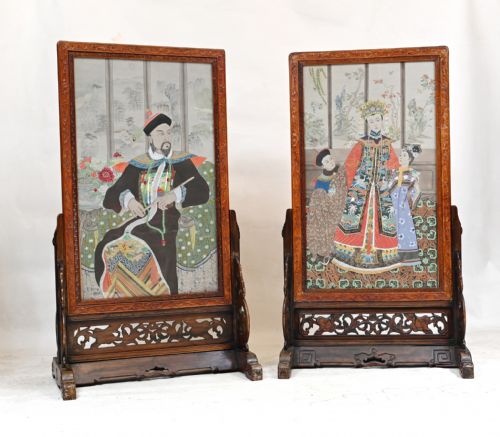
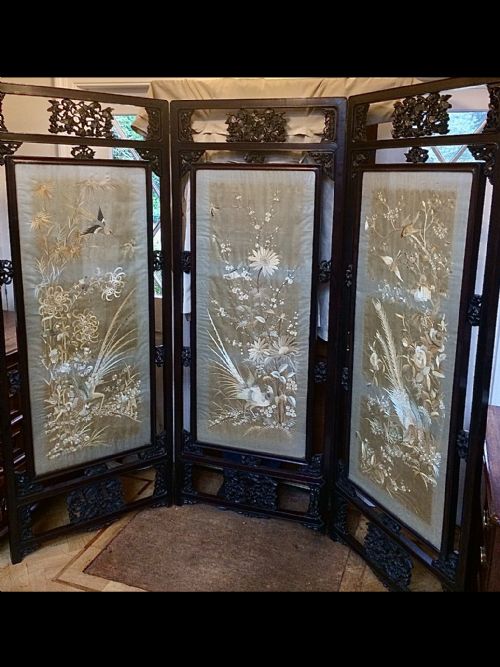
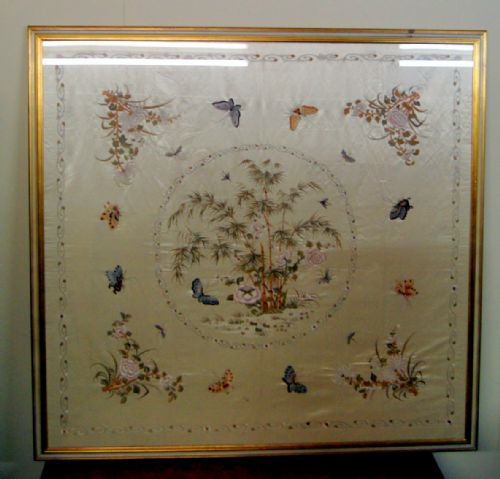
When you search for qing dynasty silk embroidery, you encounter historic textile art ranging from framed wall art and rank badges to folding screens and carved trays. These pieces bring traditional Chinese craftsmanship into domestic spaces through detailed hand sewing.
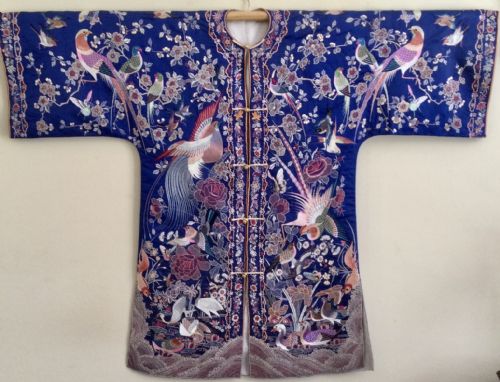
The selections available here lean heavily towards 19th century and 1900 examples, alongside earlier 18th century work. Forms include table screens, firescreens, child's robes, and framed panels depicting figures, dragons, trees, and garden birds.
Originating in China, these textiles often combine delicate silk threads and metallic threads mounted behind glass or set within carved hardwood frames. Buyers find both standalone panels and functional decorative objects like trays and screens.
How qing dynasty silk embroidery was made
Maker workshops utilised fine silk threads and metallic thread to stitch detailed figures, birds, and floral motifs by hand onto textile grounds. This careful needlework created rich textures and complex visual depth.
Many of these embroideries were mounted into custom woodwork, such as carved hardwood frames, table screens, and firescreens, sometimes incorporating glass protection and gilt wood details.
Qing Dynasty Silk Embroidery Retail Price Guide 2026
Typical asking prices for qing dynasty silk embroidery among the pieces listed under this phrase on Sellingantiques today, from the lower quarter to the upper quarter. They describe what is for sale here now, not the wider market.
Listings feature periods spanning from the 18th century through 1920, incorporating silk, glass, hardwood, and metallic thread.
What varies in the quality of qing dynasty silk embroidery
The density and precision of the hand sewing dictate the refinement of the embroidery, with tighter stitches and complex thread work showing superior skill. The integration between the textile panel and its carved hardwood or glass enclosure also defines the standard of the piece.
Preservation of the silk ground and the vibrancy of the threads influence the visual impact. Pieces retaining crisp detail in figures, trees, and dragons stand apart from those with thread wear or fading.
The Qing Dynasty Silk Embroidery Glossary
- Rank badge
- A square embroidered patch worn on official robes during the Qing dynasty to denote civil or military status. These badges display specific birds and animals corresponding to the wearer's exact grade.
- Table screen
- A decorative panel supported by a carved stand designed for placement on a desk or table. These pieces often feature silk embroidery framed in hardwood.
- Firescreen
- A standing household screen placed before an unused fireplace to decorate the hearth. They frequently showcase large embroidered silk panels behind glass.
- Metallic thread
- Flat strips of metal or wrapped core threads used alongside standard silk to add reflective highlights to embroidered motifs. This technique provides rich contrast in traditional panels.
Qing Dynasty Silk Embroidery: Frequently Asked Questions
How are qing dynasty silk embroideries framed?
Many panels are mounted behind glass within carved hardwood frames or integrated into portable table screens and folding screens.
This framing protects the delicate silk and metallic threads from dust and handling while displaying the needlework.
What subjects appear in these embroideries?
Common subjects include human figures, dragons, trees, flowers, garden birds, and mandarin ducks.
Rank badges also display specific animals and birds denoting official hierarchy.
How do I date an embroidery?
Dating relies on stylistic markers, materials, and framing techniques typical of the 18th and 19th centuries.
Records often point to periods such as the Qianlong era or the broader 19th century based on construction.
Were these textiles used in clothing?
Some textiles originated as rank badges or child's robes before being framed or collected as standalone art.
Clothing components showcase the same high standard of hand sewing found on wall panels.