




Purple Art Glass
Purple art glass encompasses vibrant vessels and ornaments ranging from early Victorian amethyst tones to sleek Art Deco designs.
Purple Art Glass
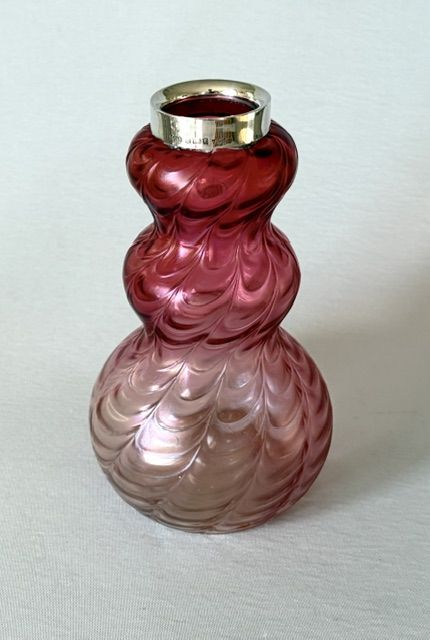
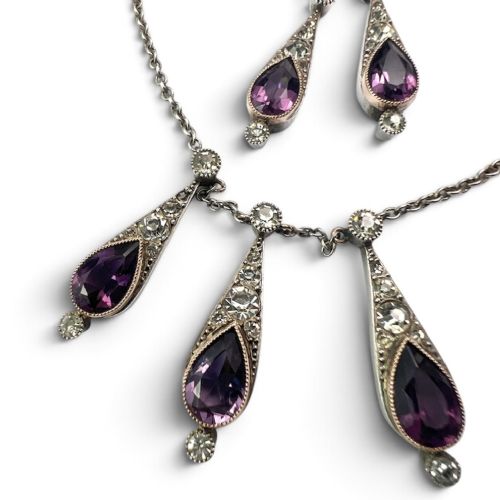
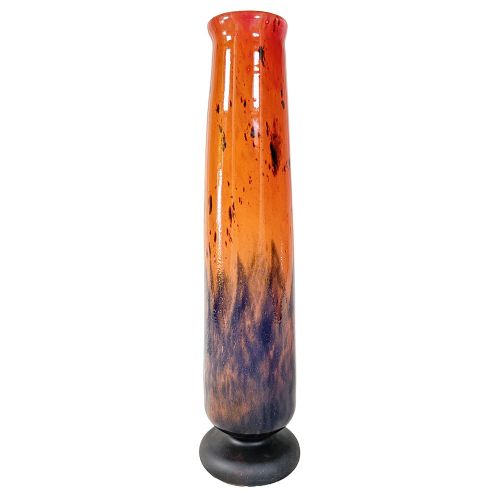
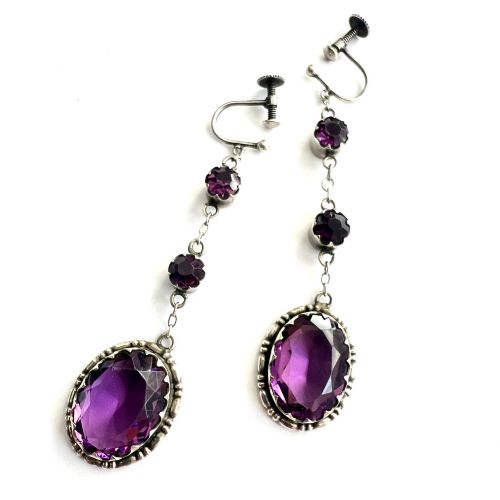
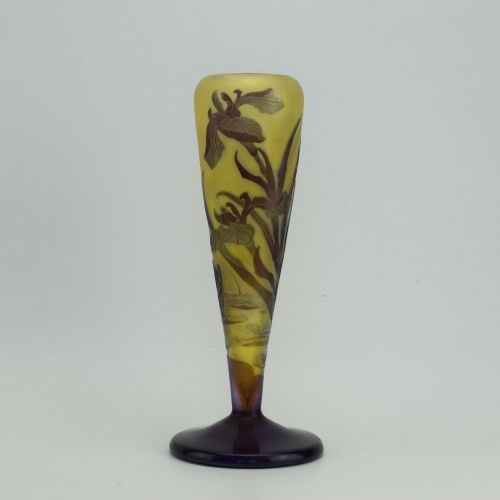
Purple art glass items span vases, scent bottles, jewellery sets, and decorative bowls created across the nineteenth and twentieth centuries. Buyers searching for purple art glass encounter varied forms, from heavy English amethyst vases to French cameo glass and iridescent Austrian pieces.
Origins stretch across Britain, France, Austria, and Bohemia, reflecting regional shifts in glassmaking techniques and design philosophies. Pieces range from simple moulded glass to elaborate cameo and pate de verre creations.
How they were made
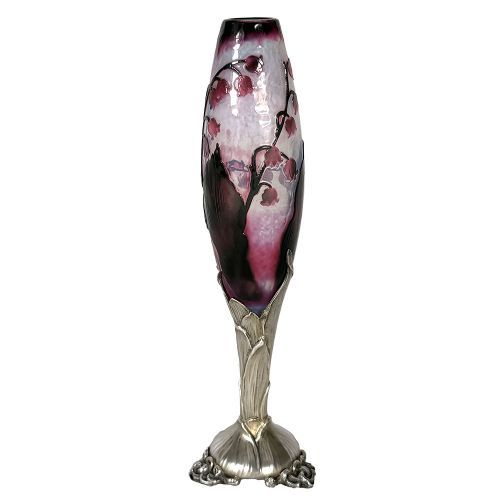
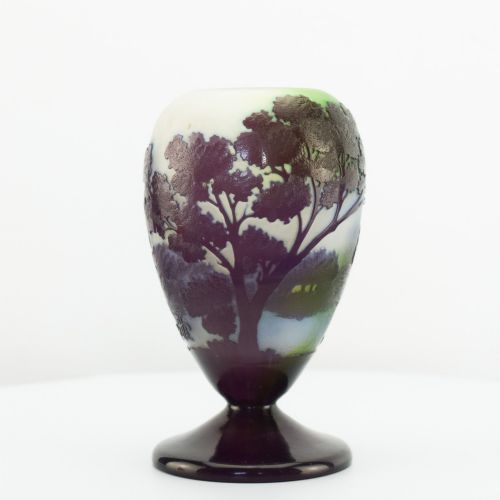
Glassmakers utilised diverse methods such as free-blowing, mould-blowing, wheel-carving, and cameo layering to achieve rich colour saturation and surface texture. Acid-etching and enamelling further enhanced the decorative qualities of the glass.
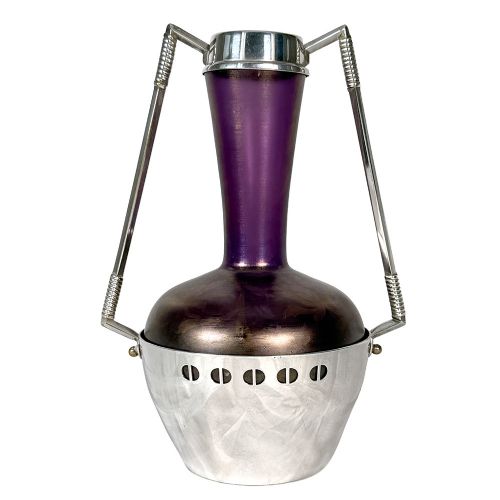
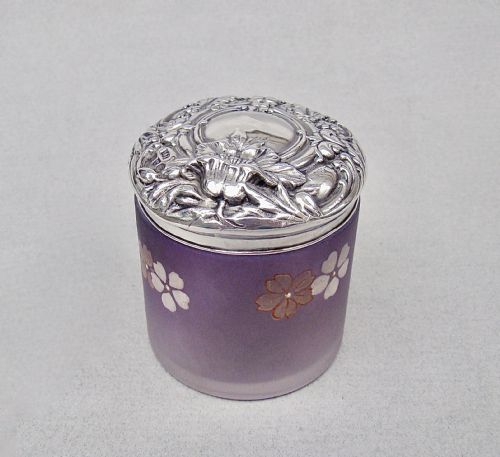
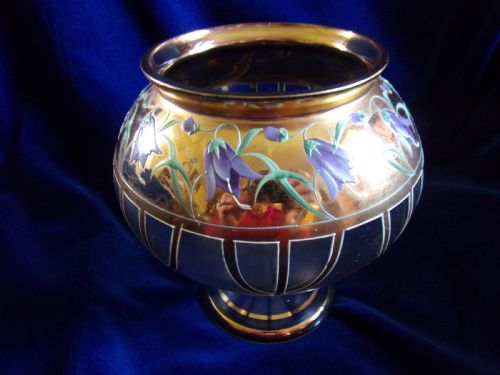
Many glass vessels incorporated metal components, utilising sterling silver, silver plate, brass, and gold mounts created by silversmiths and metalworkers. Enamel work and guilloche detailing added intricate ornamentation to dressing table jars and scent bottles.
Purple Art Glass Retail Price Guide 2026
Typical asking prices for purple art glass among the pieces listed under this phrase on Sellingantiques today, from the lower quarter to the upper quarter. They describe what is for sale here now, not the wider market.
Listings feature items from the nineteenth century through the 1960s, incorporating glass, sterling silver, enamel, and frosted glass.
What varies in quality
Quality rests in the depth and complexity of the glass manipulation, from simple translucent amethyst to layered cameo glass and iridescent finishes. Master glasshouses achieved superior optical effects and precise colour gradients.
The integration of metal mounts influences the standard of the piece, where fully hallmarked silver or bronze frames complement the glass body. Hand-applied enamel and intricate wheel-carved details elevate individual examples above standard production.
Loetz·Georg Adam Scheid·Daum·Emile Galle·Schneider·Gabriel Argy Rousseau·Karl Palda·Monart
The Purple Art Glass Glossary
- Cameo glass
- A technique involving multiple layers of coloured glass fused together and carved or acid-etched to create a raised design against a contrasting background.
- Iridescent glass
- Glass treated with metallic salts while hot to produce a shimmering, rainbow-like surface sheen that catches the light from different angles.
- Pate de verre
- A method of glass casting where crushed glass is packed into a mould and fused in a kiln, resulting in a dense, slightly granular texture.
- Amethyst glass
- Glass coloured purple through the addition of manganese or other metallic oxides during the melting process.
- Guilloche enamel
- Enamel applied over a metal surface that has been machine-turned with an intricate geometric pattern, allowing the design to show through the translucent colour.
Purple Art Glass: Frequently Asked Questions
How do I clean purple art glass?
Wash the glass gently in lukewarm water using mild washing-up liquid and a soft cloth. Avoid abrasive sponges and harsh chemical cleaners to protect delicate iridescent or enamelled surfaces.
Dry the pieces thoroughly with a lint-free towel. Take extra care with items featuring silver mounts or enamel work to prevent moisture damage.
How do I identify Art Nouveau purple glass?
Art Nouveau purple glass typically displays organic forms, flowing floral motifs, and iridescent or cameo treatments. Look for sinuous lines and naturalistic subjects such as lilies or landscape scenes.
Many pieces from this period incorporate stylized metal mounts or signature cameo signatures on the body of the vessel.
Can I use these vases for fresh flowers?
Most antique glass vases can hold water and fresh flowers, provided they lack internal structural cracks or delicate metal collars prone to water corrosion.
Inspect the interior for any signs of old staining or mineral deposits. Hand-wash carefully after use and avoid sudden temperature changes that might stress the vintage glass.
What is the difference between cameo and iridescent glass?
Cameo glass achieves its design through the physical carving or acid-etching of contrasting glass layers. The process creates a distinct relief pattern standing out from the background.
Iridescent glass relies on chemical surface treatments applied during cooling to create a lustrous, reflective sheen. The effect changes colour depending on the viewing angle and lighting conditions.